
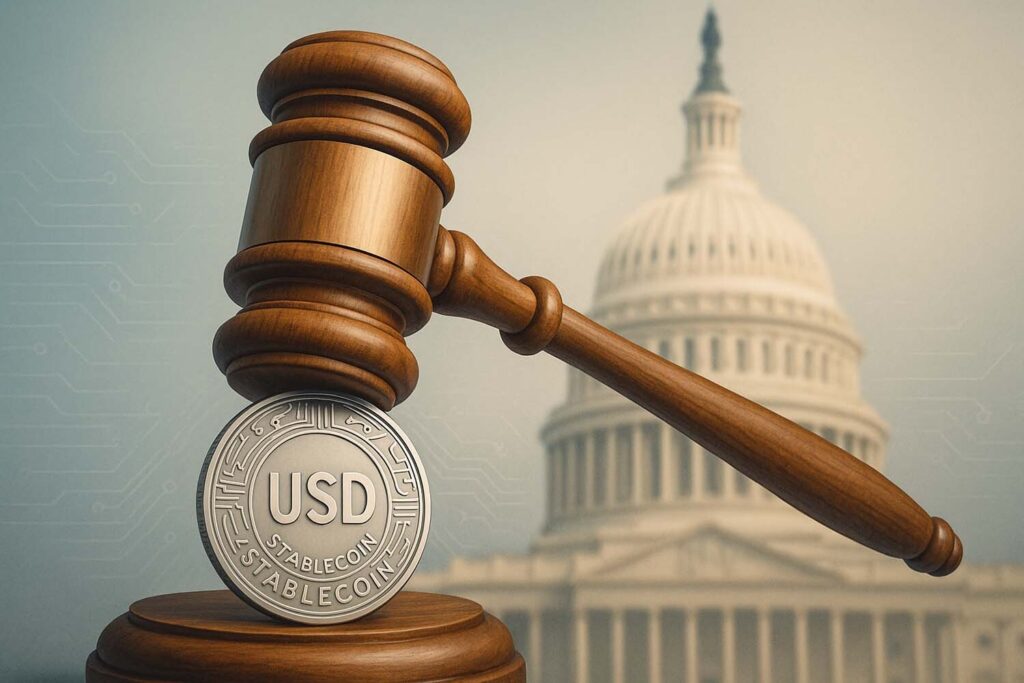
- House set to vote on Stablecoin reserve and oversight rules this week
- Issuers must hold 100% backing in short-term US government assets
- State regulators lead supervision with optional OCC federal charter
Republican leaders in the House of Representatives plan to approve legislation this week that would set clear rules for dollar-backed stablecoin issuers. The measure follows Senate approval on June 30 by a vote of 81–13 and represents Congress’s first comprehensive effort to regulate tokens pegged to the US dollar. If passed by the full House by July 17, the bill will move to the President’s desk for signature, marking a key step in defining oversight and reserve requirements for digital assets.
House Advances Stablecoin Regulatory Framework
The House bill closely follows the Senate version, requiring issuers to maintain reserves equal to 100 percent of outstanding stablecoin tokens. Those holdings must be limited to short-term US Treasury securities, Treasury repurchase agreements, or deposit accounts insured by federal agencies. Firms that fail to meet these requirements could face fines, license suspensions, or legal actions. According to Federal Election Commission records, industry backers invested roughly $100 million in lobbying last year to secure terms similar to this framework. Representative Bryan Steil of Wisconsin, who leads the Financial Services subcommittee on digital assets, has emphasized that the rules aim to ensure token redemptions occur predictably and without shortage.
Market Structure and Crypto Governance
Alongside the stablecoin bill, the House is set to consider a market structure proposal that reclassifies most cryptocurrencies as commodities under Commodity Futures Trading Commission oversight. The text would limit the Securities and Exchange Commission’s power over tokens not deemed securities. That shift reflects earlier committee votes in both parties, with sponsors arguing the CFTC has clearer authority to handle trading platforms and market conduct. Senate Banking Committee Chairman Tim Scott has indicated plans to reconcile House and Senate drafts by September 30. The Senate panel held a hearing on July 8, and the Agriculture Committee convened on July 15 to review classification principles, signaling a coordinated effort to align federal oversight.
Fiscal Safeguards and Stablecoin Reserve Mandates
Under the proposed stablecoin legislation, each token must be backed by a dollar reserve at all times. The law stipulates that reserves consist solely of instruments such as Treasury bills maturing within 90 days, repurchase agreements secured by government debt, or bank deposits covered by the Federal Deposit Insurance Corporation. State banking regulators would have primary supervisory authority, while the Office of the Comptroller of the Currency would offer an optional national charter. This dual approach is intended to reduce inconsistencies among state rules. Civil penalties and license revocations would apply if an issuer falls below the required backing, aiming to prevent the kind of liquidity shortfalls seen in past market disruptions.
Political Opposition and Crypto Week Controversy
Top-ranking Democrats have criticized the measures for lacking consumer safeguards and conflict-of-interest provisions. Representative Maxine Waters and Senator Elizabeth Warren have sponsored alternative drafts that would mandate enhanced transparency and bar transactions involving public office holders and their families. Waters plans an “anti-crypto corruption week” to highlight those concerns while the House debates the industry-backed bills. President Donald Trump, who has cited stablecoin regulation as part of his economic agenda, has expressed support for the current draft, stating that clear rules will aid financial services firms and cross-border payments. The contrasting positions underscore a wider debate over how to balance issuer flexibility with protections for token holders.
Conclusion
The outcome of the upcoming votes will establish how stablecoin issuers are regulated and what kind of reserves they must hold. It will also clarify the roles of different federal agencies in overseeing digital assets. While the proposals have received support from both parties in some areas, there are still disagreements over specific provisions. The discussion reflects differing views on consumer protection and industry involvement. As the process continues, the decisions made could shape future steps in digital asset regulation. The final version of the bill may reflect compromises between multiple priorities.
Disclaimer
The information provided in this article is for informational purposes only and should not be considered financial advice. The article does not offer sufficient information to make investment decisions, nor does it constitute an offer, recommendation, or solicitation to buy or sell any financial instrument. The content is opinion of the author and does not reflect any view or suggestion or any kind of advise from CryptoNewsBytes.com. The author declares he does not hold any of the above mentioned tokens or received any incentive from any company.
Featured image created by AI


Subscribe To Our Newsletter
Join our mailing list to receive the latest news and updates from our team.