
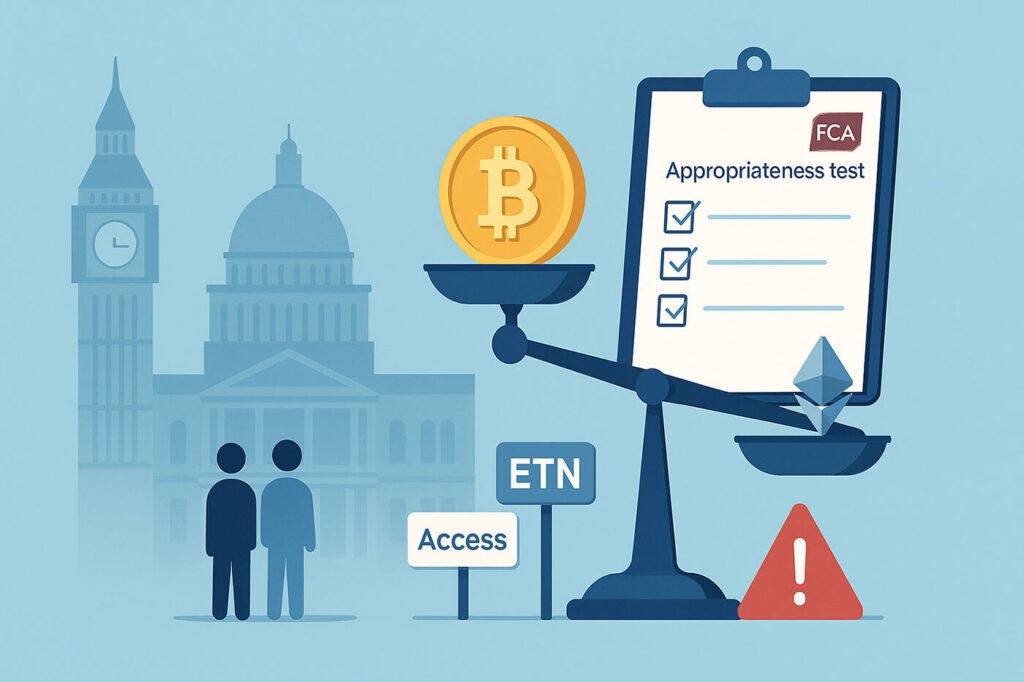
- FCA ends four-year block; LSE to list bitcoin and ether ETNs on 13 October with issuers including WisdomTree, Bitwise, and 21Shares.
- Hargreaves Lansdown says bitcoin has no intrinsic value and plans limited access early next year after suitability and appropriateness checks.
- Interactive Investor and Saxo enable trading at launch, while AJ Bell reviews timing and requirements for access by UK retail investors.
UK retail investors are entering a period of rapid change as the Financial Conduct Authority lifts its four-year ban on access to regulated crypto products. The move marks a turning point for the market, but it also exposes differences among major platforms in how they handle the reintroduction of digital-asset products. Hargreaves Lansdown, the country’s largest direct-to-consumer investment platform, has publicly cautioned clients that bitcoin “has no intrinsic value” and that cryptocurrency does not qualify as an asset class. Despite this warning, the firm intends to allow limited access to crypto products from early next year, following strict appropriateness and risk assessments. The mixed responses across major providers such as Interactive Investor, Saxo, and AJ Bell reveal that UK retail investors will face a diverse and fragmented rollout, shaped by each platform’s own view of risk, suitability, and investor protection.
UK retail investors navigate FCA shift on crypto products
Hargreaves Lansdown, the country’s biggest “DIY” investment platform, set a cautious tone after the regulator reversed its 2021 prohibition on listed crypto products. The firm stated that bitcoin “has no intrinsic value” and “is not an asset class,” adding that it does not see cryptocurrency as suitable for portfolios targeting growth or income, nor as a tool to help clients meet financial goals. The message matters because Hargreaves Lansdown holds a sizable position in the market. Founded in 1981, it controls nearly a third of the UK direct-to-consumer investment space, manages more than £170bn in assets under administration, and serves over 2mn customers. A stance from a platform with that scale shapes expectations for UK retail investors who rely on established providers for access, education, and product screening.
Despite the reservations, Hargreaves Lansdown left a door ajar. The company said some customers “will wish to speculate” and that it expects to permit access to crypto exchange-traded notes, subject to appropriateness tests, from early next year. That sequencing sets a slower path than rivals but aligns with its risk framing. It also underscores how UK retail investors must plan around provider-specific safeguards, onboarding checks, and eligibility hurdles rather than a single rule change opening immediate access across the board.
The FCA’s reversal aims to align the UK with other major markets on listed crypto exposure. In 2021, the watchdog barred retail buyers from exchange-listed crypto notes and funds. This year it changed course, allowing regulated, exchange-listed products to return for eligible investors. The shift moves activity onto venues the regulator recognizes, rather than crypto exchanges outside the listed-securities regime. For UK retail investors, the practical impact is the ability to buy bitcoin and ether exposure through exchange-listed products on a domestic market once issuers complete listings and platforms switch on distribution.
Platform responses and access plans for UK retail investors
Provider stances now diverge. Interactive Investor and Saxo said they will offer listed crypto ETNs as soon as they become available on 13 October, giving eligible clients the first wave of on-platform access. AJ Bell, another major site for self-directed savers, is reviewing the situation and could add ETNs later, subject to a competency test. Hargreaves Lansdown intends to spend the next couple of months assessing client needs and risk considerations, with access targeted for early next year and only after appropriateness checks. The staggered approach creates a tiered roll-out where UK retail investors may see near-term availability on some platforms and delayed access on others, even though the underlying regulatory bar has lifted for the entire market.
Product sponsors have lined up for London listings. Asset managers including WisdomTree, Bitwise, and 21Shares plan to list exchange-traded products that track bitcoin and ether on the London Stock Exchange. That matters for UK retail investors who prefer simple brokerage workflows and familiar settlement cycles in sterling. Access through recognized exchanges reduces reliance on offshore crypto venues, simplifies custody chains for listed securities, and allows platforms to apply existing suitability, appropriateness, and risk warnings within their standard processes. The FCA’s U-turn does not diminish the risk of the assets themselves, but it does attempt to channel exposure through regulated market infrastructure with clearer oversight.
Product scope and timelines for UK retail investors
The first listed instruments will be exchange-traded notes rather than spot ETFs. That distinction affects structure, risk, and how platforms handle investor checks. UK retail investors will need to note that, while the United States authorized spot bitcoin ETFs last year, drawing more than $100bn in combined flows across issuers including BlackRock and Fidelity, the UK approach centers on ETNs listed in London. The US example shows strong demand when listed products sit on mainstream exchanges with simple access and settlement. It does not settle questions around long-term suitability for diversified portfolios, which leading UK platforms still debate.
Hargreaves Lansdown’s comments highlight that debate. It says cryptocurrency lacks characteristics that justify inclusion for growth or income, and sets expectations that digital assets should not anchor a plan to meet financial goals. Yet it will enable limited access so that customers who choose to speculate can do so within a controlled framework. For UK retail investors, that mix of caution and access creates a practical path: eligibility checks, risk disclosures, and platform-set guardrails gate the first purchases. Meanwhile, rival platforms offering ETNs from 13 October move faster, but they still apply internal tests before enabling trading for individuals, which keeps the initial cohort more bounded than a blanket market opening.
Market scale, risk framing, and education needs
Context from abroad shows the scale of interest. US spot bitcoin ETFs passed the $100bn mark in cumulative investor assets not long after launch, proving that listed wrappers can funnel significant flows when distribution is broad and pricing is transparent. That evidence will inform issuer marketing in London and will influence how platforms calibrate risk messaging and product prominence. UK retail investors will see that messaging set against Hargreaves Lansdown’s high-profile warning that bitcoin has no intrinsic value and does not constitute an asset class. The contrast between strong US uptake and UK platform caution will shape behavior in the first months of trading.
Education remains central. UK retail investors will meet a patchwork of issuer materials, platform risk summaries, and FCA statements as access expands. Clear differences persist between ETNs and ETFs, between spot and derivative exposure, and between holding a listed note in a brokerage account and holding tokens on a crypto exchange. The regulator’s strategy encourages trading on recognized markets and leaves firms to implement checks that match their risk appetite. That is why Interactive Investor and Saxo can start on 13 October, while AJ Bell reviews, and Hargreaves Lansdown targets early next year. Timetables differ, but the pivot away from the 2021 ban is now in place, and the LSE listings from WisdomTree, Bitwise, and 21Shares set the near-term menu for buyers.
Conclusion
UK retail investors now face a regulated route to listed bitcoin and ether exposure on the London Stock Exchange, yet providers set different speeds and thresholds, with Interactive Investor and Saxo enabling trading from 13 October, AJ Bell weighing a later entry, and Hargreaves Lansdown planning access early next year after appropriateness tests while maintaining that bitcoin holds no intrinsic value and should not anchor long-term portfolios.
Disclaimer
The information provided in this article is for informational purposes only and should not be considered financial advice. The article does not offer sufficient information to make investment decisions, nor does it constitute an offer, recommendation, or solicitation to buy or sell any financial instrument. The content is opinion of the author and does not reflect any view or suggestion or any kind of advise from CryptoNewsBytes.com. The author declares he does not hold any of the above mentioned tokens or received any incentive from any company.
Featured image created by AI


Subscribe To Our Newsletter
Join our mailing list to receive the latest news and updates from our team.