
- PBOC warning on virtual currencies hits Hong Kong stablecoin stocks.
- Yunfeng, Bright Smart and OSL shares drop on regulation worries.
- Tech firms pause Hong Kong stablecoin plans after policy signals.
China’s latest warning on virtual currencies has pushed the Hong Kong stablecoin story into a sensitive phase, bringing sharp moves in local crypto-related stocks and testing the balance between mainland control and Hong Kong’s digital asset ambitions. Over the weekend, the People’s Bank of China repeated that virtual currencies are not legal tender, warned of a fresh wave of speculation, and singled out stablecoins for failing to meet customer identification and anti-money-laundering standards. Two days later, Hong Kong-listed firms connected to tokenisation and crypto services reacted fast, as investors tried to understand how far Beijing will tolerate experiments that sit under a Hong Kong stablecoin framework but touch users and capital from the mainland, where cryptocurrency trading has been banned since 2021.
PBOC warning and its impact on Hong Kong markets
The central bank’s statement followed a meeting that involved 13 government agencies, underlining how seriously Beijing treats virtual currency risks. Officials spoke of a resurgence in speculative activity and promised a crackdown on illegal transactions that use stablecoins as channels for moving funds. They argued that pegged tokens do not meet the country’s standards on due diligence and transaction monitoring, which raised concern about money laundering, fraud, and cross-border transfers that sidestep capital controls. For markets, this tone removed any remaining doubt about the mainland view on privately issued digital money, especially when those tokens reference fiat currencies. Investors in Hong Kong had to respond because several listed companies had built a narrative around tokenised finance and virtual asset growth. The sell-off on Monday showed how tightly their fortunes link to policy risk rather than only revenue or profit trends. When the PBOC said regulators had drawn a clear line where once there was only a vague border, it signalled less room for creative interpretation. That shift forces firms that hoped to sit between China’s strict rules and Hong Kong’s more open framework to reconsider their plans, including those linked to any future Hong Kong stablecoin use case that might involve mainland clients.
Hong Kong stablecoin rules and cross-border tension
Hong Kong’s own approach looks very different. In May, the city passed a stablecoin bill that set out a licensing system for issuers of fiat-referenced tokens, including any group that wants to issue Hong Kong dollar-pegged coins either inside the city or overseas. The rules require licensed entities to hold adequate reserve assets, meet redemption promises, and follow clear risk management standards. Regulators in Hong Kong have presented this regime as a way to bring stablecoin activity into the regulated perimeter rather than to push it offshore. Local officials see opportunities in using regulated tokens for payments, settlement on virtual asset platforms, and tokenised securities. Yet even a well-defined Hong Kong stablecoin framework sits under the shadow of Beijing’s stance. The mainland’s 2021 ban already blocks onshore trading and most related business, but cross-border channels remain possible in theory when users operate through Hong Kong entities. The latest statement from the PBOC narrows that space by warning that stablecoins often lack proper identity checks and AML controls. Firms that design products around cross-border flows now need to prove not only that they comply with Hong Kong rules, but also that they do not invite regulatory concern across the border. This tension shapes everything from product design to marketing strategies and may limit how far a Hong Kong stablecoin can reach into China-related business.
Market reaction of Hong Kong stablecoin stocks and brokers
The most visible reaction came in a small group of Hong Kong-listed stocks tied to virtual assets and tokenisation. Yunfeng Financial Group, which has expanded into cryptocurrency and tokenisation services, slumped more than 10 percent in early trading on Monday, setting it up for its worst day in about two months. Bright Smart Securities and Commodities Group dropped roughly 7 percent on the same day. OSL Group, a digital-asset platform, lost more than 4 to 5 percent. For these firms, the combination of a stricter mainland message and a still-developing local regime created a difficult backdrop, and equity investors reduced exposure quickly. These moves came after months of rising interest in virtual currencies following the May bill. The new law created a legal framework for fiat-based tokens as Hong Kong tried to position itself as a regional digital asset hub. That enthusiasm did not stay within the city. It spilled across the border, even though mainland authorities had already banned cryptocurrency trading in 2021. A Hong Kong stablecoin structure that looked like a safe experiment in the summer suddenly appeared more fragile once the PBOC repeated its objections to privately issued tokens. Local brokers and platforms now have to show that their businesses rest on regulated activity inside Hong Kong, rather than on any hope of drawing in flows that conflict with mainland restrictions.
Chinese tech firms and stalled Hong Kong stablecoin plans
The warning also matters for large Chinese technology groups that had once seen potential in the Hong Kong stablecoin regime. Firms such as Ant Group, backed by Alibaba, and e-commerce company JD.com had explored issuing their own stablecoins in Hong Kong or joining pilot programmes for tokenised finance. Their plans included tokens backed by the Hong Kong dollar and, in some discussions, ideas for offshore yuan-pegged coins that could support trade and cross-border payments. These initiatives depended on Hong Kong’s licensing framework and on a belief that offshore experiments could fit alongside the mainland’s rollout of the digital yuan. Regulators in Beijing pushed back. After concerns from the PBOC and the Cyberspace Administration, Ant Group and JD.com paused their Hong Kong stablecoin projects. Officials worried that private groups could gain too much influence over currency-like instruments and that stablecoins might complicate the digital yuan strategy. Around the same period, China’s securities watchdog asked some local brokerages to halt real-world-asset tokenisation conducted in Hong Kong, including projects that turned bonds or other assets into on-chain claims. These steps show that even when a Hong Kong stablecoin licence sits under local law, mainland authorities still feel comfortable intervening if they see challenges to monetary control or financial stability. For technology firms, the message is clear: they can support digital finance, but they cannot lead it in ways that conflict with central bank priorities.
Conclusion
The recent clash between Beijing’s firm line on virtual currencies and Hong Kong’s attempt to build a regulated stablecoin market sets the tone for the next phase of regional digital asset development. The PBOC has repeated that virtual currencies and related business activities remain illegal in China, highlighted stablecoins as weak on customer identification and anti-money-laundering, and helped trigger a sharp fall in Hong Kong stocks linked to tokenisation, with Yunfeng Financial down more than 10 percent, Bright Smart off about 7 percent, and OSL Group losing over 4 percent in a single session. At the same time, Hong Kong maintains a detailed licensing framework that still offers a home for a regulated Hong Kong stablecoin, provided issuers meet strict reserve, redemption, and compliance rules. The outcome for markets depends on whether firms can build products that stay clearly inside Hong Kong’s regulatory perimeter, avoid direct conflict with mainland policy, and find steady demand from users who value transparent, fiat-referenced tokens over unregulated instruments.
Disclaimer
The information provided in this article is for informational purposes only and should not be considered financial advice. The article does not offer sufficient information to make investment decisions, nor does it constitute an offer, recommendation, or solicitation to buy or sell any financial instrument. The content is opinion of the author and does not reflect any view or suggestion or any kind of advise from CryptoNewsBytes.com. The author declares he does not hold any of the above mentioned tokens or received any incentive from any company.
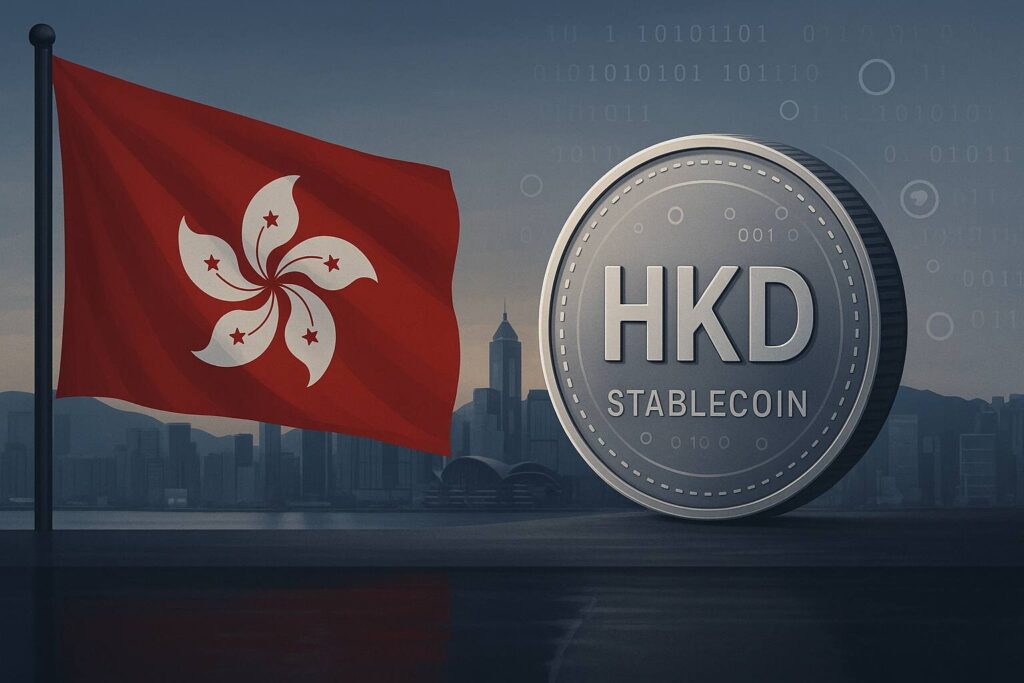
Featured image created by AI


Subscribe To Our Newsletter
Join our mailing list to receive the latest news and updates from our team.