
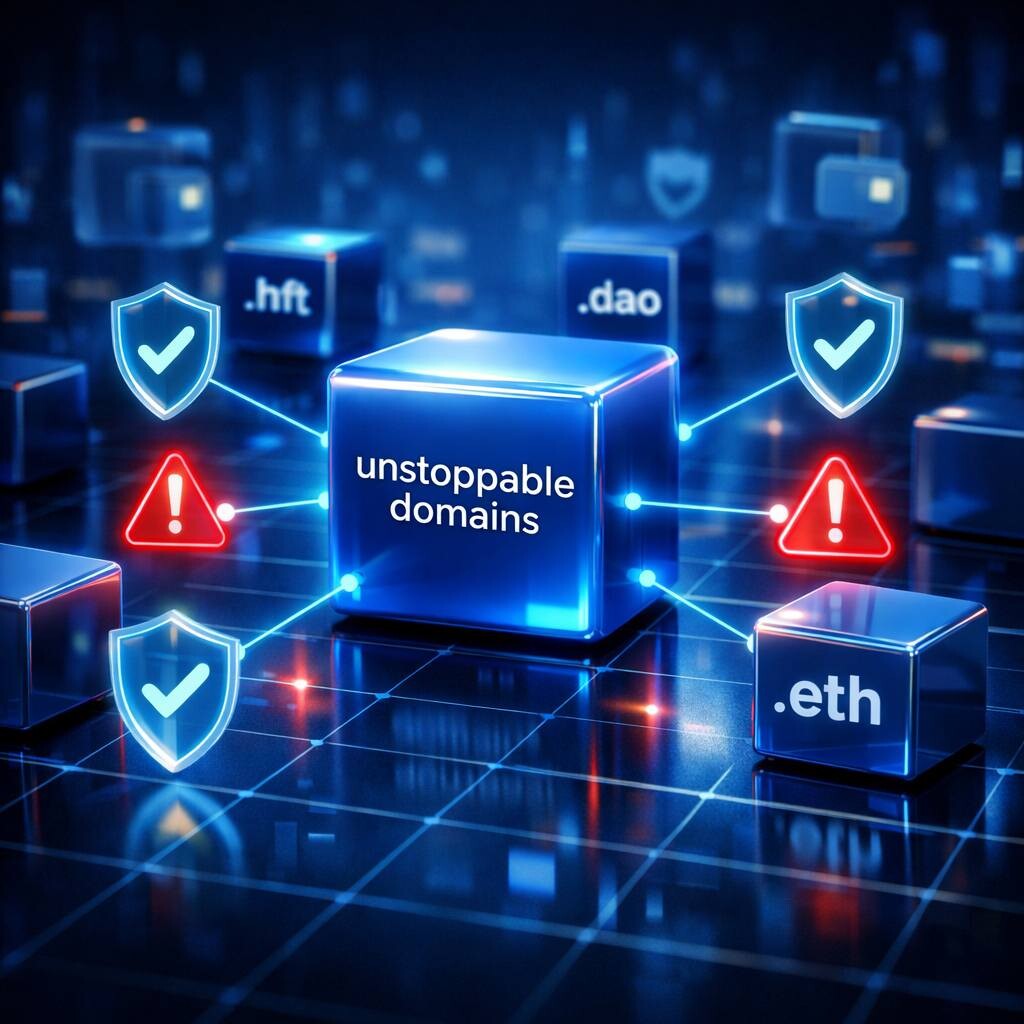
- Patent filing by Unstoppable domains outlines conditions for deactivating decentralized domains using signed wallet messages and safety scores
- Proposal includes thresholds for wallet reliability, timing of complaints, and possible input from a reviewing authority for domain takedowns
The debate over how to police misuse on blockchain-based naming systems has sharpened as more web3 naming projects confront a core limitation: decentralized domains are designed to resist removal, even when used for harmful purposes. Against that backdrop, Unstoppable domains has filed a U.S. patent application aimed at enabling domain deactivation in a decentralized environment, according to the source material. The move stands out because the company’s own branding leans on the idea that web3 names are difficult to censor, while the filing addresses methods to suspend or take down domains when conditions warrant.
The source describes the challenge as both a feature and a flaw of decentralized naming. Without a workable way to deactivate domains used “in bad ways,” the ecosystem risks undermining trust and usability. It also points to a practical pressure: web3 naming conventions appear to be shifting toward accepting takedowns and suspensions as necessary for a functional naming system, especially if end-user companies are expected to participate.
The patent filing and what it covers
The patent application referenced in the source is titled “Deactivation of decentralized domains.” It was filed in the United States by Unstoppable domains in February last year, and it was published last week, according to the provided text. The filing focuses on mechanisms that could trigger a takedown in a system built on smart contracts and wallets, where traditional centralized controls do not exist in the same way.
Rather than describing a single switch controlled by one party, the application lays out conditional triggers that could lead to deactivation. The system, as described, would evaluate signals such as signed messages from users, characteristics of those users or wallets, and assessments of a domain’s safety. In the source, the need for such tools is framed as part of a broader recognition within web3 naming that the ability to suspend or take down domains is “critical” to a functioning naming system.
The source also notes an irony: a company associated with censorship resistance is pursuing a patent that outlines methods for removing access to decentralized domains. The filing, as summarized, reflects an effort to reconcile the “can’t be censored” design goal with the realities of abuse prevention and operational stability.
How Unstoppable domains proposes to trigger deactivation
In the approach described, a takedown could be initiated when a sufficient number of users sign messages from their wallets indicating that a domain has problems or issues. Those signed messages could be sent to the decentralized domain for monitoring by the domain’s smart contract, based on the source. The patent concept also includes timing constraints. It contemplates a defined time period—examples listed include days, weeks, months, or years—during which the signed messages must be collected to support a takedown decision. The source gives a specific illustration: a few years between signed messages would likely be treated as too long to support a valid issue.
A further layer of conditions involves user or wallet trust signals. The described system could accept or weigh signed messages only if they come from wallets or users whose accounts meet a threshold for a safety or reliability score. The application’s scoring concept, as provided, may consider factors such as the reliability or safety scores of counterparties in transactions, the quantity of invalid transactions, and related indicators. Wallet age is also included as a possible filter or weighting factor. The source explains the reasoning directly: new wallet accounts may be created for malicious purposes, while an older account may suggest greater validity.
The filing also includes a path that relies on an outside review function. The preferences and conditions may be tied to a reviewing authority that examines a decentralized domain and then provides a signed message on behalf of a domain takedown organization. In addition to user-initiated complaint signals, the described model can incorporate a domain-focused safety or reliability score. In that case, the score could be compared against a threshold representing what counts as a safe or reliable domain. As described in the source, this domain score could be derived from factors such as the safety or reliability of parties accessing the domain, the domain’s content, the quantity of complaints, ratings, and invalid transactions.
One notable detail in the source is that deactivation could occur once a domain is classified as unsafe, without necessarily requiring others to mark it for deactivation. The system described allows for deactivation to be triggered by meeting “any quantity or combination” of the stated preferences or conditions. That means multiple routes could lead to the same endpoint, whether through aggregated user signals, trust-scored submissions, a reviewing authority’s signed message, or a domain safety score dropping below a threshold.
Conclusion
The source material portrays decentralized naming systems as confronting a hard operational fact: if domains cannot be suspended, misuse becomes difficult to address. In that context, Unstoppable domains’ U.S. patent application—filed in February last year and published last week—describes a framework for deactivating decentralized domains through signed wallet messages, time-based rules, trust and safety scoring, and review authority input. The filing reflects a broader shift described in the source, where web3 naming conventions increasingly treat takedowns and suspensions as necessary for a naming system that can support wider participation, including involvement from end-user companies.
Disclaimer
The information provided in this article is for informational purposes only and should not be considered financial advice. The article does not offer sufficient information to make investment decisions, nor does it constitute an offer, recommendation, or solicitation to buy or sell any financial instrument. The content is opinion of the author and does not reflect any view or suggestion or any kind of advise from CryptoNewsBytes.com. The author declares he does not hold any of the above mentioned tokens or received any incentive from any company.
Featured image created by AI


Subscribe To Our Newsletter
Join our mailing list to receive the latest news and updates from our team.