
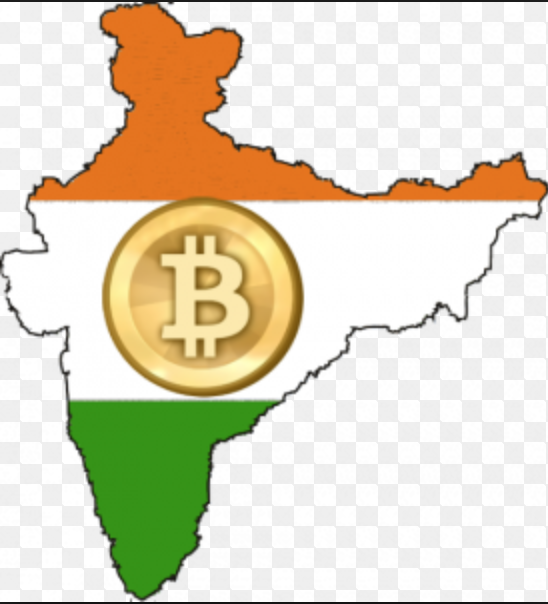
The Government of India (GoI) doesn’t regard cryptocurrencies as legal tenders, and senior GoI functionaries continue to discourage use of cryptocurrencies. The latest statement from Mr. Shaktikanta Das, former Secretary of Economic Affairs in GoI, a senior official who was part of policy making exercise regarding cryptocurrencies, conforms to that trend. Mr. Das believes that cryptocurrencies shouldn’t be allowed.
By December 2017, the Reserve Bank of India (RBI), which is India’s central bank, had issued three warnings to the Indian citizens, stating that cryptocurrencies aren’t legal tenders in India and anyone investing in them should do so at their own risk. In February 2018, as part of India’s annual budget exercise, finance minister of India Mr. Arun Jaitley had declared on the floor of the national parliament that the cryptocurrencies aren’t legal tenders as far GoI is concerned. Mr. Jaitley had also mentioned that the GoI will do everything possible to stop cryptocurrencies being used to fund illegal activities, and they won’t allow these digital currencies to be part of the payment system.
India’s tough stance against cryptocurrencies arises from the following broad reasons:
- The incumbent government is prosecuting a spectacular anti-corruption drive, with encouraging results so far. Corruption in India has left very deeply negative marks on the country’s socioeconomic conditions. Highly powerful people carried out their corrupt activities by fudging their identities, and siphoned off large sums of public money. At a time when the GoI is forcing every financial transaction to have proper audit trail using technology and regulations, allowing the relative anonymity offered by cryptocurrencies may potentially hurt the clean-up effort.
- India, long affected by terrorism, is fighting an all-out war against terrorism of various kinds, with encouraging results so far. History of terrorist activities in India clearly shows how illegal activities have funded terrorist groups. At a time when the GoI has been fairly successful in squeezing funding of terrorist groups, allowing cryptocurrencies and their relative anonymity will hamper the war against terrorism.
- Due to corruption by politically powerful people during the last several decades, Indian public sector unit (PSU) banks are saddled with non-performing assets (NPAs) in the form of huge loans which aren’t likely to ever repaid. At a time when the GoI is forcing the PSU banks to come clean on NPAs, and have just completed a massive recapitalization exercise of the PSU banks, bringing stability of the banking system is of very high priority. If Indian citizens invest heavily into cryptocurrencies, they may incur heavy losses due to speculative nature of crypto trading. The associated negative market sentiments might adversely impact the recovery of the formal banking sector.
- At a time when the GoI is clamping down on tax evasion, the concern that the crypto traders and crypto exchanges aren’t paying tax on their gains is viewed seriously.
In a democracy, public opinion matters. In January this year, South Korean government took a tough stand against cryptocurrencies, including mulling over proposals to ban them completely. However, large sections of South Korean population overwhelmingly support cryptocurrencies, and the public sentiment made the South Korean government rethink their stance, and it appears that currently they are looking at regulating cryptocurrencies. In India, there isn’t overwhelming popular support for cryptocurrencies. While a section of the population is enthusiastic about crypto trading, another section is concerned that the cryptocurrencies may harm GoI‘s anti-corruption drive, and impact their war against terrorism adversely. Also, heavy strain on environment caused by energy-intensive cryptocurrency mining has caught the attention of Indian population, who aren’t sure why something without tangible value should be allowed to consume so much of precious energy resources.
The GoI has already started to act on its declaration of not allowing cryptocurrencies to become part of the mainstream financial system in India. Earlier this month, it was reported in media that the State Bank of India (SBI), the largest PSU bank in India, isn’t allowing their debit and credit cards for trading in cryptocurrencies. A taxation guideline is reportedly in the offing, which will determine how the crypto traders in India will be taxed, i.e. whether they will declare their income from crypto trading as business income and pay tax accordingly, or whether crypto investment will fall under long term or short term capital investment categories.
Some observers and experts feel that if India closes herself to cryptocurrencies, then the country may lag behind with respect to this important innovation that’s driving decentralization of money. Some observers feel that India may not ban cryptocurrencies altogether, but will rather regulate it. For e.g. Zebi, which is working on securing India’s exponentially growing big data using blockchain, believes that the statement of Mr. Jaitley, finance minister of India, points to potential regulations coming soon, and not outright ban. The recent statement from Mr. Das doesn’t support such optimism, because Mr. Das clearly feels that cryptocurrency transactions are too decentralized, and there can’t be any effective regulation. If GoI veers to this point of view, cryptocurrencies may not have a bright future in India. Interestingly, India is enthusiastically embracing blockchain, the technology that underpins the cryptocurrencies. Not only GoI, but several state governments are also actively looking into how blockchain can improve service delivery to the citizens with its promise of decentralization and immutable records. For e.g. the government of the southern Indian state of Andhra Pradesh has already put their land records on blockchain.


Subscribe To Our Newsletter
Join our mailing list to receive the latest news and updates from our team.