
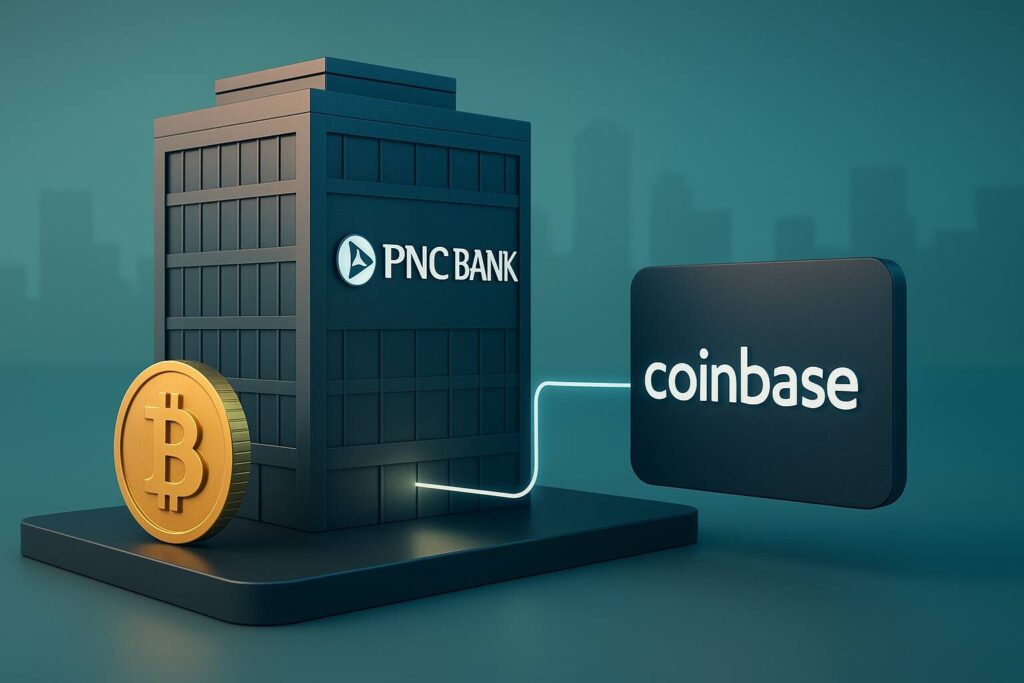
- PNC Bank lets private clients trade bitcoin through Coinbase
- Service runs inside PNC’s Private Bank Online platform
- Future phases may extend access to institutional clients
PNC Bank has moved from watching the digital asset market to building it into its core private banking offer, marking a notable shift in how a large United States institution handles bitcoin access for wealthy clients. In its latest step, PNC Bank now lets eligible clients inside its private banking division buy, sell and hold spot bitcoin directly through the Private Bank Online platform, instead of sending them to a separate crypto exchange environment. The move places bitcoin trading next to traditional deposits, investment portfolios and lending lines, helping PNC Bank frame digital assets as one more tool inside a broader, long-term wealth strategy rather than a side experiment on a separate app.
PNC Bank integrates bitcoin trading into its private banking platform
The new service embeds bitcoin functionality straight into the existing digital environment that private clients already use every day, which keeps the experience familiar and reduces friction for first-time crypto users. Eligible clients log into Private Bank Online, open Portfolio View and see a bitcoin position line appearing alongside equity, fixed income and cash holdings, with the same consolidated look and reporting tools they already know. From this view they can submit orders to buy, sell and continue to hold bitcoin, while the platform routes every trade through Coinbase’s Crypto-as-a-Service infrastructure for execution, custody and settlement under an institutional-grade framework. Behind the scenes, the architecture separates roles in a way that suits both the bank and the crypto provider. Coinbase runs the digital asset layer, including secure storage, trade matching, transaction monitoring and integration with blockchain networks, while PNC Bank manages client relationships, regulatory obligations and front-end access. Executives compare Coinbase’s role to that of a cloud provider such as Amazon Web Services: the infrastructure handles the complex technical load, and the bank uses that infrastructure to deliver a branded, regulated service that fits its existing standards. This design lets PNC Bank present bitcoin trading as just another capability inside its wealth platform, rather than pushing clients into a third-party app where the bank has less control over service quality and risk controls.
How the PNC Bank and Coinbase partnership structures bitcoin access
The current rollout builds on a strategic partnership that PNC and Coinbase announced earlier in the year, focused on bringing digital asset access into a traditional wealth management framework. In that agreement, Coinbase supplies the trading, custody and settlement engine, while PNC Bank keeps ownership of the client experience, advice and compliance oversight. The private bank can draw on Coinbase’s experience as a large global crypto custodian, yet still apply its own risk policies, onboarding standards and product governance around how the new service appears in client portfolios. This structure aims to make bitcoin feel like a normal part of a diversified balance sheet rather than a speculative add-on that lives in a separate, less supervised environment. Leadership messages from both sides underline this positioning. Chairman and chief executive William Demchak has framed the launch as a response to growing client interest in digital assets, emphasising that the bank must give those clients options that feel secure, well designed and consistent with the rest of their financial planning. From the crypto side, Coinbase Institutional co-chief executive Brett Tejpaul has described the partnership as an example of how a digital asset firm and a large wealth manager can share responsibilities: the infrastructure provider focuses on safe, scalable access to bitcoin and other assets, while PNC Bank anchors the client relationship, portfolio discussion and suitability checks inside the regulatory perimeter that high-net-worth investors expect.
What direct bitcoin trading means for wealth clients of the bank
The initial focus lies firmly on the private banking segment, which includes high- and ultra-high-net-worth individuals and family offices served through more than 100 offices across the United States. These clients already manage complex portfolios that mix public securities, private investments, real estate and cash reserves, so the ability to add a bitcoin position inside the same digital console offers operational convenience and tighter oversight. Funding for bitcoin purchases draws directly on existing PNC investment management accounts and checking balances, which removes the extra transfer steps that clients face when they move funds to an external crypto exchange. In practical terms, a client can review a quarterly portfolio report, decide to introduce a small bitcoin allocation, and place the order without leaving the PNC Bank online environment. The move also lands at a moment when other large institutions experiment with digital asset access in different formats. Bank of America, for example, recently permitted its wealth advisers to recommend allocations of roughly 1 to 4 percent into bitcoin and wider crypto exposure through regulated exchange-traded products, instead of direct spot trading on its own platform. That approach channels demand into listed funds while keeping the bank one step removed from the underlying coins, whereas the PNC route brings spot bitcoin inside the bank’s own systems, with Coinbase carrying the operational layer. Together, these developments suggest that mainstream firms now see a small digital asset allocation as a legitimate topic in wealth discussions, even if each institution chooses a different technical route to deliver that exposure.
Future phases of the digital asset strategy at the bank
Executives describe the current rollout as the first stage in a broader digital asset roadmap, not a one-off experiment. Before this launch, the private bank already allowed clients to gain indirect exposure to bitcoin and other cryptocurrencies through exchange-traded funds, which hold futures or spot positions on their behalf. Direct spot trading inside the Private Bank Online platform now adds another layer on top of that fund access, giving clients more control over position size and timing while maintaining wealth-management oversight. Over time, PNC Bank plans to evaluate how clients use the service, how it fits into advice conversations and how it interacts with other parts of the balance sheet, including liquidity lines and long-term planning vehicles. The bank has also indicated clear plans to widen the eligible client base once the initial phase settles. Future expansion steps may include opening the bitcoin trading channel to institutional clients such as nonprofit organisations, endowments and foundations that work with the bank for long-term asset management. These institutions often face strict governance requirements, so they will likely need clear policies for allocation size, risk limits and reporting before they use any new digital asset tools. By starting with a defined group of private bank clients and partnering with Coinbase for the infrastructure layer, PNC Bank can collect operational data, refine controls and then extend the same pattern to these additional segments in later phases, while keeping everything inside the same regulated framework that already governs its other wealth activities.
Conclusion
The launch of direct spot bitcoin trading for private banking clients places PNC Bank at the front of a new phase in how large regulated institutions handle digital asset demand. Instead of steering clients toward separate exchange accounts, the bank now offers bitcoin access inside the same Private Bank Online and Portfolio View experience that already holds their traditional assets, with Coinbase’s Crypto-as-a-Service platform supplying the technical backbone. That structure lets PNC Bank keep control of advice, suitability and compliance, while giving clients a straightforward way to treat bitcoin as one component of a diversified portfolio rather than an isolated speculation. As the service matures and more data emerges on how clients use it, the institution expects to extend similar capabilities to nonprofits, endowments and foundations that already trust it with long-term capital. Other major firms, such as Bank of America, follow different routes by emphasising regulated exchange-traded products, yet the direction of travel remains the same: digital assets now sit inside the core wealth conversation rather than at its edges. In that context, PNC Bank’s decision to bring bitcoin trading directly into its private banking platform becomes a practical signal that crypto exposure is moving from experiment to structured, monitored allocation within mainstream financial planning.
Disclaimer
The information provided in this article is for informational purposes only and should not be considered financial advice. The article does not offer sufficient information to make investment decisions, nor does it constitute an offer, recommendation, or solicitation to buy or sell any financial instrument. The content is opinion of the author and does not reflect any view or suggestion or any kind of advise from CryptoNewsBytes.com. The author declares he does not hold any of the above mentioned tokens or received any incentive from any company.
Featured image created by AI


Subscribe To Our Newsletter
Join our mailing list to receive the latest news and updates from our team.