
- Trump met with 11 GOP lawmakers in the Oval Office to discuss backing for the stablecoin bill and the GENIUS Act.
- The gathering aimed to secure votes and keep this week’s crypto agenda on track.
- Lawmakers raised questions about regulatory scope and market effects.
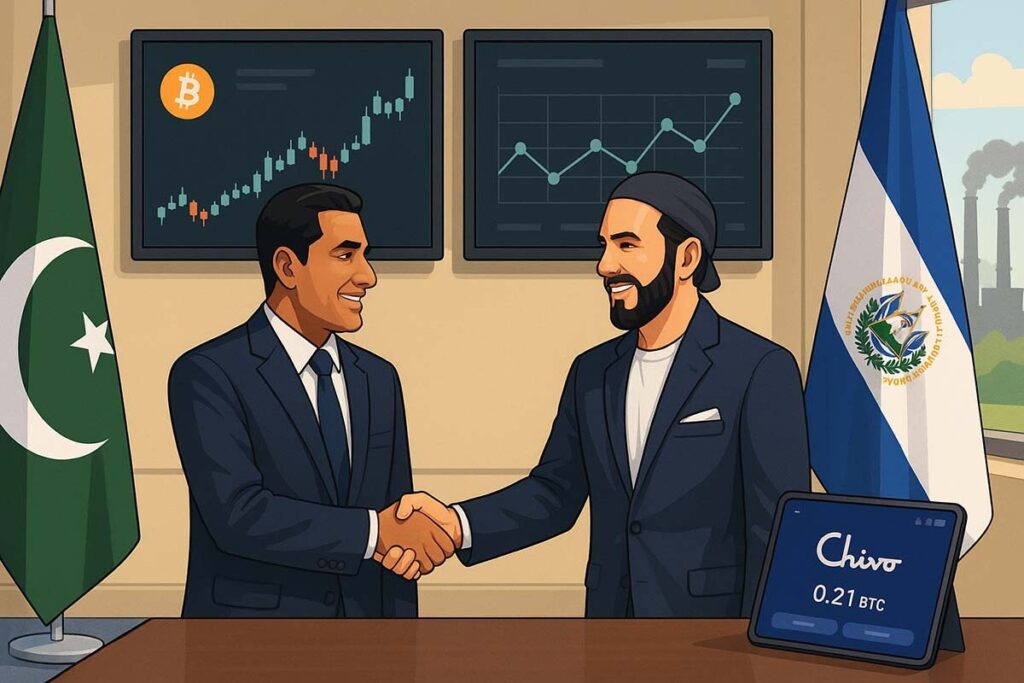
Pakistan and El Salvador have begun their first formal diplomatic relationship by focusing on cryptocurrency collaboration. In San Salvador, Bilal Bin Saqib, special assistant to the prime minister on crypto and blockchain, met with President Nayib Bukele to establish a partnership for sharing expertise in digital assets. This effort reflects changes in the country’s approach to its energy resources and El Salvador’s ongoing use of bitcoin.
Pakistan and El Salvador formalize crypto link
At the meeting, Pakistan and El Salvador agreed on steps to exchange knowledge about blockchain networks, mining operations, and regulatory frameworks. Officials will share data on consumer adoption rates, security protocols, and risk management. Pakistan will learn from El Salvador’s experience as the first country to adopt bitcoin as legal tender in 2021, while El Salvador will review Pakistan’s methods for using surplus electricity in mining.
Pakistan mining and regulatory steps
In May, Pakistan allocated 2,000 megawatts of surplus energy from coal‑fired power plants for bitcoin mining. That same month, the government formed the Digital Assets Authority (PDAA) to oversee exchanges, audit blockchain networks, and enforce anti‑money laundering rules. Estimates indicate that between 15 million and 20 million citizens hold cryptocurrency. Officials also consulted with Michael Saylor of MicroStrategy to assess how bitcoin might fit into sovereign reserves.
El Salvador’s bitcoin balance and legal tender role
Since recognizing bitcoin as legal tender in September 2021, El Salvador has acquired over 6,200 BTC, valued at about $745 million. Bitcoin is accepted alongside the U.S. dollar for tax payments and public services, and the Chivo wallet system supports daily transactions. The government’s publicly disclosed bitcoin holdings serve as a case study in integrating digital currency into national budgets and remittance systems.
IMF conditions and financial context
Last year, Pakistan secured a $7 billion loan from the International Monetary Fund, with fiscal reforms scheduled through 2027. The IMF did not approve a power subsidy for bitcoin mining, citing fiscal concerns. Despite this, Pakistan proceeded with its mining plan, aiming to use stranded energy and potential bitcoin reserves to ease foreign‑exchange pressure. El Salvador also faced IMF caution but continued its bitcoin purchases under similar conditions.
Conclusion
The partnership between Pakistan and El Salvador marks the start of a knowledge‑sharing effort on cryptocurrency regulation, mining, and reserve management. Pakistan’s use of 2,000 megawatts for mining and the creation of a digital assets authority show its evolving policy. El Salvador’s holding of 6,200 BTC and its use of bitcoin in public finance offer practical insights. Together, the two countries aim to explore ways to balance energy resources, financial oversight, and digital currency.
Disclaimer
The information provided in this article is for informational purposes only and should not be considered financial advice. The article does not offer sufficient information to make investment decisions, nor does it constitute an offer, recommendation, or solicitation to buy or sell any financial instrument. The content is opinion of the author and does not reflect any view or suggestion or any kind of advise from CryptoNewsBytes.com. The author declares he does not hold any of the above mentioned tokens or received any incentive from any company.
Featured image created by AI


Subscribe To Our Newsletter
Join our mailing list to receive the latest news and updates from our team.