

- Pakistan studies a rupee-backed stablecoin and CBDC pilot.
- Experts estimate a 20–25B dollar crypto-related opportunity.
- New virtual asset licensing framework invites global firms.
Pakistan moves into a defined phase of digital finance as policymakers, regulators and banks align around a rupee-backed stablecoin, a central bank digital currency and a clear framework for virtual asset providers. The shift follows rising on-chain activity, billions already held in crypto instruments and concern that further delay could erase an estimated 20 to 25 billion dollars in economic gains for Pakistan and its residents.
Rupee-backed stablecoin roadmap for Pakistan’s domestic market
At the Sustainable Development Policy Institute conference, Pakistan Banks Association President Zafar Masud outlined a direct opportunity: design a rupee-linked stablecoin that sits under domestic supervision and responds to how residents already use digital assets across Pakistan. He highlighted estimates that citizens hold between 20 and 30 billion dollars in asset-backed crypto products and warned that unclear rules keep this volume outside formal records instead of channelling it through monitored institutions. A regulated token backed by high-quality liquid reserves in local banks would move a portion of this activity onshore, allow transparent audits and reduce reliance on unregulated platforms that serve users without meaningful oversight.
The proposed model links each unit of the token to verifiable reserves, imposes daily reporting, sets redemption rules and limits issuers to licensed entities, so users can check backing rather than trust unverified promises. Supervisors gain better oversight of flows without banning existing demand, while banks and payment providers inside Pakistan integrate stablecoin rails into wallets and merchant tools that follow know-your-customer and anti–money laundering standards. With this structure, cross-border transfers, online commerce and domestic settlements can clear faster and with lower friction, while monetary authorities keep final control over issuance terms and monitor how digital value moves through the national system.
In parallel, the State Bank’s Payments Department is building a central bank digital currency that complements, rather than replaces, private stablecoins. Officials confirmed that a working prototype exists with support from the World Bank and the International Monetary Fund, with a pilot planned before any wider deployment across Pakistan’s payment landscape. A sovereign digital unit would settle in central bank money, support both retail and wholesale use cases, and give regulators accurate data on payment patterns, helping them calibrate risk rules and respond to misuse without cutting off legitimate transactions.
ZAR stablecoin expansion and financial inclusion in Pakistan
ZAR, a fintech project focused on accessible stablecoin infrastructure, recently secured 12.9 million dollars in funding led by Andreessen Horowitz with backing from Dragonfly Capital, VanEck Ventures, Coinbase Ventures and Endeavor Catalyst. The company aims to distribute dollar-based stablecoins to users in emerging economies who need simple, low-fee tools for savings and payments that function reliably in local conditions. Its plans include deep outreach in Pakistan, where a population of around 240 million includes more than 100 million unbanked adults who rely heavily on cash, informal channels and costly remittance services that limit their financial flexibility.

By linking trusted custodians, compliant wallets and straightforward on-ramps, ZAR seeks to reduce friction for workers receiving income from abroad, freelancers billing foreign clients and households managing exposure to unstable pricing. If authorities in Pakistan align licensing requirements and consumer safeguards, this infrastructure can sit alongside a future rupee-backed stablecoin and CBDC rather than conflict with them. Clear standards on disclosures, reserve composition, redemption rights and dispute handling would also guide how foreign-denominated stablecoins interact with local money and help shield users from failures or misleading marketing that undermines confidence.
The interaction between domestic initiatives and private stablecoin providers pushes regulators to move from abstract debates to applied policy. Once funded actors roll out real services, supervisors in Pakistan must define limits on leverage, reporting formats, cybersecurity benchmarks and wallet interoperability. Consistent treatment for local and foreign providers can prevent regulatory arbitrage, encourage responsible innovation and keep records of cross-border flows that now bypass official data and weaken visibility on systemic risk.
Pakistan Virtual Assets Regulatory Authority and exchange licensing
The Virtual Assets Ordinance 2025 created the Pakistan Virtual Assets Regulatory Authority to license, regulate and supervise virtual asset service providers under one umbrella. This body invites leading exchanges, custodians and related firms to submit Expressions of Interest if they wish to operate in the jurisdiction, signalling a preference for controlled participation instead of unregulated activity that exposes users in Pakistan to opaque practices. Applicants face conditions on corporate governance, segregation of client funds, technical security and transparent listing criteria, and they must implement robust know-your-customer and suspicious activity reporting processes.
Through PVARA, authorities coordinate with the central bank, securities regulator and tax bodies to design a coherent approach that covers spot trading, custody, tokenized assets and payment use cases. The framework aims to bring local users away from informal peer-to-peer markets into platforms that disclose fees and risks, maintain resilience against hacks and follow clear exit procedures if operations shut down. Regulated access also positions banks and fintechs in Pakistan to integrate compliant digital asset services into existing products, such as remittance corridors, merchant acquiring and payroll solutions, rather than leaving demand to offshore entities alone.
Early licensing rounds provide a testing ground for enforcement routines and data collection. Supervisors can adjust capital rules, reserve thresholds and technical standards based on observed performance, while exchanges gain clarity on what is permitted in Pakistan’s jurisdiction. Over time, this interaction shapes how quickly more complex products, including tokenized government securities or on-chain money markets, move into the regulated perimeter and help deepen domestic capital markets.
Economic impact, remittances and the race against regulatory delay in Pakistan
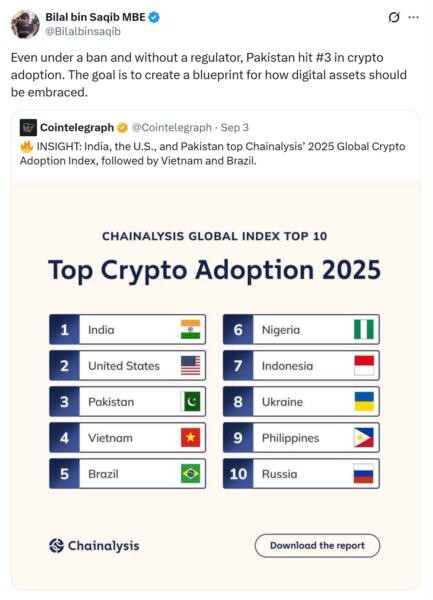
Analysts at the SDPI conference warned that slow action could cost between 20 and 25 billion dollars in lost economic benefits, including unrealized tax revenue, unrecorded savings, missed fintech investment and continued overpayment on cross-border transfers. The estimate reflects the size of holdings already linked to crypto instruments and the growth path seen in markets that adopted clear rules earlier, while emphasising that users in Pakistan already operate at scale despite unclear status. With recent placement near the top of global crypto adoption rankings, the country risks seeing activity deepen offshore if it does not provide reliable domestic options backed by enforceable standards.
Remittances form one of the strongest practical cases for reform. Millions of overseas workers send funds home every month and face high charges, settlement delays and opaque exchange spreads that reduce the value families actually receive. A well-designed rupee-backed stablecoin framework, combined with a CBDC and licensed stablecoin distributors, can shorten settlement chains, improve transparency on conversion rates and enable smaller, more frequent transfers without excessive cost for households in Pakistan that depend on foreign income.
The policy course now requires timely but careful execution. Authorities need to finalise reserve rules, wallet security standards, consumer disclosure requirements and resolution processes for technical failures or insolvency in platforms that serve residents. They must coordinate across agencies to avoid overlapping guidance and ensure that local banks, payment providers and fintechs can integrate digital asset services without facing conflicting instructions. By matching regulatory clarity with realistic technical timelines, decision makers in Pakistan can move existing demand into supervised channels instead of forcing users toward opaque alternatives.
Conclusion
The country stands at a defined turning point in its approach to digital assets, with concrete proposals for a rupee-backed stablecoin, an advanced CBDC prototype, a specialized regulator for virtual asset providers and growing participation from funded stablecoin projects. Effective coordination, transparent rules and disciplined implementation can capture existing crypto activity inside the formal system, reduce frictions in remittances and payments, and support gradual financial inclusion, while keeping oversight and monetary integrity at the centre of the evolving framework that Pakistan now starts to build.
Disclaimer
The information provided in this article is for informational purposes only and should not be considered financial advice. The article does not offer sufficient information to make investment decisions, nor does it constitute an offer, recommendation, or solicitation to buy or sell any financial instrument. The content is opinion of the author and does not reflect any view or suggestion or any kind of advise from CryptoNewsBytes.com. The author declares he does not hold any of the above mentioned tokens or received any incentive from any company.
Featured image created by AI


Subscribe To Our Newsletter
Join our mailing list to receive the latest news and updates from our team.