
Unpacking Coinbase’s Response to the SEC’s Wells Notice: Staying Compliant Amid Regulatory Confusion
It’s been two years since the SEC thoroughly reviewed Coinbase’s business and approved its public listing. The company’s S1 filing clearly outlined their asset listing process, and with a rigorous asset review, Coinbase has rejected more than 90% of submitted assets. Despite this, the SEC has recently issued a Wells notice to Coinbase, targeting an unspecified portion of their listed digital assets, their staking service (Coinbase Earn), Coinbase Prime, and Coinbase Wallet. The Wells notice suggests potential securities law violations and could lead to enforcement action, but it’s not a formal charge or lawsuit.
What’s important for users to know is that Coinbase products and services remain unaffected by this news. They continue to operate as usual, with no changes required to their current offerings.
The Wells notice itself provides limited information for Coinbase to address, with the SEC only identifying potential securities law violations without further details. Coinbase had asked the SEC to clarify which assets on their platform may be considered securities, but the SEC declined to do so. This comes after months of discussions between Coinbase and the SEC about registration, with the SEC failing to respond to Coinbase’s proposals.
Despite the seriousness of the situation, Coinbase is confident in their business operations and is willing to seek clarity through legal means if necessary. They believe that rulemaking and legislation should define the industry’s legal framework rather than enforcement actions.
Coinbase has tried to register with the SEC but has faced roadblocks. They have developed two registration models and sought feedback from the SEC, but have received none. The SEC’s lack of guidance and inconsistent positions are causing confusion in the crypto industry, and courts are starting to question the SEC’s approach. The recent Voyager case, for example, saw Federal Bankruptcy Judge Michael Wiles ruling against the SEC and highlighting the regulators’ disagreement over whether cryptocurrencies should be considered commodities or securities.
The regulatory environment for cryptocurrencies in the U.S. needs improvement, and enforcement actions against companies like Coinbase that are committed to compliance seem counterproductive. Coinbase maintains that they do not list securities or offer products considered securities. They have a strict review process for each digital asset and have rejected hundreds of assets that do not meet their standards.
Coinbase remains dedicated to its mission of creating more economic freedom and opportunity around the world. They continue to call for clear rules and a straightforward registration process, emphasizing the need for comprehensive crypto regulation in the U.S. that understands the technology. In the meantime, Coinbase will continue building trusted products and services, striving to revolutionize the financial system.
You may be also interested to read more about the relevant topics below
- Currency Financial System doesn’t work for everyone – Coinbase CEO
- Coinbase launches “Crypto435” campaign to grow crypto advocacy and to make your voice heard
- Coinbase Sets Ambitious Goal of One Billion Users, Shifts Focus to Regulation
- Ark Invest Pumps up their Coinbase Stocks by $16 million, Degens Love It
- Coinbase CEO Wants the Crypto Industry Regulated to Protect Investors
- Coinbase Backs Grayscale In Its Legal Battle With the SEC.
- Binance Braces for Potential Fines from US Regulators
- SEC Cracks Down on Binance.US for Operating as Unregistered Securities Exchange: Will Cryptocurrency Survive Regulatory Onslaught?
- Federal Reserve Chairman Jerome Powell’s Bold Endorsement: Proper Regulation Could Unlock Stablecoins’ – Potential in Financial Sector
- Silvergate – Cryptocurrency-focused Bank is in a Pickle
- Hong Kong plans to make crypto purchase and trading legal for all of its citizens
- Crypto Industry is Under Siege by Regulators
- Empowering Crypto Investors: Binance Joins Forces with Law Enforcement in Powerful Anti-Scam Campaign
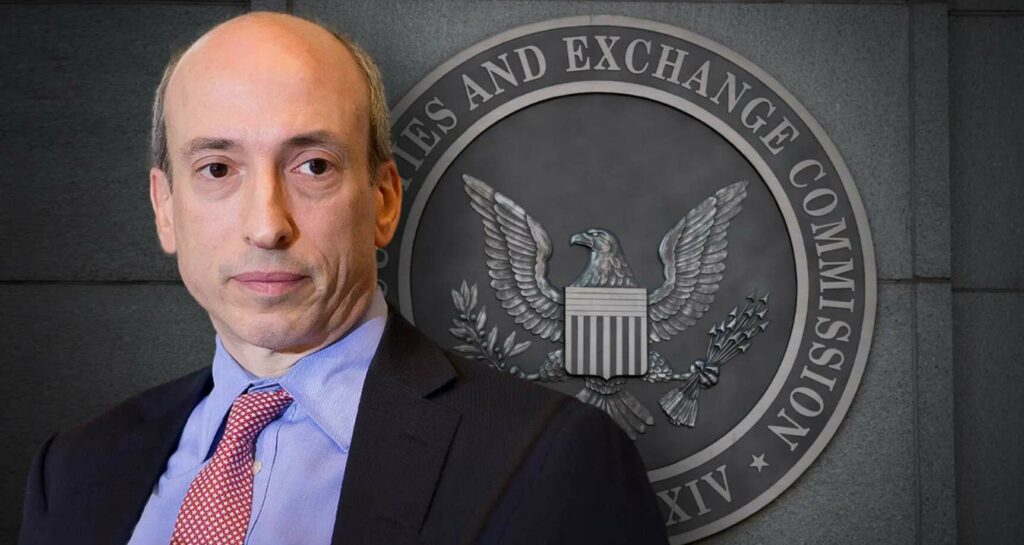
SOURCE IMAGE :Gary Gensler, chair of the U.S. Securities and Exchange Commission (Andrew Harrer/Bloomberg / Getty Images)


Subscribe To Our Newsletter
Join our mailing list to receive the latest news and updates from our team.