
- Sui combines DAG and blockchain to process transactions quickly and securely.
- DAGs use interconnected nodes to capture complex transactional relationships.
- Sui’s hybrid approach allows for fast confirmations and organized checkpoints for data integrity.
In the field of distributed ledger technology, Sui stands out because it brings together the features of a directed acyclic graph (DAG) and a blockchain. This combination allows Sui to process transactions very quickly while also keeping the data secure. This article will explore the details of DAG, its function within the Sui network, and how this method differentiates Sui from conventional blockchains.
What is a DAG?
A DAG represents a data structure that deviates from the linear chain structure commonly found in traditional blockchains. Unlike blockchains, which consist of sequential blocks, a DAG resembles a web of interconnected nodes. To understand DAGs better, let’s break down the acronym.
Graph Database and Relationships
In the context of distributed ledger technology, a graph database organizes data using interconnected structures that resemble a web of relationships. These relationships capture the connections between individual data entries or transactions, forming a network based on causal relationships. By adopting this approach, DAGs can effectively capture complex transactional relationships and dependencies within the network.
Acyclic: Eliminating Loops and Cycles
The term “acyclic” signifies the absence of loops or cycles within the ledger or database. In other words, there is no way to create a path that leads to a situation where an earlier transaction relies on a later transaction. This property ensures that information flows in a one-way direction, maintaining data integrity and facilitating efficient processing of transactions.
Directed: Unambiguous Data Flow

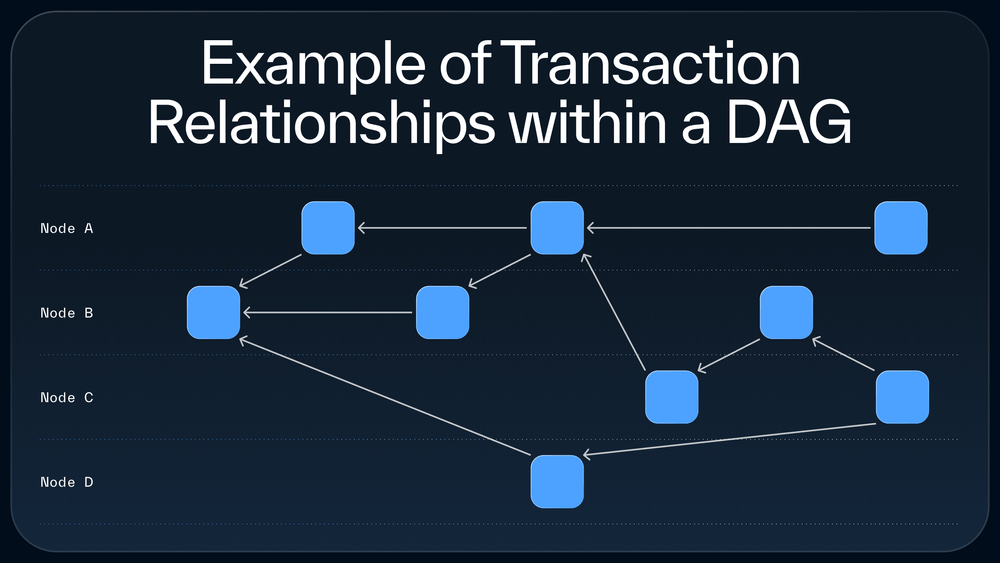
Being a directed graph, each relationship within a DAG has a defined direction that indicates the flow of information. This directed nature allows for clear and unambiguous data flow, which is crucial for maintaining integrity and facilitating efficient processing of transactions.
In summary, a DAG can be described as a database structured as a network of interconnected transactions, linked together based on their dependencies, forming a graph that expands with each new transaction.
Blockchains and DAGs
To fully appreciate the benefits of DAGs, it is essential to understand their key differences from traditional blockchains.
Batching and Consensus in Blockchains
In a blockchain, a group of transactions is typically batched into a block, which then goes through a consensus process as a single entity. These blocks are linked together in a linear fashion, necessitating step-by-step changes in the network’s state. Consensus is achieved when a supermajority of validators agree on the validity of a block, ensuring that all transactions within that block are valid.
Decentralized Consensus in DAGs
In contrast, transactions within a DAG can achieve consensus independently, bypassing the process of grouping transactions into blocks. Instead of validators assessing a single group of transactions simultaneously, individual transactions are propagated throughout the network, gaining signatures from validators who possess the necessary knowledge to validate the transaction. Once a transaction obtains signatures from a supermajority of validators, it achieves consensus and is considered finalized.
Sui’s Innovative Approach
Sui takes advantage of the benefits offered by DAGs for transaction propagation and consensus, while also incorporating a separate process to organize transactions into checkpoints, similar to blocks in a blockchain. This hybrid approach combines the best features of both DAGs and blockchains, resulting in unparalleled speed, flexibility, and data integrity.
Asynchronous and Concurrent Confirmations
By utilizing a DAG for transaction propagation and consensus, Sui ensures that transactions can be confirmed asynchronously and concurrently, offering a more scalable and efficient system compared to traditional blockchains. This means that transactions can be processed and verified in parallel, leading to significantly higher transactions-per-second performance.
Finalized Checkpoints for Data Integrity
In Sui’s blockchain structure, transactions grouped into checkpoints are already finalized. This contrasts with typical blockchains, where transactions are grouped into blocks before consensus occurs. The inclusion of finalized transactions in checkpoints streamlines the transaction validation and storage process, enhancing overall efficiency.
Maintaining Historical Data Order
To maintain the integrity and order of historical information, Sui’s separate process organizes checkpoints in a linear fashion, similar to traditional blockchains. This structured approach provides a familiar framework for storing and accessing historical data.
Conclusion
Sui’s innovative integration of DAGs and blockchains has revolutionized the landscape of distributed ledger technology. By utilizing DAGs for transaction propagation and consensus, Sui achieves remarkable speed and scalability. Simultaneously, Sui’s separate process of organizing finalized transactions into checkpoints ensures data integrity and historical order. This hybrid architecture empowers Sui to serve as a robust and adaptable platform for decentralized applications and smart contracts, setting new standards in the realm of blockchain technology.
Disclaimer
The information provided in this article is for informational purposes only and should not be considered financial advice. The article does not offer sufficient information to make investment decisions, nor does it constitute an offer, recommendation, or solicitation to buy or sell any financial instrument. The content is opinion of the author and does not reflect any view or suggestion or any kind of advise from CryptoNewsBytes.com. The author declares he does not hold any of the above mentioned tokens or received any incentive from any company.
image source


Subscribe To Our Newsletter
Join our mailing list to receive the latest news and updates from our team.