
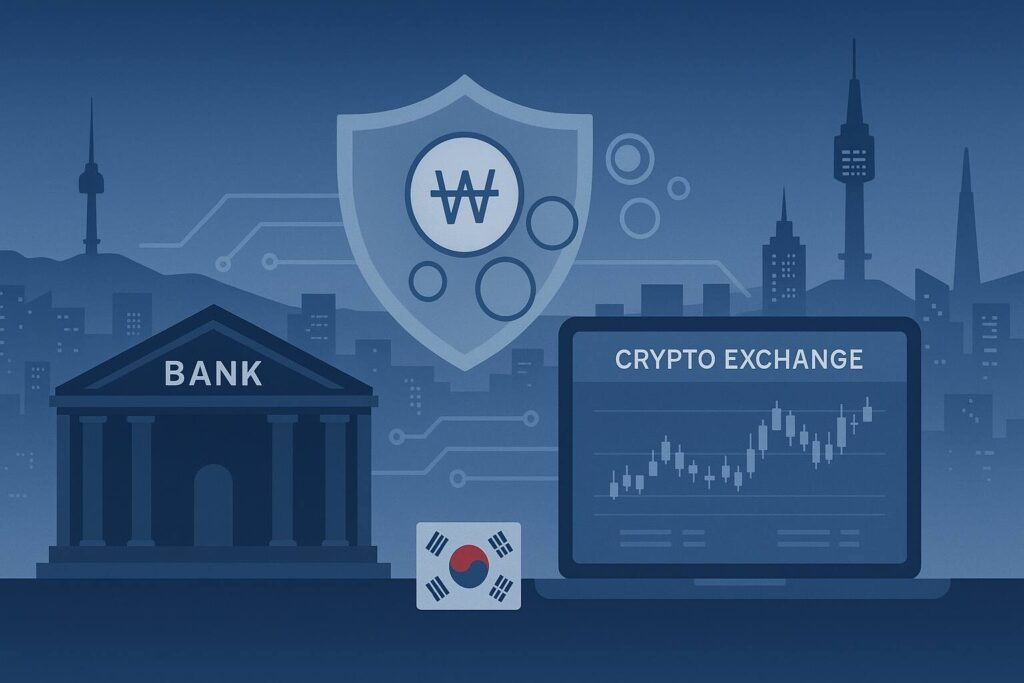
- South Korea plans bank style compensation duties for crypto exchanges, requiring them to cover user losses from hacks and system failures.
- The Upbit incident, where over 104 billion Solana based tokens left the exchange, highlights weak reporting and security practices.
- Lawmakers in South Korea also push for a stablecoin bill with clear rules on reserves, redemption and oversight deadlines.
South Korea is moving to treat digital asset platforms much more like traditional banks after a major security incident at the country’s largest cryptocurrency exchange, placing consumer protection at the center of a new regulatory push. In response to the recent Upbit hack and a wider pattern of technical failures, policymakers in South Korea now plan a bank-style, no-fault compensation system for users, alongside tougher security rules and a dedicated stablecoin bill that could reshape the local market over the next year.
South Korea weighs bank-level liability for crypto exchanges
Financial regulators in South Korea want crypto exchanges to carry bank-level responsibility when customers lose funds because of hacks or system failures, even if the platforms did not act negligently. The Financial Services Commission is reviewing amendments that would force virtual asset service providers to compensate users for losses caused by security breaches or breakdowns, using a no-fault standard copied from the Electronic Financial Transactions Act that now covers banks and electronic payment firms. The change would mark a clear break from the current approach, where authorities can fine exchanges but often cannot directly order full compensation when a hack occurs. Under the planned model, exchanges in South Korea would need to treat user funds more like deposits in a regulated bank, with clear legal duties to restore balances after an incident and fewer gaps that allow platforms to shift losses onto customers. For large venues that handle billions of won in daily trading, this step would likely require higher capital buffers, more robust insurance coverage and constant investment in cybersecurity to satisfy supervisors and avoid severe penalties if systems fail.
Upbit hack exposes structural gaps in South Korea’s digital asset oversight
The immediate trigger for the new liability debate was the late November breach at Upbit, the dominant exchange in South Korea and a key player in the broader Asian market. On November 27, attackers moved more than 104 billion Solana-based tokens, worth about 44.5 billion won or roughly 30.1 million dollars, from Upbit’s internal wallets to external addresses in less than an hour, forcing the platform to halt transfers and scramble to protect remaining assets. Investigators later linked the incident to a broader pattern of sophisticated attacks that often target infrastructure linked to South Korea, with local media citing officials who suspect a North Korean group associated with the Lazarus cluster, which has a long record of high value crypto heists. Upbit said it detected unusual activity shortly after 5 a.m., yet the exchange did not report the breach to the Financial Supervisory Service until close to 11 a.m., a delay that prompted sharp criticism in parliament and claims that management waited until Dunamu had completed a merger transaction with Naver Financial before disclosing the loss. The timing dispute now sits at the center of political hearings that ask whether supervisors gave too much room to large platforms and whether future law should include strict reporting deadlines for any material incident in South Korea’s crypto sector.
System failures and revenue-based fines reshape risk calculations in South Korea
The Upbit hack came on top of a long list of technical problems that already weakened trust in domestic trading venues. Data submitted by the Financial Supervisory Service shows that the five major exchanges in South Korea – Upbit, Bithumb, Coinone, Korbit and Gopax – recorded twenty significant system failures from 2023 through late 2025, disrupting service for more than nine hundred users and producing over five billion won in combined losses. Upbit alone reported six of those outages, and about six hundred of its customers suffered direct financial damage when orders could not be executed or balances showed incorrect values. Lawmakers now want these exchanges to face fines tied to their annual revenue, bringing the penalty structure into line with rules used for banks and large payment firms. The draft revision under discussion would allow authorities to impose sanctions of up to three percent of an exchange’s yearly turnover when a hacking incident or major security failure occurs, a sharp increase from the current regime, where penalties for crypto platforms are capped near 3.4 million dollars regardless of size. For leading exchanges in South Korea, a three percent hit could easily exceed past enforcement costs, which gives management a powerful reason to invest in resilient infrastructure, independent audits and real-time incident detection instead of treating fines as a manageable business expense.
Stablecoin regulation becomes the next test of South Korea’s policy resolve
While liability rules move forward, elected officials in South Korea also press regulators to deliver a dedicated stablecoin framework on a tight deadline. Lawmakers from the ruling party have demanded that financial authorities submit a draft stablecoin bill by December 10 and warned that they will introduce their own proposal if the government misses that date, after months of slow progress and repeated delays. The goal is to bring the draft to formal debate during an extraordinary National Assembly session planned for January 2026, so that rules for asset backing, disclosure, redemption and issuer licensing do not lag behind market growth. A stablecoin law would complement existing anti–money laundering measures that already cover many crypto transactions in South Korea and would directly address concerns about large private tokens used for payments and remittances. Officials want clearer standards for reserves, stress testing and redemption rights, particularly for won-pegged products that may one day connect digital asset platforms, local banks and foreign payment firms. In this environment, issuers that plan to serve users in South Korea will need to prove that their coins remain fully backed through market stress, while exchanges that list these tokens must show that they understand the new obligations that come with bank-like products offered to everyday customers.
Conclusion
The regulatory response now taking shape in South Korea signals a shift from light oversight toward a framework that treats crypto exchanges as critical financial infrastructure rather than experimental trading venues. No-fault compensation, revenue-based fines and strict reporting rules, combined with a dedicated stablecoin bill, aim to close gaps revealed by the Upbit hack and a long series of system failures. If policymakers in South Korea manage to turn these proposals into clear, enforceable law, the country will set a reference point for other jurisdictions that want to protect users without shutting down innovation, and global platforms that operate in the Korean market will have to adjust their risk models and technology roadmaps to match this new standard.
Disclaimer
The information provided in this article is for informational purposes only and should not be considered financial advice. The article does not offer sufficient information to make investment decisions, nor does it constitute an offer, recommendation, or solicitation to buy or sell any financial instrument. The content is opinion of the author and does not reflect any view or suggestion or any kind of advise from CryptoNewsBytes.com. The author declares he does not hold any of the above mentioned tokens or received any incentive from any company.
Featured image created by AI


Subscribe To Our Newsletter
Join our mailing list to receive the latest news and updates from our team.