
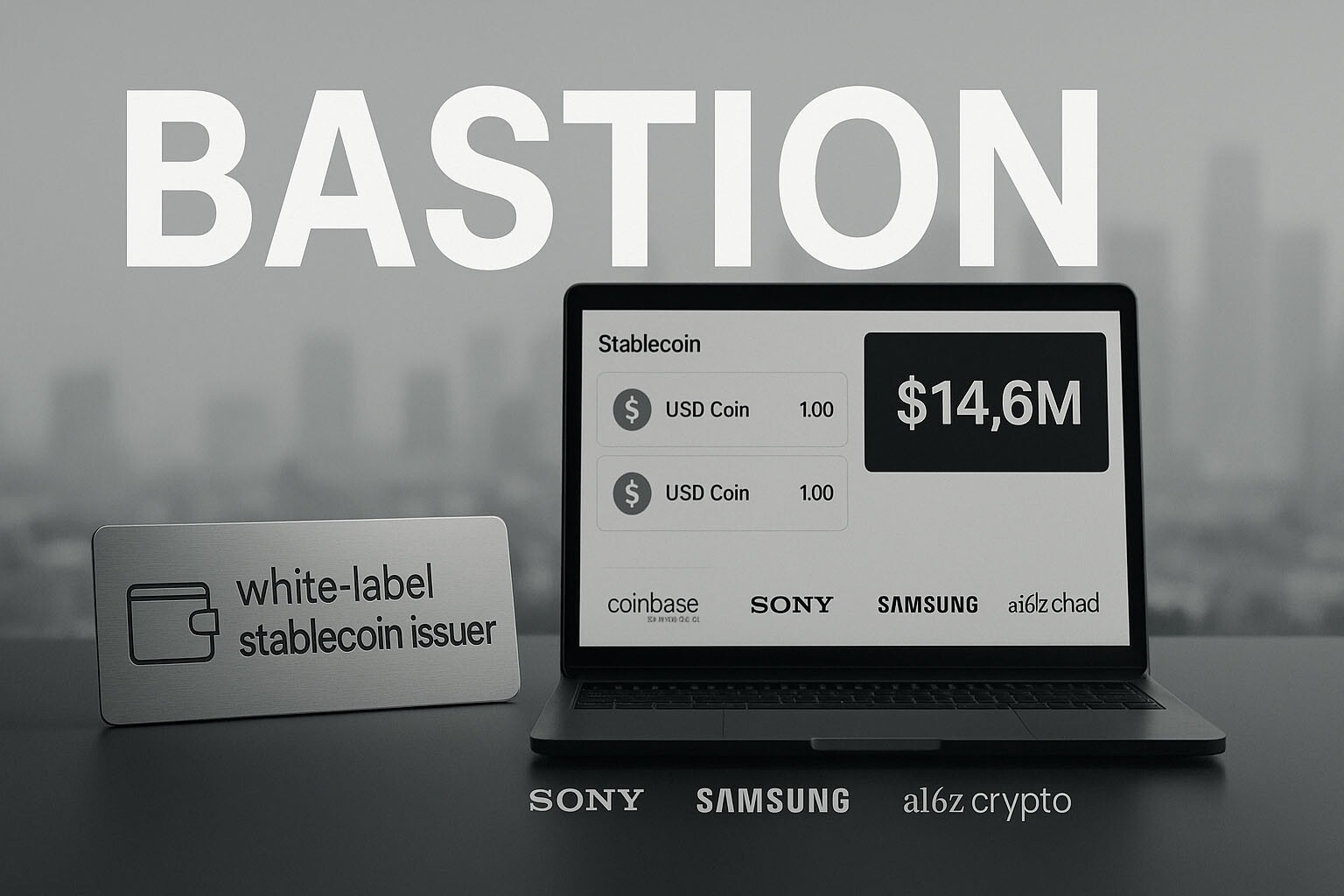
- Coinbase Ventures leads $14.6M for Bastion; valuation undisclosed; Sony, Samsung, a16z crypto, Hashed joined.
- Bastion offers white-label stablecoin issuance, wallets, and cash conversion in 70 countries, including the U.S.
- Founders hail from a16z crypto and Meta’s Libra; one cofounder has since left.
Bastion raised $14.6 million in fresh funding led by Coinbase Ventures, pushing its white-label stablecoin model further into the mainstream as payments and crypto firms seek simpler token launches and faster settlement. The company builds issuance, compliance, and wallet rails so brands can roll out their own dollar-pegged tokens without hiring specialists or securing licenses from scratch. The round follows a year when stablecoins moved past trading desks, with Stripe closing a $1.1 billion acquisition of Bridge in February, Circle going public in June, and new U.S. stablecoin legislation signed in July by President Donald Trump. Bastion’s team counts 27 employees and traces its roots to Andreessen Horowitz’s crypto group and Meta’s Libra project, signaling experience with both venture and big-tech standards.
Bastion funding details and investors
The new $14.6 million round put Bastion in front of several strategic backers that sit close to hardware, software, and exchange infrastructure. Coinbase Ventures led the deal, while the venture arms of Sony and Samsung joined alongside the crypto arm of Andreessen Horowitz and the crypto VC Hashed. CEO Nassim Eddequiouaq did not disclose the valuation, keeping focus on delivery rather than optics. He previously raised a $25 million seed round in 2023, a period when the firm shaped its core stack and early compliance playbooks. Co-founder Riyaz Faizullabhoy has since left the company, but the founding DNA remains tied to earlier roles at a16z crypto and the Libra effort at Meta. Strategic investors describe a steady cadence of corporates announcing branded tokens week after week, and they position Bastion as connective tissue that helps launch, manage, and operate those stablecoins with fewer moving parts. The claim is simple: cut complexity, reduce build time, and meet basic regulatory expectations from day one.
Stablecoin market context and recent deals
Stablecoins long served traders who parked gains from volatile assets like Bitcoin and Ethereum in tokens designed to hold steady. Over the last year, the use cases widened as payment flows, remittances, and on-chain treasury movements looked for lower fees and faster settlement. Stripe’s $1.1 billion purchase of Bridge in February marked a gateway moment for mainstream fintech. Circle’s public listing in June gave the sector a benchmark on capitalization, disclosure, and quarterly discipline. July brought fresh U.S. law when President Donald Trump signed stablecoin legislation, giving issuers and distributors a framework that points to clearer supervision. These milestones set a stage where a white-label operator can matter. Corporates want branded tokens that plug into wallets, compliance checks, and cash-out paths without rewiring their own stacks. Bastion speaks to that demand with a service model that keeps the issuer brand visible while the plumbing remains abstracted.
Bastion product stack and global reach
Bastion differentiates with a suite that covers issuance, wallet software, and conversion rails that move stablecoins into cash across 70 countries, including the United States. That footprint reduces friction for partners that need off-ramps for customers, suppliers, or affiliates in multiple markets. The company says its tools reflect lessons from building at Libra, where scale, controls, and latency all mattered. Partners avoid hiring large internal teams or stitching together separate vendors for KYC, custody, and fiat settlement. Instead they run their own brand while Bastion handles the underlying orchestration. Management cites ongoing competition with established players such as Paxos and newer entrants like Agora, yet argues that an integrated toolkit helps close deals and shorten pilots. Bastion has not named corporations using its tech, a common stance in early enterprise cycles where pilots run under NDA. Even so, the team signals confidence about the next eight to nine months as features harden and more regions switch on.
Competition, regulation, and outlook
Competition centers on breadth of services, regulatory posture, and the ability to deliver wallet experiences that feel familiar to non-crypto users. Paxos brings a long record with regulated issuance and settlements, while challengers test narrower approaches that aim for speed. Bastion pitches a full stack that keeps brand control with the client and overlays compliance from the first integration. New U.S. legislation adds clearer guardrails, which can shorten procurement cycles for larger companies that need policy cover before green-lighting token programs. Global rollouts still depend on country-level rules and banking partners, so operational reach and reliability matter more than slogans. Bastion frames its roadmap around practical features such as merchant settlement, payroll disbursements, and loyalty redemption, each tied to the same wallet core and cash conversion paths. If the company continues to win pilots and convert them into production, the white-label model could become a default starting point for corporates that want stablecoin functionality without owning the heavy lift.
Conclusion
Bastion raised $14.6 million with Coinbase Ventures at the helm, added strategic support from Sony and Samsung venture units, and kept momentum after a $25 million seed in 2023. The firm targets enterprise demand for branded stablecoins with issuance, wallets, and cash-out in 70 countries, while competing with Paxos and Agora in a market shaped by Stripe’s $1.1 billion Bridge deal, Circle’s public listing in June, and U.S. legislation signed in July. If execution matches plan over the next eight to nine months, Bastion can turn a white-label toolkit into a practical standard for companies that need stablecoin rails without rebuilding their tech stacks.
Disclaimer
The information provided in this article is for informational purposes only and should not be considered financial advice. The article does not offer sufficient information to make investment decisions, nor does it constitute an offer, recommendation, or solicitation to buy or sell any financial instrument. The content is opinion of the author and does not reflect any view or suggestion or any kind of advise from CryptoNewsBytes.com. The author declares he does not hold any of the above mentioned tokens or received any incentive from any company.
Featured image created by AI