
- Senators debate how to define token status and assign regulatory roles
- Senators address conflict of interest concerns involving executive branch ties
- Senators review expert warnings on exemptions for decentralized finance firms
A recent Senate Banking Committee hearing focused on shaping rules for digital asset markets. Senators discussed how to define tokens, assign regulatory roles, and limit conflicts of interest. Republican members emphasized minimal restrictions, while Democrats raised concerns about oversight gaps. Testimonies from industry leaders highlighted possible risks and regulatory blind spots. With a September 30 deadline approaching, the panel aims to finalize legislation. The House is expected to consider a similar bill in the coming days.
Political Dynamics in Senate Banking Committee Hearings
Republican and Democratic committee members presented sharply contrasting views on the optimal regulatory approach. Chairman Tim Scott advocated for a “light-touch” framework that would clearly delineate the status of various digital tokens and implement anti-fraud measures without stifling market growth. By contrast, Senator Raphael Warnock emphasized the need for stricter provisions to address conflicts of interest involving the executive branch. Warnock highlighted recent memecoin initiatives spearheaded by President Donald Trump and his family, arguing that existing proposals risk creating loopholes for political insiders.
Legislative Timeline for Crypto Regulation
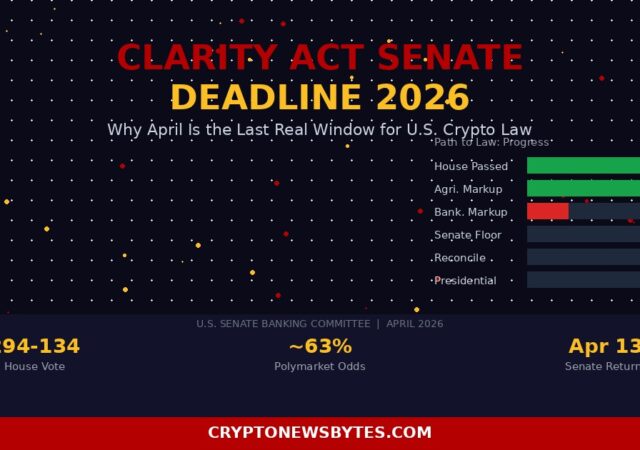
The committee’s July 9 hearing underscored an aggressive schedule for enacting digital asset rules. Senators must finalize recommendations by September 30 to meet the panel’s deadline. Following that, the House is poised to vote on its companion bill in mid-July. Should both chambers approve their respective versions, a conference process would reconcile differences before any final legislation reaches the president’s desk. This condensed timeline reflects bipartisan consensus on urgency, yet significant gaps remain regarding enforcement authority and platform classification.
Defining Securities and Guardrails for Digital Assets
Central to the discussion was the question of which tokens constitute securities under federal law. Chairman Scott stressed that clarity is essential for token issuers, traders, and exchanges. The proposed bill would adopt a framework similar to the Howey Test, specifying that any token meeting established criteria for investment contracts must register with the Securities and Exchange Commission. At the same time, the measure outlines enhanced monitoring mechanisms to detect suspicious transactions and flag potential money laundering activities.
Conflict of Interest Concerns by Senators
Senator Warnock raised pointed objections to provisions he considers inadequate in preventing regulatory capture. He warned that allowing platforms to self-designate as decentralized could enable entities with executive ties to operate beyond effective oversight. “It’s not a fair market or a free market,” he asserted, referring to the risk that high-profile backers might exert undue influence. His arguments resonated with several Democratic colleagues who fear that current draft language grants too broad an exemption to decentralized organizations.
Senators Hear Expert Views on DeFi Exemptions and Settlement Regime
Expert witnesses provided detailed assessments of the draft legislation’s strengths and shortcomings. Former Commodity Futures Trading Commission Chair Timothy Massad cautioned that broad exemptions for decentralized finance firms could drive regulated activity into unregulated spheres. He urged senators to tighten definitions around decentralization. Summer Mersinger of the Blockchain Association advocated for streamlined registration processes, while Ripple CEO Brad Garlinghouse underscored the urgency of enabling cross-border token settlements under a unified regime. Each witness highlighted the trade-offs between fostering innovation and maintaining market integrity.
Bipartisan Market Structure Principles Proposed by Senators
Last month, a group of Republican senators—including Cynthia Lummis, Thom Tillis, Bill Hagerty, and Tim Scott—released a set of market structure principles designed to guide the legislative process. These principles call for a clear legal status for digital assets, delineation of regulatory authority between the SEC and the CFTC, and harmonized standards for anti-money laundering compliance. The plan largely mirrors the CLARITY Act advanced by House committees in June, suggesting growing alignment between the chambers despite procedural differences.
Regulatory Implications for CFTC and SEC Oversight
A recurring theme was the division of oversight between the Commodity Futures Trading Commission and the Securities and Exchange Commission. Draft legislation proposes that tokens classified as commodities fall under the CFTC’s purview, while those deemed securities remain within the SEC’s regulatory remit. Critics warn that firms may exploit overlapping jurisdictions to evade full compliance. Democrats pressed for explicit language to prevent dual registration avoidance, arguing that any ambiguity could hinder enforcement and expose investors to unmitigated risk.
Conclusion
As Congress moves toward finalizing crypto-market structure legislation, the outcomes of these hearings will shape the future of digital asset oversight. With a September 30 deadline looming, committee members must reconcile competing priorities—defining security status, safeguarding against conflicts of interest, and preventing regulatory arbitrage. The success of this process hinges on crafting laws that are precise enough to enforce yet flexible enough to accommodate technological evolution.
Disclaimer
The information provided in this article is for informational purposes only and should not be considered financial advice. The article does not offer sufficient information to make investment decisions, nor does it constitute an offer, recommendation, or solicitation to buy or sell any financial instrument. The content is opinion of the author and does not reflect any view or suggestion or any kind of advise from CryptoNewsBytes.com. The author declares he does not hold any of the above mentioned tokens or received any incentive from any company.
featured image created by AI