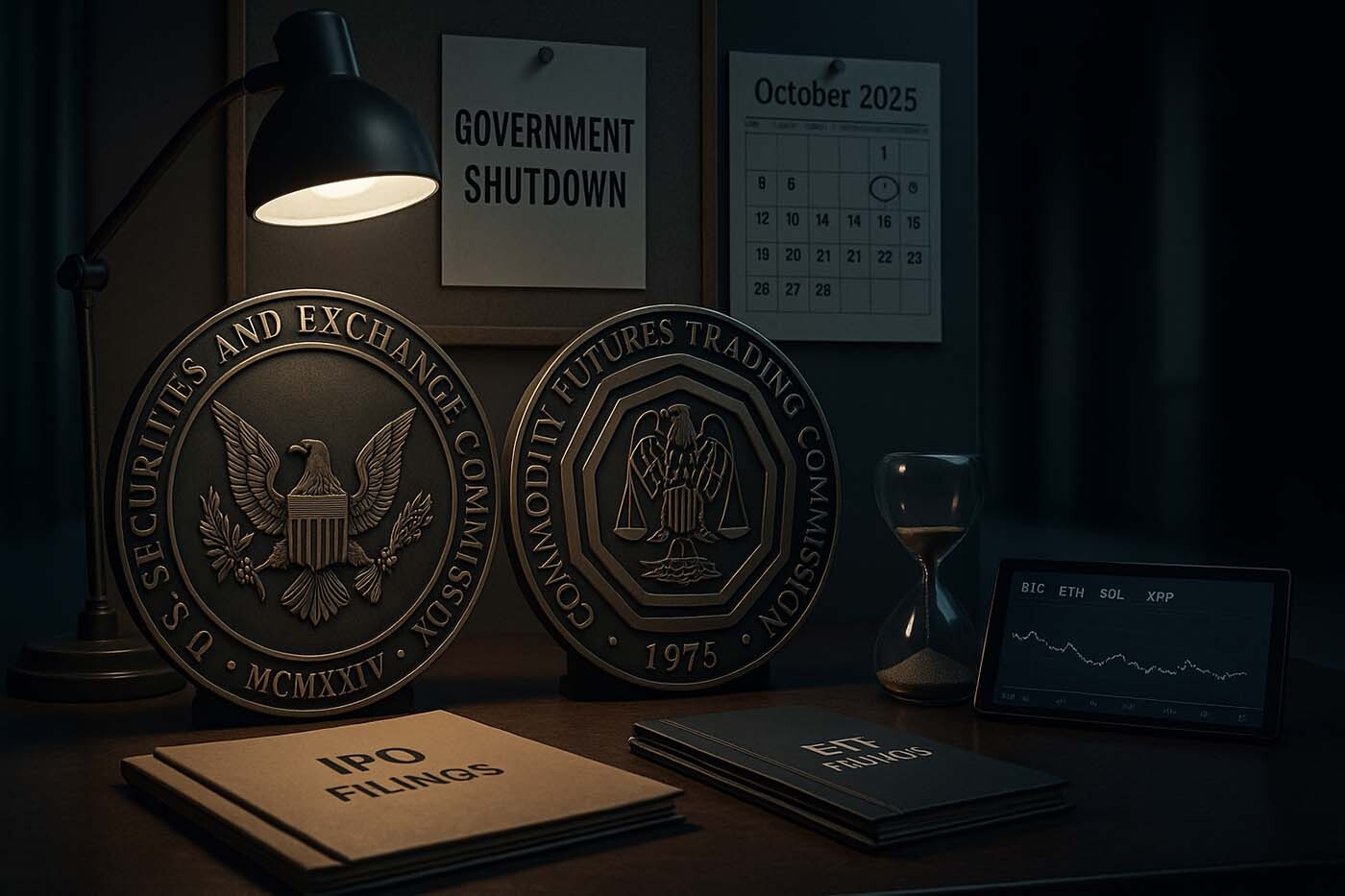
- SEC keeps 393 staff, halts IPO and crypto ETF approvals
- CFTC operates with 5.7% of workforce during shutdown
- Fed, FDIC, and CFPB continue regular functions uninterrupted
US financial regulators faced a sharp operational reset as a federal government shutdown began at midnight, forcing the Securities and Exchange Commission to furlough more than 90% of its staff and narrowing market oversight to emergency functions. The agency kept only about 393 employees to handle urgent enforcement and critical surveillance, according to its contingency plan, while routine filings remained accepted but without the reviews needed to advance new listings or complex approvals. Markets reacted with weaker Wall Street futures, a softer dollar, and gold at a record high, reflecting concern about delayed economic data and stalled capital-raising plans that hinge on timely regulatory processing.
US financial regulators scale back operations during shutdown
The SEC notified staff on Tuesday evening to prepare for the halt, then moved on Wednesday to implement furloughs that leave only a small core team active for emergencies and essential monitoring. Exchanges, broker-dealers, and funds can still submit routine company filings, yet the Division of Trading and Markets cannot review pending applications, limiting progress on initial public offerings and critical market infrastructure changes. The CFTC outlined an even slimmer posture, planning to operate with about 5.7% of its 543 employees, which is roughly thirty people, focused on preventing fraud and keeping derivatives markets orderly. With both agencies constrained, US financial regulators have less capacity to clear backlogs or work through technical issues that accumulate quickly during periods of market stress.
IPO reviews, crypto ETF timelines, and data delays
A prolonged shutdown would slow or cancel key government economic releases that investors use to assess inflation, hiring, and growth, introducing more guesswork into asset pricing. The immediate effect lands on capital formation, since the SEC cannot process IPOs that rely on iterative review cycles and comment letters to reach pricing windows. That pause arrives after signs of an IPO revival, which now faces timing risk as bankers reassess the calendar. Crypto markets also feel the strain, because the inability to review filings could postpone expected approvals of exchange-traded fund products, including those tied to Solana and XRP that analysts had anticipated in early October. Without timely action from US financial regulators, issuers and traders must plan around longer decision paths, wider event windows, and possible price volatility around rescheduled milestones.
US financial regulators staffing and contingency numbers
Numbers frame the scope of this pause. The SEC retains about 393 employees while furloughing the vast majority of its workforce, a cut that reshapes daily supervision, examination work, and policy activity. The CFTC’s plan to function with about 5.7% of 543 staff underscores limited capacity for surveillance and enforcement outside emergencies. Leadership voices captured the risk to confidence and timing, with market participants warning that an extended freeze can clog the IPO pipeline and deter buyers in new offerings during political uncertainty. Lawmakers also flagged the trade-off, as Representative Maxine Waters cautioned that curbed watchdog activity “leav[es] financial markets and investors at great risk at a time when strong oversight is needed most,” a reminder that short staffing reduces the ability of US financial regulators to react quickly if conditions change.
Banking remains open while select agencies continue operations
Not all supervision halts. The Federal Reserve and the Federal Deposit Insurance Corporation continue to operate because they are not funded through congressional appropriations, allowing bank examinations and core safety-and-soundness work to proceed. Those agencies also reminded banks that they may continue to make loans that typically require flood insurance, even though the National Flood Insurance Program has largely shuttered for new policies during the stoppage. The Consumer Financial Protection Bureau, already scaled back under the current administration, also continues operations, sustaining consumer-facing oversight while other activities wind down. These exceptions matter because they keep the banking system’s daily functions intact, even as markets feel the pinch from reduced data flow, delayed approvals, and the narrower remit for US financial regulators at the securities and derivatives level.
Conclusion
The shutdown’s first day set clear constraints on staffing, reviews, and timelines, with the SEC keeping about 393 employees active, the CFTC operating at roughly 5.7% of 543 staff, and routine IPO and crypto ETF processing stalled until normal funding returns. Economic data releases may slip if the stoppage extends, adding uncertainty to pricing and policy expectations while futures and the dollar weaken and gold reaches a record. Banking oversight persists at the Fed and FDIC, and the CFPB remains open, yet markets still face thinner supervision where the most time-sensitive filings sit, leaving issuers and investors to navigate extended calendars and tighter windows until US financial regulators resume full operations.
Disclaimer
The information provided in this article is for informational purposes only and should not be considered financial advice. The article does not offer sufficient information to make investment decisions, nor does it constitute an offer, recommendation, or solicitation to buy or sell any financial instrument. The content is opinion of the author and does not reflect any view or suggestion or any kind of advise from CryptoNewsBytes.com. The author declares he does not hold any of the above mentioned tokens or received any incentive from any company.
Featured image created by AI