

- Spot Bitcoin ETFs posted $1.42B in weekly inflows, led by $754M Tuesday and $844M Wednesday, with a $395M outflow Friday and the strongest week since early October’s $2.7B.
- Ether ETFs gained about $479M for the week, with $290M Tuesday and $215M Wednesday, then roughly $180M out Friday, showing front-loaded demand across both assets.
- Vincent Liu says whales reduced net selling while ETFs absorb supply, and Ecoinometrics notes sustained multi-week inflows are needed as cumulative flows remain negative.
Spot Bitcoin ETFs have seen a strong surge in demand, signaling a renewed appetite from institutional investors after a quieter period in the digital asset market. Over the past week, these regulated investment vehicles recorded $1.42 billion in net inflows, their best performance since early October, when they attracted around $2.7 billion. This shift comes as large investors adjust their positioning and the available supply of Bitcoin on the market appears to tighten, setting the stage for a more active trading environment and potentially more stable price support.
Weekly inflows show renewed demand for Spot Bitcoin ETFs and Ether funds
The latest weekly data highlights a decisive return of capital into Spot Bitcoin ETFs, with flows concentrating in the middle of the week. According to SoSoValue, Tuesday and Wednesday stood out as the most active sessions, underscoring how quickly institutional interest can return when market conditions improve. On Tuesday, the products pulled in about $754 million in net inflows, followed by an even stronger Wednesday, which saw roughly $844 million added. These two days alone accounted for the majority of the weekly total, showing that investors often move in clusters when conviction builds around a price level or macro narrative. Despite this strong midweek demand, the week did not end in a straight line higher for Spot Bitcoin ETFs. Late in the week, risk sentiment cooled and some holders chose to take profits or rebalance, leading to a net outflow of around $395 million on Friday. Even with that pullback, the cumulative effect of the earlier buying pushed total weekly inflows to $1.42 billion. This marks the best weekly result since early October, when similar products drew in about $2.7 billion, a period that also coincided with heightened optimism around digital asset adoption and macro conditions that favored risk assets. The positive flows were not limited to Bitcoin. Ether-based exchange-traded products also benefited from renewed interest, with inflows front-loaded earlier in the week. On Tuesday, Ether ETFs recorded the largest single-day net inflow of roughly $290 million, followed by another solid session on Wednesday with about $215 million. Much like the pattern in Spot Bitcoin ETFs, Ether ETF flows weakened toward the end of the week. Friday brought net outflows of roughly $180 million, which trimmed weekly gains but still left Ether ETFs with a respectable total of around $479 million in net inflows. This combination of activity across both major digital assets signals that institutional investors are not focusing on a single token, but instead appear to be rebuilding diversified exposure through regulated channels.
Tightening supply and onchain data support Spot Bitcoin ETFs inflows
Beneath the surface of these flows, onchain indicators point to a shifting landscape in Bitcoin supply that supports the recent demand for Spot Bitcoin ETFs. Vincent Liu, chief investment officer at Kronos Research, noted that long-only allocators are returning to the market after a cautious stretch, and they are doing so through regulated products rather than unregulated venues. This move toward Spot Bitcoin ETFs suggests a preference for transparent, institutionally focused structures that fit within existing mandates for many funds and wealth managers. Liu observed that large holders, often known as whales, have slowed their net selling compared with late December. That period saw more active distribution and added pressure on prices. As whales reduce their selling activity while Spot Bitcoin ETFs continue to absorb coins, the available float on the market appears to tighten. This combination can create a more favorable backdrop for price stability, since fresh selling has fewer coins to compete with and new demand finds less supply at current levels. The result is not necessarily a rapid spike in price, but rather a more supportive environment that can absorb dips more easily.
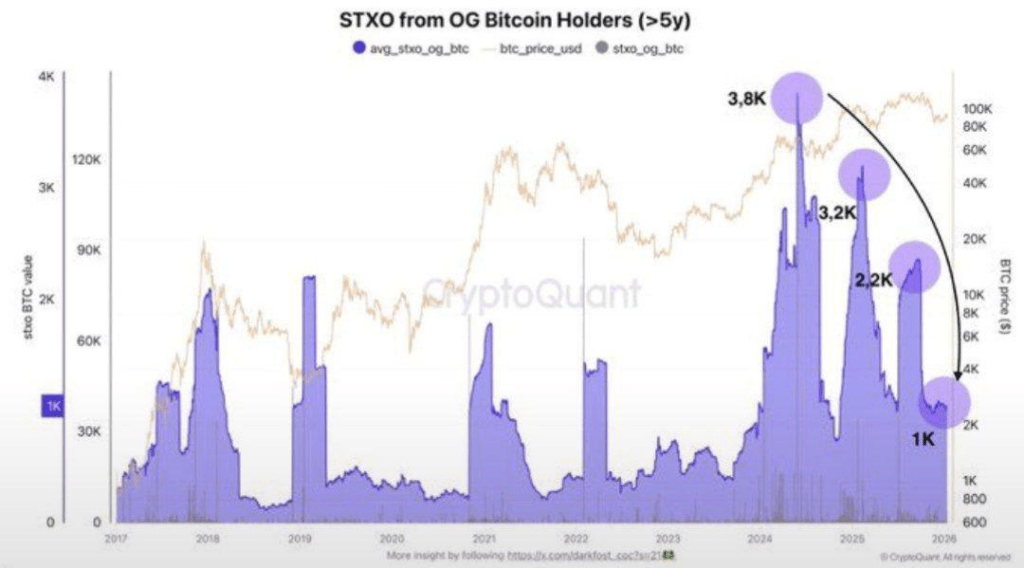
He emphasized that this shift remains in an early phase, rather than a fully confirmed long-term trend. Renewed inflows into Spot Bitcoin ETFs, reduced whale selling and gradual improvements in market structure all point toward a more durable institutional bid forming under the market, but the process takes time. Liu suggested that the odds favor more positive days ahead, though he cautioned that the path will not move in a straight line. Short-term volatility can still appear as macro news, regulatory developments or profit-taking trigger swings, yet the underlying trend of tightening supply and consistent ETF buying provides a firmer base than during previous corrective phases. In practical terms, this means that when prices dip, there is a higher chance that incoming orders from Spot Bitcoin ETFs and other institutional channels will step in to absorb selling. That dynamic contrasts with periods when ETFs faced net outflows and whales sold aggressively, which often led to deeper and more prolonged drawdowns. With the current configuration, investors who focus on medium to long-term positioning may see recent volatility as an opportunity rather than a reason to abandon exposure, especially as more capital seeks regulated access to Bitcoin.
Short Bitcoin ETFs and limited impact on sustained Spot Bitcoin ETFs rallies
While Spot Bitcoin ETFs recorded eye-catching inflows, not all ETF activity points in the same direction for price momentum. The macro intelligence newsletter Ecoinometrics has examined previous spikes in inflows and found that these strong days often correspond to short-lived price rebounds rather than long and steady uptrends. When Spot Bitcoin ETFs attract large sums over one or two sessions, Bitcoin’s price frequently responds with a bounce, but those gains tend to fade once inflows slow down or reverse.
From this perspective, isolated positive days for Spot Bitcoin ETFs help stabilize the market, yet they rarely change the broader trajectory unless they appear in sequence for several weeks. Ecoinometrics notes that cumulative ETF flows remain deeply negative over a longer horizon, meaning that despite recent strength, the products still have ground to make up compared with prior redemption cycles. For a lasting uptrend, the market would likely need multiple consecutive weeks of strong net inflows, rather than single bursts of demand followed by choppy or negative sessions.
Short Bitcoin ETFs add another layer to this picture. When traders use inverse or short products, they can hedge spot exposure or speculate on downside, which sometimes tempers bullish momentum from Spot Bitcoin ETFs. Recent inflows into short-oriented products have not proved powerful enough to drive long-lasting rallies when they unwind. Instead, these positions tend to contribute to brief squeezes when prices move against crowded shorts, leading to sharp but limited price moves that fade as soon as positioning normalizes.
This pattern helps explain why Bitcoin can experience energetic rallies after strong Spot Bitcoin ETFs inflows, only to stall as soon as demand eases. Without a persistent wave of new capital entering through spot products week after week, each upward move remains vulnerable to consolidation or retracement. Investors who track both long and short ETFs gain a clearer sense of whether the market stands on a foundation of steady accumulation or just temporary repositioning that might not hold under pressure.
Bitcoin ETFs gain traction among institutional investors
The recent $1.42 billion weekly inflow into Spot Bitcoin ETFs, combined with $479 million entering Ether ETFs, suggests that institutional investors are re-engaging with digital assets in a more structured way. This happens as macro conditions remain mixed and risk assets face competing narratives, from inflation concerns to shifting interest rate expectations. In such an environment, the existence of liquid, regulated products like Spot Bitcoin ETFs offers institutions a way to adjust exposure quickly while staying within their compliance frameworks. If current trends continue, Spot Bitcoin ETFs could play a central role in how large pools of capital participate in Bitcoin’s next major cycle. Their ability to absorb coins while whales scale back on selling can gradually reshape the supply-demand balance, especially if new issuance from miners fails to keep pace with demand. Even without a dramatic move in price, the quiet build-up of ETF holdings can create a stronger base over time, reducing the impact of sudden bouts of selling from leveraged traders or short-term speculators. However, the data also warns against assuming that one strong week guarantees a lasting bull market. The fact that the strongest inflows since early October still come in the context of longer-term negative cumulative flows shows that the market is in a rebuilding phase rather than a clear expansionary one. For Spot Bitcoin ETFs to signal a decisive shift, observers will watch for a pattern of consistent weekly inflows, shrinking net outflows from whales and continued engagement from institutional allocators. In the meantime, volatility will likely remain a feature rather than an exception. Midweek surges in Spot Bitcoin ETFs inflows, followed by late-week profit taking and occasional outflows, can create a trading rhythm that favors active managers and systematic strategies. Long-term investors may look through these swings, focusing instead on metrics such as total ETF holdings, market structure onchain supply held by long-term holders and the behavior of large wallets. Together, these indicators help build a clearer view of whether the recent return of demand marks a short pause in a broader downtrend or the first leg of a more sustained recovery.
Conclusion
Spot Bitcoin ETFs have entered the spotlight again, with $1.42 billion in weekly inflows marking their strongest performance since early October and aligning with signs of tightening Bitcoin supply. Midweek sessions showed how quickly institutional demand can return, while the late-week outflow of about $395 million highlighted that the market still moves in waves rather than along a simple upward line. Onchain evidence of reduced whale selling, combined with $479 million of inflows into Ether ETFs, supports the idea that institutional allocators are gradually rebuilding digital asset exposure through regulated vehicles. At the same time, analysis from Ecoinometrics underlines that single bursts of inflows into Spot Bitcoin ETFs usually trigger short-lived price rebounds unless they extend over several consecutive weeks. Cumulative ETF flows remain negative on a broader view, and short Bitcoin ETFs continue to influence short-term price behavior without yet creating the base for a large, sustained rally. The coming weeks will show whether the latest inflow surge evolves into a persistent trend of accumulation or remains a notable yet limited rebound within a larger consolidation phase.
Disclaimer
The information provided in this article is for informational purposes only and should not be considered financial advice. The article does not offer sufficient information to make investment decisions, nor does it constitute an offer, recommendation, or solicitation to buy or sell any financial instrument. The content is opinion of the author and does not reflect any view or suggestion or any kind of advise from CryptoNewsBytes.com. The author declares he does not hold any of the above mentioned tokens or received any incentive from any company.
Featured image created by AI