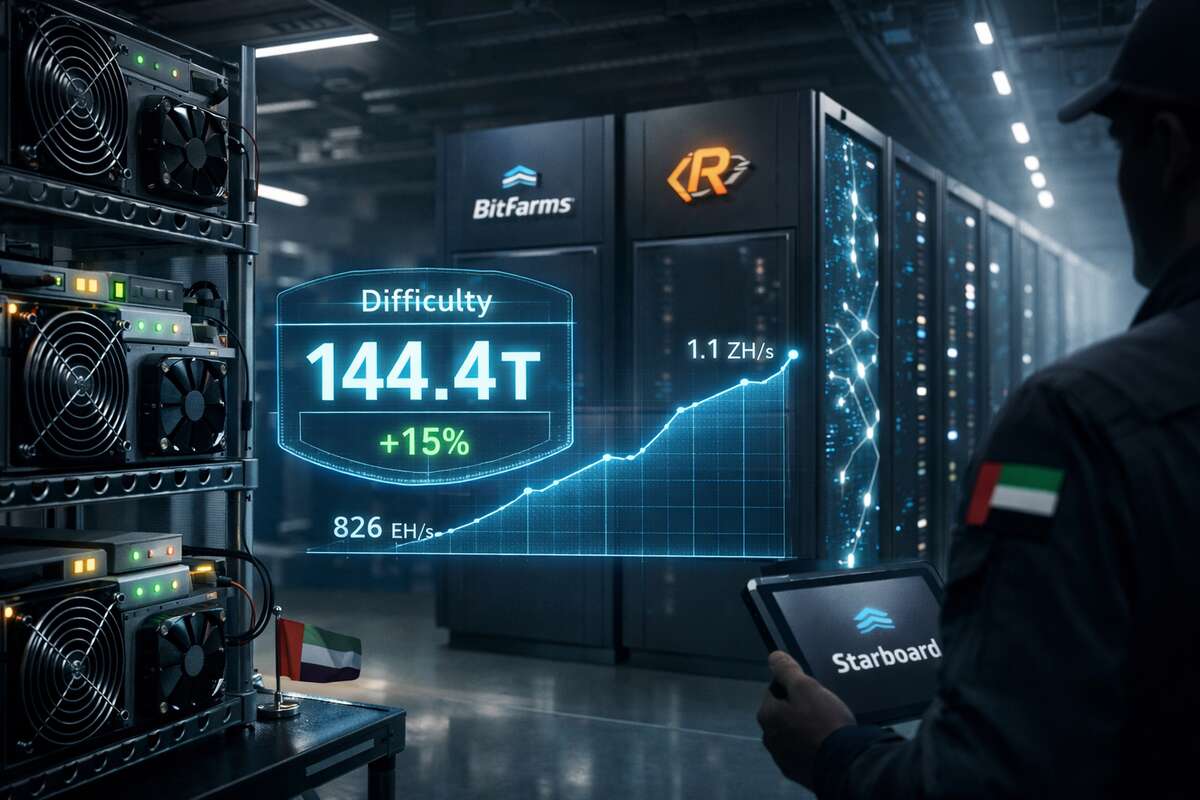
- Bitcoin mining difficulty increased 15% to 144.4T after a prior drop linked to US winter storms and lower hashrate levels.
- Hashrate has recovered toward 1 ZH/s while some public miners shift energy and computing resources into AI and data center services.
Bitcoin mining difficulty has surged to 144.4 trillion (T), marking a 15% rise and the steepest percentage increase since 2021. This adjustment comes after a period of volatility in both network activity and market conditions, highlighting how the system responds to changing hashrate levels, energy shocks, and shifting business strategies among major mining firms.
Network recalibration and the latest difficulty spike
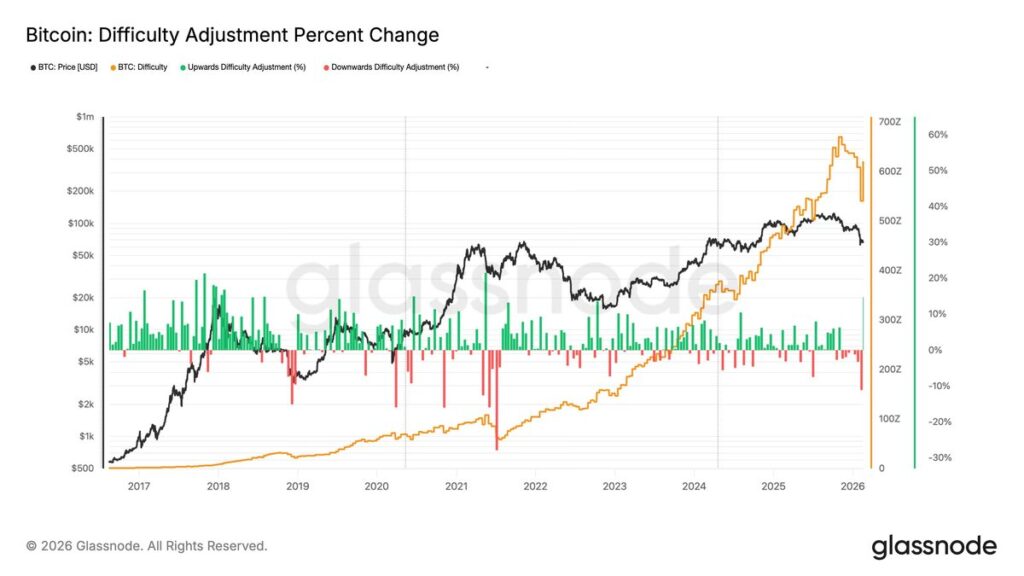
Bitcoin mining difficulty measures how challenging it is for miners to add new blocks to the blockchain. The protocol automatically recalibrates this metric every 2,016 blocks, which usually takes about two weeks, so that new blocks continue to appear roughly every 10 minutes despite fluctuations in the total computational power, or hashrate.
The latest 15% jump to 144.4 T follows a 12% reduction in difficulty that occurred after a notable drop in the bitcoin hashrate. That decline in hashrate was tied to a severe winter storm in the United States, which forced several large mining operators to temporarily scale back or halt operations. The network’s most recent increase is the sharpest percentage adjustment since 2021, when the aftermath of China’s mining ban produced major disruptions. At that time, the network saw a 22% upward adjustment as hashrate returned and the system stabilized.
This new upswing in bitcoin mining difficulty signals that the network is once again seeing higher levels of computational power, even though miner economics remain under pressure.
Hashrate swings, price moves, and pressure on miners
The jump in difficulty is closely linked to recent swings in bitcoin’s hashrate and price. In October, when bitcoin’s market price climbed to an all-time high of around $126,500, the hashrate reached a peak of 1.1 zettahash per second (ZH/s). As the price retreated to as low as $60,000 in February, the hashrate fell to 826 exahash per second (EH/s), reflecting weaker incentives for some miners to stay online.
Since that low, the total hashrate has recovered to around 1 ZH/s, while bitcoin’s price has bounced back to roughly $67,000. This recovery in computing power has contributed directly to the recent upward shift in bitcoin mining difficulty, as the protocol responds to more miners competing to solve blocks.
Despite the stronger hashrate, miners face a challenging revenue environment. Hashprice, which estimates the daily income miners earn per unit of hashrate, is stuck at multi-year lows around $23.9 per petahash per second (PH/s). This compressed revenue per unit of computing power is tightening margins, particularly for operators with higher energy or capital costs.
Yet large-scale miners that can secure low-cost electricity continue to expand or maintain substantial operations. Their participation plays a key role in keeping the hashrate elevated, even while the spot price of bitcoin remains well below its recent peak and hashprice stays subdued.
bitcoin mining difficulty and strategic shifts toward AI
The current pattern in bitcoin mining difficulty also reflects structural changes within the industry. A significant factor behind the earlier decline in hashrate has been the decision by several publicly listed mining firms to redirect a portion of their energy and computing resources toward artificial intelligence and high performance computing (HPC) data centers.
Bitfarms (BITF) offers a notable example of this pivot. The company recently announced a rebrand that removes explicit reference to bitcoin from its corporate identity, signaling a broader strategic shift. Bitfarms is increasing its emphasis on AI-related infrastructure, aligning its existing data center and power footprint with demand from AI workloads.
Riot Platforms (RIOT) is facing similar pressures. Activist investor Starboard has called on Riot to scale up its involvement in AI data center operations, pushing the company to diversify beyond pure bitcoin mining. These moves illustrate how some of the sector’s better-capitalized players are looking beyond traditional mining, even as they continue to shape overall hashrate levels through their decisions on where to deploy hardware and energy.
At the same time, some national initiatives remain firmly focused on bitcoin mining itself. The United Arab Emirates is estimated to hold around $344 million in unrealized profit from its mining activities, underscoring how jurisdictions with ample low-cost power can maintain a strong presence in the network despite weaker hashprice.
This combination of AI-oriented reallocation among certain public miners and continued aggressive activity by low-cost operators helps explain the recent pattern: a temporary drop in hashrate and difficulty, followed by a strong rebound that has pushed bitcoin mining difficulty to its latest peak.
Conclusion
The latest increase in bitcoin mining difficulty to 144.4 T, a 15% adjustment, underscores how the network automatically adapts to shifting hashrate conditions. Weather-related disruptions in the United States, changes in bitcoin’s market price, and reallocation of capacity toward AI and HPC data centers by listed miners have all contributed to recent volatility. Even so, well-capitalized operators with access to cheap energy, including large players in the United Arab Emirates, are keeping the hashrate high despite multi-year lows in hashprice. The result is a network that remains secure and resilient, while miners navigate narrower margins and evolving business models.
Disclaimer
The information provided in this article is for informational purposes only and should not be considered financial advice. The article does not offer sufficient information to make investment decisions, nor does it constitute an offer, recommendation, or solicitation to buy or sell any financial instrument. The content is opinion of the author and does not reflect any view or suggestion or any kind of advise from CryptoNewsBytes.com. The author declares he does not hold any of the above mentioned tokens or received any incentive from any company.
Featured image created by AI