- X plans to roll out Smart Cashtags so users can view live price data and trade stocks and cryptocurrencies directly from their timelines
- The platform is tightening rules on spam, raids, and fee-pool apps while expanding X Money, backed by money transmitter licenses in over 40 U.S. states
X is preparing a new step in its shift toward finance, with head of product Nikita Bier confirming that Smart Cashtags will arrive “in the coming weeks.” The feature is intended to let people trade stocks and cryptocurrencies straight from their timelines, turning existing market chatter on the platform into direct trading activity. The update is part of a broader effort to weave financial tools into the core experience of the social network, which is being steered toward a “super-app” model.
Smart Cashtags bring trading directly into X
Bier’s announcement formalizes a plan he first outlined on Jan. 11, when he described X as “the best source for financial news” and said that “hundreds of billions of dollars are deployed based on things people read here.” At that time, he noted that the product team was gathering user feedback with a February release in mind. His latest comments, posted on Saturday, indicate that Smart Cashtags are now approaching launch, with several related features expected at roughly the same time.
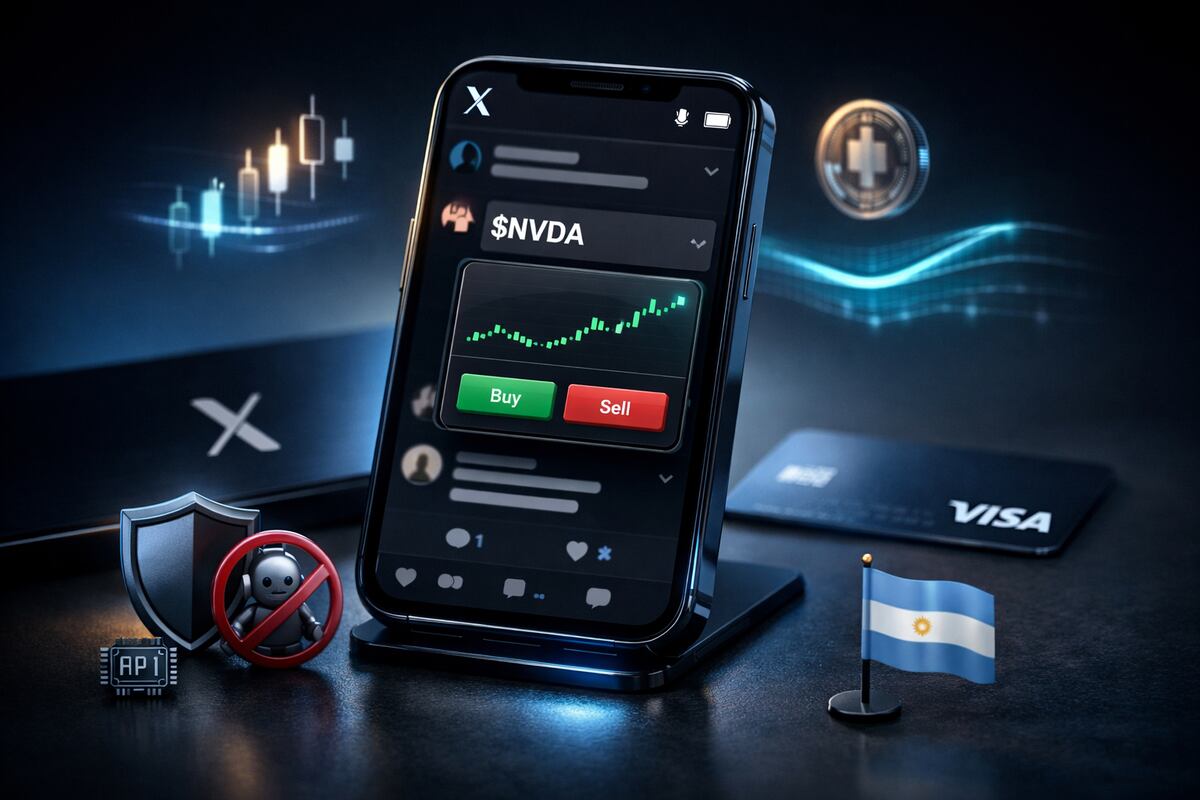
Smart Cashtags extend the platform’s existing $TICKER convention, where a dollar sign before a symbol turns it into a clickable reference. Under the new system, users who post a ticker will be able to tie it to a specific asset or smart contract address. When someone taps that tag, the interface will show live price information, posts about that asset from across X, and options to execute trades. Early preview images shared by the company have shown “Buy” and “Sell” buttons integrated next to the market data, pointing to an in-app order flow.
According to Bier, the API supporting Smart Cashtags is designed to operate in near real time for any asset minted on-chain. That means thinly traded tokens that have yet to appear on centralized exchanges could still surface within the same interface as large-cap equities. He has cited $NVDA as one example of a stock that already has an active presence through cashtags on X, illustrating how the new system could place established shares and emerging tokens side by side.
Bier framed Smart Cashtags as a response to how people already use X during market hours, noting the scale of capital that moves based on information found there. By connecting posts to direct trading capabilities, the company is seeking to tighten the link between financial conversation and execution, while still keeping users inside the app.
X targets spam, raids, and manipulative crypto apps
Along with the product update, Bier outlined a stricter posture toward apps that use X to promote spam or harassment. He said he wants crypto activity on the platform to grow, but argued that services which reward users for raiding other accounts or flooding timelines are not compatible with that goal. In a post on X, Bier wrote that he supports the spread of crypto on the platform, but rejected applications that motivate users to spam, raid, or harass people who did not opt in.
His comments were triggered by a discussion about third-party crypto applications on X. Argentine entrepreneur Santiago Siri had claimed that OpenClaw creator Peter Steinberger was missing out on notable token income by not embracing tokenization structures. Siri framed “claim your fees” mechanisms as a missed opportunity. Bier responded by calling this description “the most dishonest perspective” he had seen on the subject and said X plans to change its API terms to prohibit apps that establish fee pools on behalf of users who have not consented.
Christopher Park, director of the X developer platform, reinforced the message in a separate post. He stated that all automated and spam-related activity driven by scraping or API access would be subject to thorough review. Park said X aims to stop bots and software that enable or encourage large-scale manipulation of engagement, mass spam, or extensive scraping of content. Together, these remarks signal that the rollout of Smart Cashtags will accompany a recalibration of what third-party financial tools can do on X.
The stance has drawn criticism from some crypto traders on the platform, who have objected to previous enforcement announcements. Even so, Bier has continued to emphasize that the company intends to support crypto while curbing features that rely on unwanted participation or coordinated harassment.
X Money and the broader financial strategy
Smart Cashtags sit within a larger financial project at X that centers on X Money, a digital wallet and trading platform. In January 2025, then-CEO Linda Yaccarino revealed a collaboration with Visa to launch X Money as a tool for peer-to-peer payments. That announcement positioned the wallet as a way for users to move funds within the social network, linking everyday communication with transfers.
By June, Yaccarino told the Financial Times that X would expand X Money to cover investing and trading directly inside the app. Those remarks framed in-app market access as a natural extension of how users already discuss stocks and cryptocurrencies on the platform. Smart Cashtags are now emerging as a practical mechanism to connect that market discussion with X Money’s financial infrastructure.
The company has obtained money transmitter licenses in more than 40 U.S. states, providing a regulatory base for certain types of financial activity. However, it has not yet secured equivalent authorization in New York, after withdrawing its application there. This uneven licensing landscape shapes where X Money can operate fully, and it remains a constraint as X attempts to position itself as a financial services provider as well as a social network.
Elon Musk, speaking at an xAI presentation earlier this month, said that X Money has gone through internal testing with employees and is scheduled to enter a limited external beta in one to two months. His comments came about three years and three months after he completed the roughly $44 billion acquisition of Twitter, which has since been renamed X. Over that period, the company has steadily advanced from simple payment plans toward a more integrated financial ecosystem that spans wallets, trading tools, and market data.
Smart Cashtags connect directly to this strategy. By merging cashtag conversations with X Money’s trading functions, X aims to create a loop where market information, user commentary, and transaction capabilities are all contained within one interface, yet still framed by tighter rules on automation and third-party incentives.
Conclusion
With Smart Cashtags nearing release, X is moving closer to a model where financial transactions sit alongside social interaction. The feature builds on familiar cashtag behavior but adds live market data and the ability to trade stocks and cryptocurrencies from a timeline post. At the same time, the company is preparing to enforce stricter limits on bots, spam, and crypto apps that rely on fee pools or raids, reshaping the developer environment around its API. Paired with the gradual rollout of X Money, the new tools highlight how X is embedding payments, investing, and crypto into the structure of the platform that began life as Twitter.
Disclaimer
The information provided in this article is for informational purposes only and should not be considered financial advice. The article does not offer sufficient information to make investment decisions, nor does it constitute an offer, recommendation, or solicitation to buy or sell any financial instrument. The content is opinion of the author and does not reflect any view or suggestion or any kind of advise from CryptoNewsBytes.com. The author declares he does not hold any of the above mentioned tokens or received any incentive from any company.
Featured image created by AI