- OKX receives a Malta payment institution license to meet MiCA and PSD2 requirements for stablecoin-related payment services across the EU
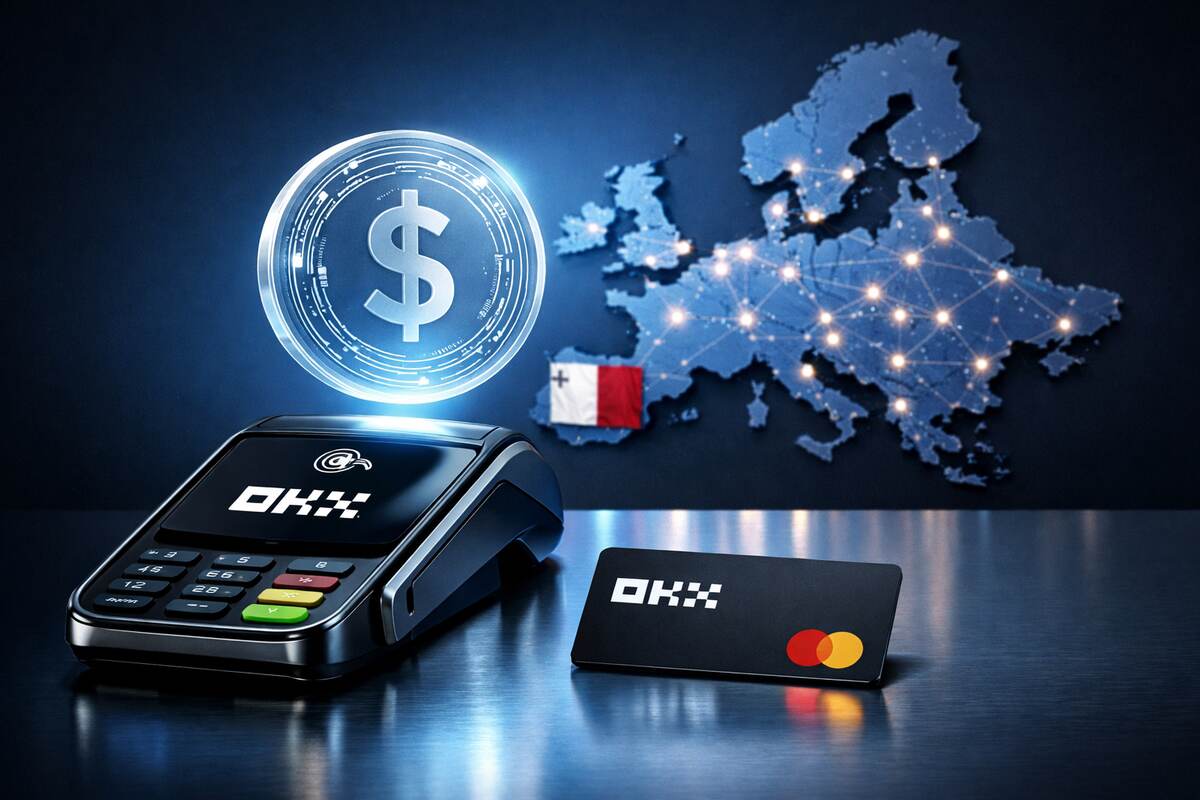
- The exchange supports real-world stablecoin use through OKX Pay, the OKX Card and a crypto payment card launched in Europe with Mastercard
Cryptocurrency exchange okx has secured a payment institution (PI) license in Malta, positioning the platform to operate under upcoming European Union rules that begin applying in March. The new authorization enables the exchange to continue offering stablecoin-based payment services throughout the EU while aligning with the Markets in Crypto-Assets (MiCA) framework and the Second Payment Services Directive (PSD2).
OKX aligns with EU regulatory changes
The PI license granted in Malta brings okx into line with evolving EU requirements for crypto-asset service providers involved in payments. Under the updated PSD2 regime, firms that handle transactions using stablecoins, which are treated in law as electronic money tokens (EMTs), must hold either a payment institution license or authorization as an electronic money institution (EMI). By obtaining the PI status, the exchange meets this obligation ahead of the March implementation of the new rules.
According to the company’s announcement, the license is central to ensuring that its stablecoin payment activities remain fully compliant with both MiCA and PSD2. MiCA sets out a dedicated regulatory structure for crypto-assets across the bloc, while PSD2 governs payment services and electronic money. The combination of these two frameworks means that platforms like okx operating at the intersection of digital assets and payments must satisfy more stringent oversight. The Malta authorization offers a route for the exchange to continue serving customers across the EU without interruption as these rules come into force.
Expansion of stablecoin payment services at OKX
The regulatory approval follows a period of product expansion at okx that has focused on integrating stablecoins into routine financial transactions. The firm recently launched real-world payment tools such as OKX Pay and the OKX Card, which are designed to make stablecoins usable in everyday settings. These services aim to allow customers to pay for goods and services with digital assets while relying on stablecoins’ pegged value.
Erald Ghoos, CEO of OKX Europe, linked the new license directly to this product strategy, stating that securing payment institution status ensures that OKX Pay and the OKX Card operate within a fully compliant framework. The license therefore functions not only as a regulatory requirement but also as a foundation for scaling the company’s payment offerings across different EU markets. With stablecoins classified as EMTs under EU law, maintaining appropriate authorization is essential for any provider that wishes to process payments or issue instruments tied to these tokens.
New partnerships and investments around stablecoins
The company’s regulatory progress coincides with new initiatives aimed at embedding stablecoins more firmly in European financial infrastructure. At the end of last month, OKX launched a crypto payment card in Europe through a collaboration with Mastercard. The card extends the firm’s payment ecosystem and is intended to give users another channel to spend digital assets in a manner familiar to traditional cardholders.
Beyond payment cards, the exchange has also been active on the investment side. OKX Ventures, the firm’s innovation-focused investment arm, has recently supported stablecoin issuance platform STBL. This backing indicates a broader interest in the underlying infrastructure that supports stablecoin creation and management, not only their use in consumer-facing payment products. Taken together, the Mastercard partnership and the investment in STBL show that the firm is building out both front-end services and back-end capabilities around stablecoins while anchoring these efforts in compliance with EU regulations.
Conclusion
By obtaining a payment institution license in Malta, okx has positioned itself to navigate the EU’s incoming MiCA and PSD2 requirements while continuing to offer stablecoin-centric payment services. The authorization underpins newer products such as OKX Pay and the OKX Card, supports the rollout of a crypto payment card in partnership with Mastercard, and complements investments in stablecoin infrastructure through its ventures arm. As March approaches and the updated regulatory framework takes effect, the license provides the company with a formal basis to keep stablecoins integrated into its European payment operations.
Disclaimer
The information provided in this article is for informational purposes only and should not be considered financial advice. The article does not offer sufficient information to make investment decisions, nor does it constitute an offer, recommendation, or solicitation to buy or sell any financial instrument. The content is opinion of the author and does not reflect any view or suggestion or any kind of advise from CryptoNewsBytes.com. The author declares he does not hold any of the above mentioned tokens or received any incentive from any company.
Featured image created by AI