- Survey data shows strong growth in stablecoin use in the biggest African economies, with many Nigerians preferring stablecoin payments over the Naira.
- Stablecoins are mainly used for crypto trading, while limited merchant acceptance and central bank concerns over dollarisation remain key challenges.
Nigeria and South Africa, the biggest African economies, are emerging as major centres of demand for stablecoins, according to new survey data. A report based on responses from thousands of current and prospective crypto users indicates that these two countries are not only leading in adoption, but also show the strongest confidence in the role stablecoins could play in their financial systems. At the same time, central bankers and policymakers remain wary of the broader implications for monetary sovereignty and capital flows.
Rising stablecoin appetite in the biggest African economies
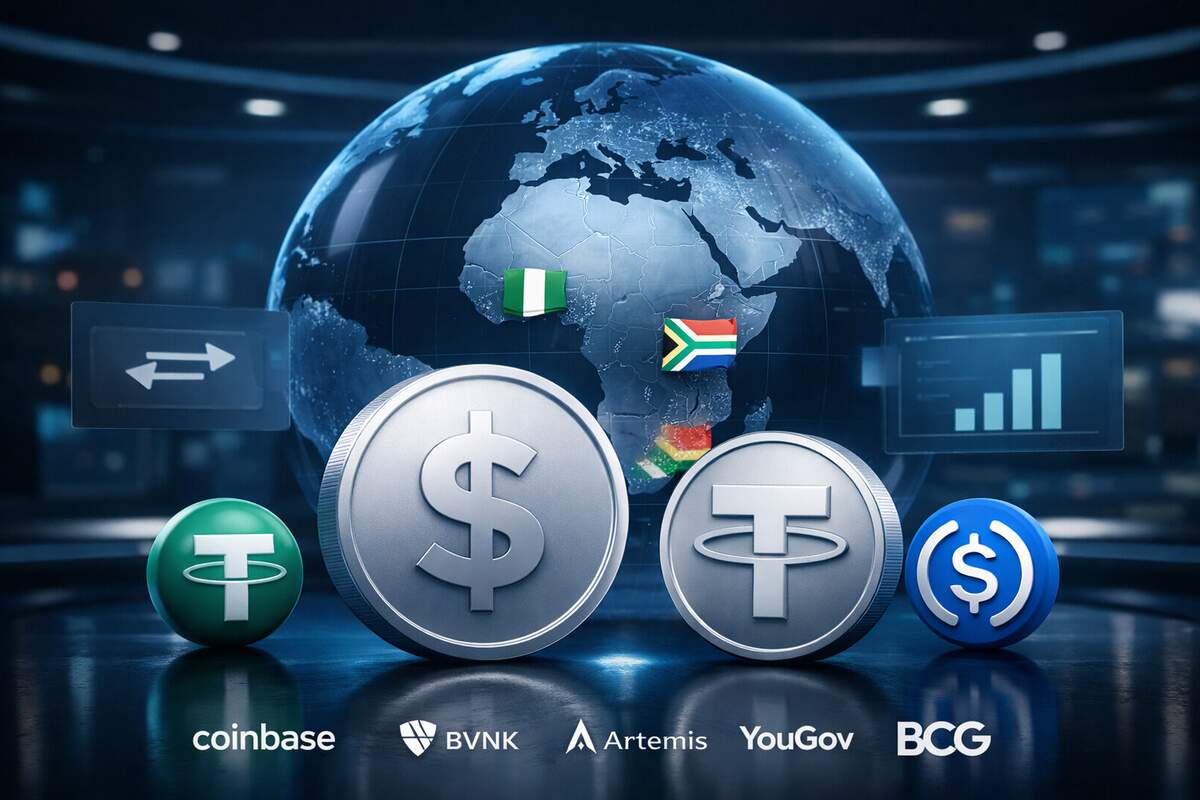
The Stablecoin Utility Report, compiled by YouGov with crypto firms BVNK, Coinbase and Artemis, surveyed more than 4,650 people in 15 countries who either already hold, or plan to hold, stablecoins or other cryptocurrencies. The findings point to particularly intense interest in the biggest African economies, where economic instability and payment frictions are pushing residents to look for alternative instruments.
In Nigeria and South Africa, almost four in five respondents said they already hold stablecoins. More than three-quarters of these holders plan to boost their stablecoin balances over the next year, underlining the degree of confidence in this asset class despite regulatory uncertainty and market volatility in the broader crypto sector. This compares with weaker uptake and slower growth intentions in high-income economies, where traditional banking and digital payment systems are often more reliable and cheaper.
The report indicates that users in low and middle-income countries are more inclined to adopt stablecoins than those in richer nations. Among people who do not yet own stablecoins, the likelihood of starting to hold them is roughly double in developing economies compared with high-income counterparts. Nigeria stands out in particular: 95% of Nigerian respondents said they would rather be paid in stablecoins than in the domestic currency, the Naira. That preference highlights both the perceived stability of dollar-linked tokens and ongoing concerns about local currency volatility and inflation.
How stablecoins are used today and the limits to everyday adoption
For all the enthusiasm in the biggest African economies and other emerging markets, current stablecoin activity remains heavily skewed toward financial trading rather than day-to-day spending. A report by Boston Consulting Group last year estimated that nearly 90% of all stablecoin transactions are tied to crypto trading. Only 6% are used to pay for goods or services, suggesting that their core function is still as a bridge within digital asset markets rather than as a mainstream payment tool.
The new survey supports this picture while also revealing appetite for broader use. Over half of all respondents across the 15 countries increased their stablecoin holdings over the past year, with the sharpest growth seen in developing economies. Yet the report also notes that limited acceptance of stablecoins at physical and online merchants is a significant obstacle to wider adoption for day-to-day purchases, bills and subscriptions.
BVNK co-founder Chris Harmse said that in many places where traditional payments are slow, costly or unreliable, people are already getting paid and spending stablecoins in practice. According to him, users now want these assets to work more smoothly with existing financial tools, such as bank accounts and payment platforms.
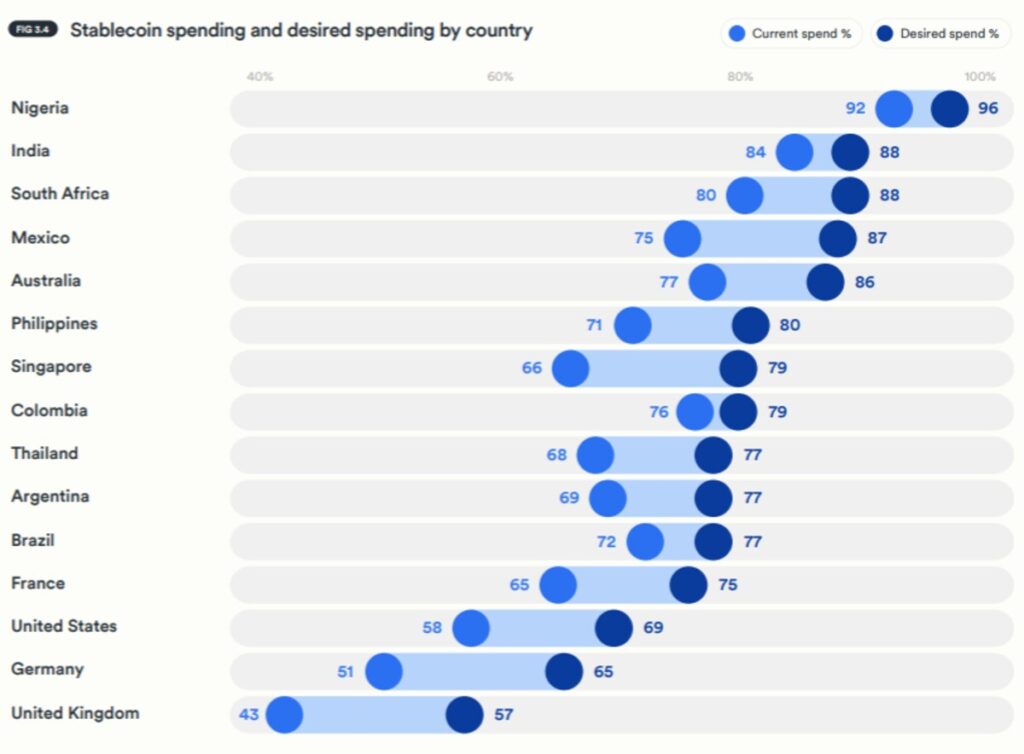
That desire for integration underscores a key tension: stablecoins are being used as workarounds to legacy systems, yet users still want them connected to those same systems for convenience and reach.
Global expansion and concerns over dollarisation
The growing role of the biggest African economies in the stablecoin ecosystem comes as the global market for these tokens surpasses $310 billion in value. The space is dominated by U.S. dollar-pegged coins, in particular Tether with about $185 billion and USDC with roughly $75 billion in circulation. Around 99% of issued stablecoins are tied to the dollar, which has turned them into a de facto channel for accessing U.S. currency exposure without using conventional bank accounts.
Regulatory initiatives in the United States, including the GENIUS Act, are expected to support further expansion of the stablecoin sector. However, this dominance of dollar-based tokens has triggered unease among central bankers in emerging markets. They worry that widespread use of such instruments could lead to informal dollarisation, weakening demand for local currencies and undermining domestic monetary policy.
Another concern is the potential impact on local banking systems. If households and businesses shift a portion of their savings from bank deposits into stablecoins, commercial banks could see reduced funding, which might affect lending and overall financial stability. Central banks also warn that stablecoins could make capital flight easier, as residents move money across borders more quickly and quietly than through traditional channels that are easier to monitor and regulate.
Balancing efficiency gains with financial stability risks
Despite these risks, some policymakers recognise practical advantages in specific areas, especially cross-border payments. South African Reserve Bank Governor Lesetja Kganyago has pointed to remittances as one domain where stablecoins might improve outcomes. He cited cases in which it can cost as much as $30 to send $100 from South Africa to neighbouring Mozambique. That fee level is seen as unreasonably high, and cheaper stablecoin-based transfers could offer a more efficient alternative for migrants and families.
This trade-off between efficiency and control runs through the survey’s findings. On one hand, people in countries with weaker financial infrastructure, including the biggest African economies, see stablecoins as a way to escape slow settlement, high fees and unreliable local systems. On the other, regulators fear losing visibility over flows and finding their policy tools blunted if large volumes of domestic transactions migrate into private digital currencies.
Key barriers to achieving a balanced outcome include:
- Limited merchant acceptance, both in physical stores and online.
- Fragmented integration with banks, wallets and payment apps.
- Ongoing regulatory uncertainty in many jurisdictions.
Users, according to the report, are calling for better integration of stablecoins into the financial products they already rely on, while central banks are deliberating how to impose oversight without stifling potential improvements in payment efficiency.
Conclusion
The survey results position Nigeria and South Africa at the forefront of global demand for stablecoins, with users in these biggest African economies showing both high current adoption and strong intent to increase their exposure. Their experience illustrates the broader dynamics at play in emerging markets, where shortcomings in traditional financial systems and concerns about local currencies are accelerating interest in dollar-pegged digital tokens.
At the same time, the predominance of trading use cases, the lack of routine merchant acceptance and the unease of central bankers about dollarisation and capital flight show that stablecoins remain far from a settled feature of the financial landscape. Whether they evolve into widely used payment tools or remain concentrated in crypto markets will depend on how regulators, financial institutions and technology providers respond to the growing demand documented in the report.
Disclaimer
The information provided in this article is for informational purposes only and should not be considered financial advice. The article does not offer sufficient information to make investment decisions, nor does it constitute an offer, recommendation, or solicitation to buy or sell any financial instrument. The content is opinion of the author and does not reflect any view or suggestion or any kind of advise from CryptoNewsBytes.com. The author declares he does not hold any of the above mentioned tokens or received any incentive from any company.
Featured image created by AI