- Barclays is reviewing blockchain technology for possible tokenized deposits and stablecoin services, with a provider decision expected by April.
- The bank has invested in stablecoin settlement startup Ubyx and would join peers like JPMorgan and US Bank if it moves ahead.
Barclays is examining a deeper move into blockchain technology, including potential offerings of tokenized deposits and stablecoins, according to a report released Friday by Bloomberg. The U.K.-listed banking group has begun collecting information from technology vendors as it evaluates how to participate in digital asset infrastructure. While the exploration marks a further step into crypto-related services, the bank’s share price fell nearly 4% on the day, in line with a wider market downturn, though it remains sharply higher over the past year.
Barclays evaluates blockchain and digital asset options
People familiar with the matter told Bloomberg that the bank has approached multiple technology suppliers to understand what systems and support would be required for a blockchain strategy. The information-gathering process forms part of an internal review into whether to introduce tokenized deposit products or stablecoin-based services for its clients. According to the report, the institution may choose a technology provider as soon as April, though no final decision on launching products has been reported.
The latest review follows a gradual shift in the bank’s posture toward digital assets. The institution was identified last autumn as one of several international banks considering a jointly issued stablecoin. That interest has evolved into more targeted work on how blockchain-based instruments could be integrated into existing operations and client services. While the bank has not announced any firm timeline, the current assessment suggests it is moving beyond high-level exploration into concrete evaluations of platforms and partners.
barclays and its growing engagement with stablecoin infrastructure
The bank has already taken a tangible step into the stablecoin ecosystem through an investment in Ubyx, a startup that focuses on settlement using stablecoins. That investment signaled growing confidence that blockchain-based payment rails could support regulated financial institutions. At the time of the Ubyx deal, Ryan Hayward, Head of Digital Assets at the bank, emphasized the importance of specialist technology in enabling seamless interaction for regulated firms. He highlighted connectivity and infrastructure as critical components for institutions that want to participate safely in digital asset markets.
Building on that stance, the current review is aimed at determining which providers can deliver those capabilities at scale. The bank is understood to be analyzing how tokenized deposits could coexist with its traditional deposit base and how stablecoins might be used in settlement, liquidity management, or client payment solutions. The internal work includes evaluating regulatory requirements, operational resilience, and the potential impact on existing systems.
A move toward tokenized deposits would place customer funds on a blockchain as digital representations of conventional bank balances, potentially enabling faster settlement and new payment workflows. Stablecoins, meanwhile, could be used for cross-border transfers or as a bridge asset within institutional trading and treasury functions. Any decision will likely depend on whether the bank concludes that such products can be managed within current regulatory frameworks and risk controls.
Competitive landscape: major banks test tokenized deposits and stablecoins
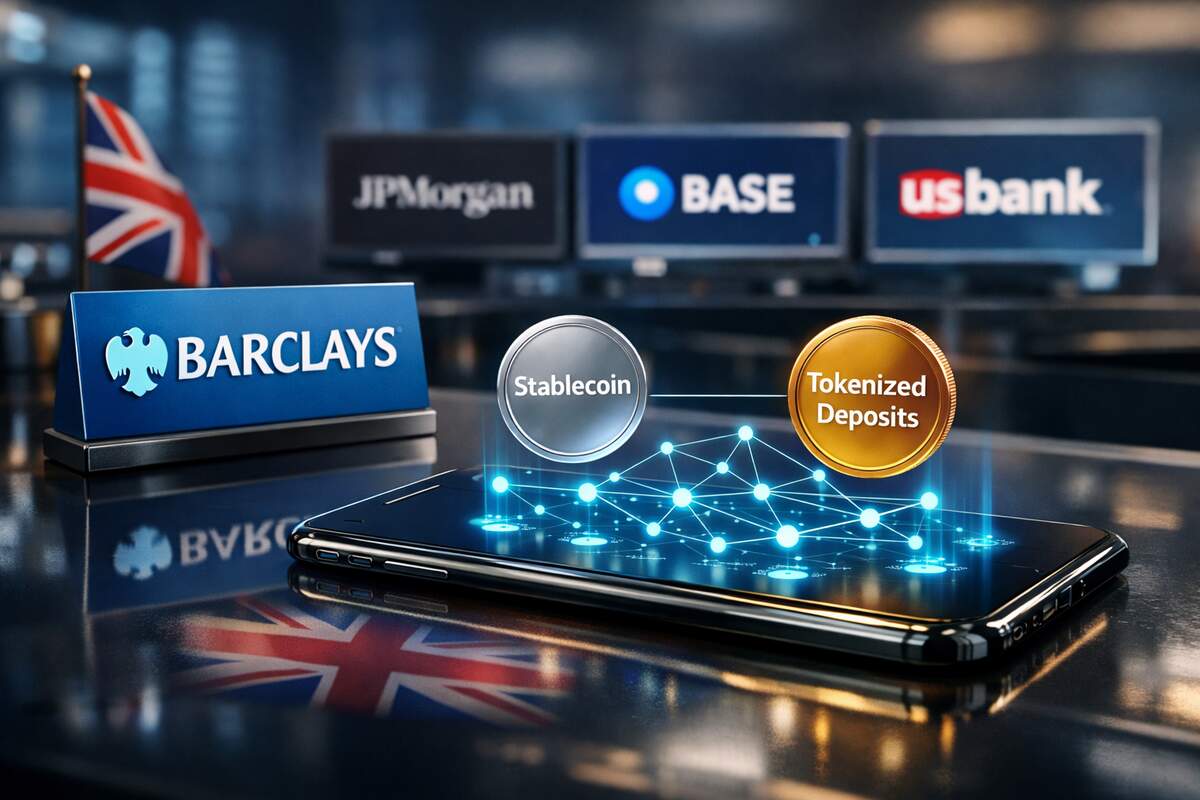
If the bank proceeds, it would join a group of large financial institutions that have already gone live with blockchain-based deposit or stablecoin projects. JPMorgan introduced its tokenized deposit instrument, JPMD, on Base, an Ethereum scaling network incubated by Coinbase, last year. The token lets institutional customers move value using a digital form of their JPMorgan deposits. Earlier this year, the bank expanded JPMD to the Canton Network, broadening its presence in tokenized finance.
JPMorgan’s activity followed reports that it was working on a model to let clients rely on Bitcoin and Ethereum as collateral for loans, indicating a broader digital asset strategy beyond just payments. Other large banks in the United States have taken similar steps. US Bank, which is publicly traded, began trials of a stablecoin operating on the Stellar Network, testing how blockchain could support its services. Citigroup and Bank of America have also signaled their interest in similar technologies, although details of their projects remain limited.
Within this environment, the U.K.-based institution’s potential entry underscores how traditional banks are experimenting across multiple approaches: proprietary tokens, deposit tokenization, and third-party stablecoins. The competition centers on which model can deliver reliable settlement, regulatory compliance, and client demand, without undermining bank balance sheets or introducing new systemic risks. How the bank positions itself—whether as a cautious adopter focused on internal efficiencies or a more outward-facing participant providing client-facing blockchain products—could shape its role within that emerging ecosystem.
Market reaction and outlook for Barclays
Despite the flurry of activity around blockchain and stablecoins, the bank’s reported exploration did not generate a positive immediate response from investors on Friday. Shares in the institution were trading down almost 4% on the day, as broader markets also moved lower. The decline suggests that, for now, equity performance is being driven more by macroeconomic conditions and sector-wide sentiment than by early-stage digital asset initiatives.
Over a twelve-month horizon, however, the share price tells a different story. The stock has advanced about 54% over the last year of trading, a gain that reflects improved investor confidence compared with prior periods. The current blockchain review is taking place against that backdrop of recovery, with management weighing how new technologies might contribute to long-term competitiveness in payments and transaction services.
Key considerations likely include:
- How tokenized deposits or stablecoins could improve settlement times and reduce operational costs.
- Whether corporate and institutional clients are seeking such services at meaningful scale.
- The extent to which regulators in the U.K. and other core markets will support or constrain new offerings.
The choice of technology supplier, expected as early as April according to Bloomberg, will be a critical step if the bank decides to move forward. A selected provider would need to integrate with existing infrastructure, satisfy risk and compliance standards, and demonstrate the capacity to operate at a global banking scale.
Conclusion
The U.K.-based banking group is advancing its examination of blockchain, focusing in particular on tokenized deposits and stablecoin-related services. Through its investment in Ubyx and its current search for technology partners, the institution is moving from broad interest to more specific assessments of how digital asset infrastructure could fit within a regulated banking model. Should it proceed, it would join major global peers that are already active in tokenized finance, though investors have yet to reward the latest signals with short-term share price gains. The outcome of the ongoing review, and any decision expected around April, will show how prominently blockchain will feature in the bank’s future strategy.
Disclaimer
The information provided in this article is for informational purposes only and should not be considered financial advice. The article does not offer sufficient information to make investment decisions, nor does it constitute an offer, recommendation, or solicitation to buy or sell any financial instrument. The content is opinion of the author and does not reflect any view or suggestion or any kind of advise from CryptoNewsBytes.com. The author declares he does not hold any of the above mentioned tokens or received any incentive from any company.
Featured image created by AI