
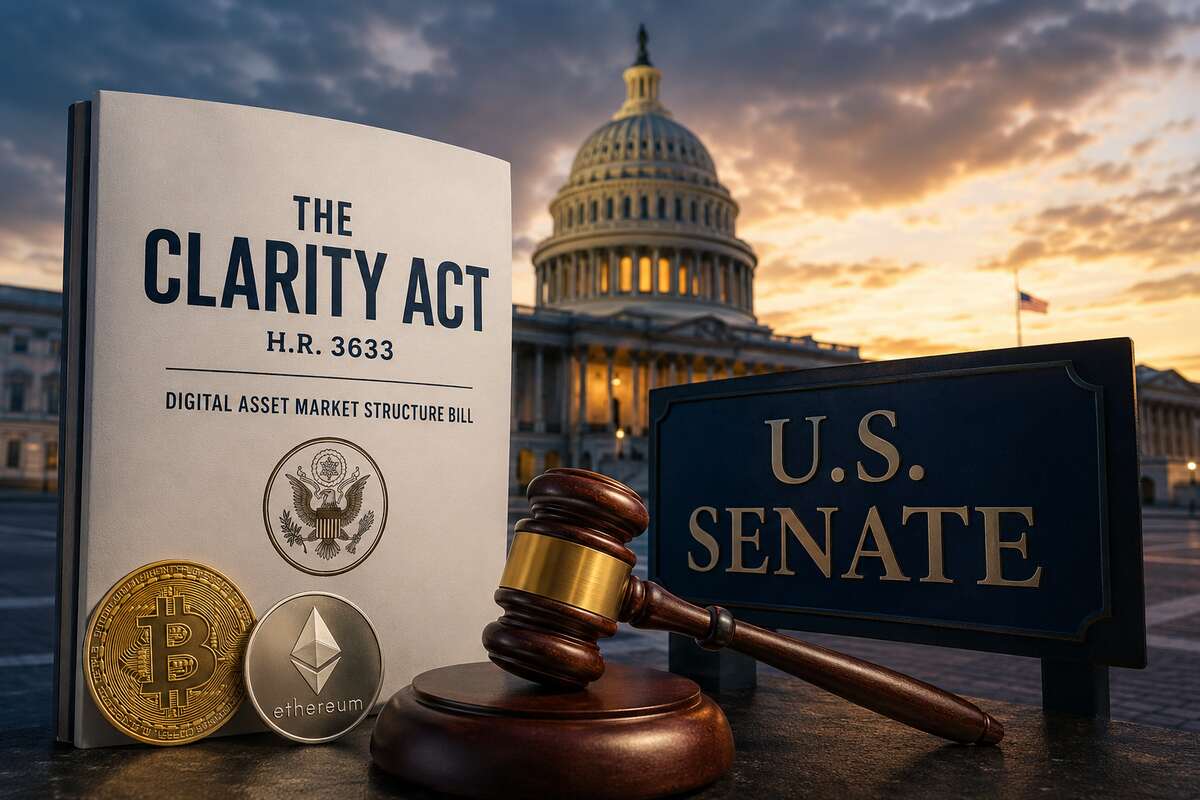
- John Thune filed the motion to proceed, starting the Senate process for the Clarity Act.
- The first procedural vote is scheduled for 2:15 p.m. ET on September 15.
- Lawmakers are still negotiating disputes over enforcement, stablecoin rewards, and Trump’s crypto holdings.
The Clarity Act moved closer to a Senate floor fight after Republican leadership opened the formal process needed to bring the crypto market-structure bill forward. Senate Majority Leader John Thune filed the motion to proceed early Saturday, setting up an initial procedural vote soon after lawmakers return from the August recess. The Clarity Act would create a legal framework for much of the U.S. crypto market and define how authority is divided between the SEC and CFTC. Even with that step, the bill still faces unresolved policy disputes and a difficult path to the 60-vote threshold required to move contested legislation through the Senate.
Clarity Act enters the Senate process
The latest action on the Clarity Act was a cloture filing on the motion to proceed to H.R. 3633. That filing is only a procedural opening move, not passage of the bill itself, but it begins the multi-step Senate process used to move contested legislation toward a floor vote.
Because the filing came too late to fit in before senators left for the August recess, the next action is scheduled for after they return. The first procedural test is set for 2:15 p.m. ET on Tuesday, September 15, showing that Republican leadership wants the Clarity Act to be handled quickly when the chamber reconvenes.
What the Clarity Act would do
If it becomes law, the Clarity Act would establish a formal legal structure for most cryptocurrency activity in the United States. A key part of the bill is drawing jurisdictional lines between the SEC and CFTC, while placing much of the industry under the oversight of the CFTC.
The measure is widely seen as a market-structure bill that could give traditional financial institutions more confidence to participate in crypto. Even so, the Clarity Act is still at an early Senate stage, and its practical impact depends first on whether lawmakers can build enough support to move it through the chamber.
Clarity Act faces support gap and disputes
Republicans still need roughly six Democratic crossovers to reach the 60-vote threshold. That gap has remained since the bill cleared the Senate Banking Committee in May with support from only two Democrats, and Democratic reluctance was a major reason the vote was pushed until after the August break. Negotiators now have several weeks to try to resolve the disputes surrounding the Clarity Act. Those issues include illicit-finance and law-enforcement protections, the unresolved debate over stablecoin yield and rewards, and government ethics provisions tied to President Donald Trump’s crypto holdings.
What happens after the September vote
Lawmakers are also trying to secure a bipartisan agreement on provisions covering President Trump’s crypto holdings. An addendum negotiated with the White House would require him to divest from crypto-related businesses, but there has so far been no word from the White House on that proposal.
If the Clarity Act clears the Senate, it would go back to the House for another vote before reaching Trump’s desk. The calendar adds pressure, because the September window is narrowing ahead of midterm campaigning and the coming weeks are viewed as the last realistic chance for the legislation to become law this year.
Conclusion
The Clarity Act has advanced to an important procedural stage, but its path remains uncertain. Thune’s filing put the bill on track for an early September Senate test, with the first procedural vote scheduled for 2:15 p.m. ET on September 15. Still, the Clarity Act needs more Democratic support to clear the 60-vote hurdle, and several policy disagreements remain unresolved. Questions about illicit-finance protections, stablecoin rewards, and ethics rules related to President Donald Trump’s crypto holdings are still hanging over the negotiations. That means the September vote could become a decisive moment for whether the bill has a realistic path to becoming law this year.
Disclaimer
The information provided in this article is for informational purposes only and should not be considered financial advice. The article does not offer sufficient information to make investment decisions, nor does it constitute an offer, recommendation, or solicitation to buy or sell any financial instrument. The content is opinion of the author and does not reflect any view or suggestion or any kind of advise from CryptoNewsBytes.com. The author declares he does not hold any of the above mentioned tokens or received any incentive from any company.
Featured image created by AI