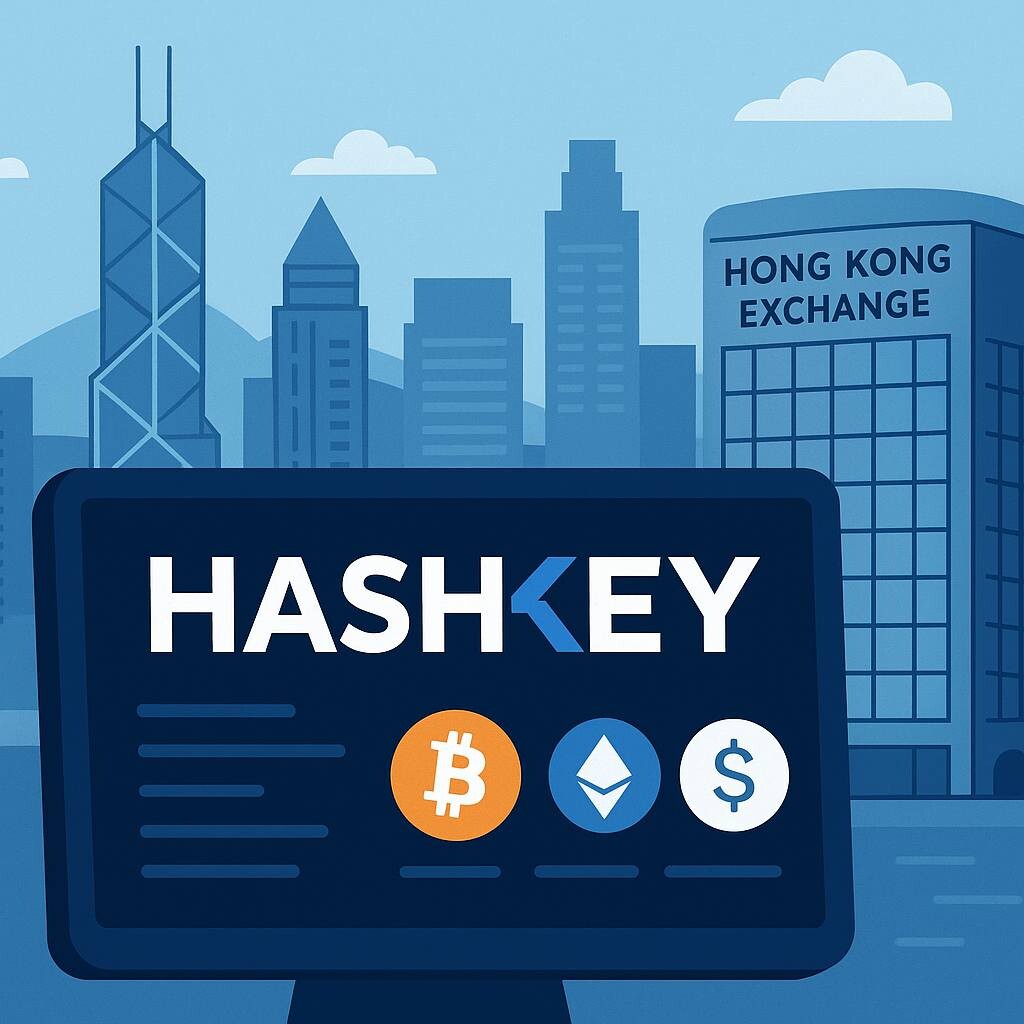
- Hashkey prices its Hong Kong IPO at HK$6.68 per share, selling 240.6 million shares and raising about $206 million in fresh capital.
- The IPO attracts cornerstone investors such as UBS, Fidelity and CDH, showing interest in a licensed crypto exchange in Hong Kong.
- The listing takes place while Bitcoin faces sharp price swings and mainland China keeps a strict stance on cryptocurrency trading.
Hashkey has moved from private digital asset champion to public market test case as it prices its Hong Kong initial public offering at HK$6.68 per share, raising about HK$1.6 billion, or roughly $206 million, in fresh capital. The deal lands near the top of a marketed range between HK$5.95 and HK$6.95 and comes after a year in which Bitcoin set record highs above $126,000 before dropping about 36% in roughly a month, a backdrop that keeps risk appetite under constant review. For Hong Kong, the listing gives tangible shape to its ambition to become a regulated digital asset hub, while mainland China maintains a strict ban on cryptocurrency trading and repeats warnings about speculative activity.
Hashkey IPO pricing and deal structure
The Hong Kong listing prices 240.6 million shares at HK$6.68 each, producing gross proceeds of about HK$1.6 billion and placing the final price close to the top end of the HK$5.95 to HK$6.95 range that bankers marketed to investors. Based on that price, several reports put the implied equity value of Hashkey at close to HK$19 billion, turning the exchange operator into one of the larger newly listed financial technology names on the local market in 2025. The company initially flagged a fundraising target of up to HK$1.67 billion, or about $215 million, which means final pricing came slightly below the absolute maximum raise yet still signals solid demand in a cautious environment. Shares are scheduled to begin trading on the Hong Kong Stock Exchange on 17 December 2025 under stock code 03887, giving investors their first chance to express a listed view on a fully licensed city-based cryptocurrency exchange. Hashkey plans to direct much of the new capital toward technology investment, operations and regulatory compliance, areas that underpin its core businesses in trading facilitation, tokenisation, asset management and brokerage.
Market backdrop and what Hashkey listing means for Hong Kong
The timing of the Hashkey float highlights how far the digital asset cycle has moved in a short period, because major coins reached repeated record levels earlier in the year before reversing sharply. Bitcoin, still the market’s main reference asset, climbed to an all-time high above $126,000 in early October, then fell by about 36% over roughly one month, a retreat that reminded investors how quickly sentiment can change in this market. In spite of that volatility, Hong Kong officials and regulators have continued to present the city as a home for regulated crypto activity, building on a licensing regime that already covers exchanges such as Hashkey and that now extends to a broader set of virtual asset services. The listing therefore functions as more than a single corporate funding event; it also serves as a signal that Hong Kong intends to keep digital assets within its financial architecture rather than push them offshore. For global investors, a tradable Hashkey share provides an alternative to buying tokens or overseas exchange stocks, and it allows them to express a view on the growth of a Hong Kong-centred, rules-based trading venue. The deal also tests whether equity investors accept the argument that a compliance-heavy exchange model can create more stable revenue through trading fees, tokenisation services and institutional custody, even though the company remains in a high investment phase and has reported cumulative adjusted net losses of more than HK$1.5 billion between 2022 and 2024.
Investor demand for Hashkey shares and cornerstone backing
Order books for the transaction show that demand for Hashkey equity reached well beyond the basic amount on offer, with various data providers reporting that the public subscription in Hong Kong exceeded one hundred times the shares available and in some calculations moved above three hundred times, depending on the segment measured. Institutional allocations show a similarly concentrated pattern, as roughly 80% of the non-cornerstone institutional tranche went to the top twenty accounts, a sign that large long-term investors wanted meaningful positions rather than small token holdings.The cornerstone line-up features names that matter in both traditional finance and regional capital markets, including UBS, Fidelity and Chinese investment firm CDH, along with several other funds that together agreed to subscribe for around HK$590 million of stock before the wider bookbuild began. Their early commitments helped frame the deal as a mainstream equity story rather than a niche speculative listing focused only on token prices. Hashkey management can now point to a shareholder base that mixes global asset managers, regional long-only funds and a large retail cohort attracted by the exchange’s role as one of Hong Kong’s first fully licensed virtual asset trading platforms open to both professional and retail investors. For those investors, the critical question will be how quickly the company can turn strong headline trading volumes and tokenisation activity into sustainable profit, given that revenue reached about HK$720 million last year while adjusted net loss widened to roughly HK$1.19 billion in the same period.
Regulatory split between mainland China and Hong Kong
The Hashkey IPO also draws attention to the contrasting policy stance between Beijing and Hong Kong. Mainland authorities banned cryptocurrency trading in 2021 and have repeated that position several times since, with the People’s Bank of China cautioning against any renewed wave of speculation and promising to act against illegal activity linked to virtual currencies. Hong Kong, which operates a separate legal and economic system, has taken a different route that combines strict licensing with an explicit attempt to host regulated digital asset business, including exchanges, tokenisation projects and stablecoin pilots. That approach gives the city a chance to attract startups and established firms that want regulatory clarity in Asia without leaving the region, and it explains why a company such as Hashkey chose Hong Kong rather than another jurisdiction for its main exchange operations. Regulators there subject the platform to capital, governance, custody and disclosure rules similar to those applied to more conventional financial institutions, yet they still permit retail access within defined risk frameworks. This dual structure of caution and openness frames the environment into which Hashkey now sells its shares, and it may influence how other crypto businesses think about public listings or secondary fundraising in the city over the next few years.
Conclusion
The listing gives Hashkey a fresh capital base of around HK$1.6 billion at a time when crypto prices remain volatile and regulatory attitudes differ sharply across major markets, especially between Hong Kong and mainland China. Investor demand, including oversubscription in the public offer and strong interest from global cornerstone funds, shows that a regulated digital asset exchange can still attract substantial equity capital even while it invests heavily and reports sizeable losses. For Hong Kong’s policymakers, the performance of Hashkey shares after trading begins on 17 December will act as a live test of the city’s bet on licensed virtual asset infrastructure as part of its broader financial centre strategy. If the business converts its current position into steady fees from trading, tokenisation and asset management while keeping a firm grip on compliance, it may become one of the reference names for investors who want exposure to regulated crypto platforms in Asia without buying the underlying tokens themselves. In that case, the first days of trading for Hashkey on the Hong Kong Stock Exchange could mark the start of a new phase where listed digital asset operators sit more firmly inside mainstream capital markets rather than at the edges of the system.
Disclaimer
The information provided in this article is for informational purposes only and should not be considered financial advice. The article does not offer sufficient information to make investment decisions, nor does it constitute an offer, recommendation, or solicitation to buy or sell any financial instrument. The content is opinion of the author and does not reflect any view or suggestion or any kind of advise from CryptoNewsBytes.com. The author declares he does not hold any of the above mentioned tokens or received any incentive from any company.
Featured image created by AI