- Japan’s FSA and National Police Agency asked exchanges to add withdrawal delays and related safeguards.
- The request includes address preregistration, waiting periods, withdrawal limits and stronger authentication.
- The measures are not binding and exchanges can decide how to apply them.
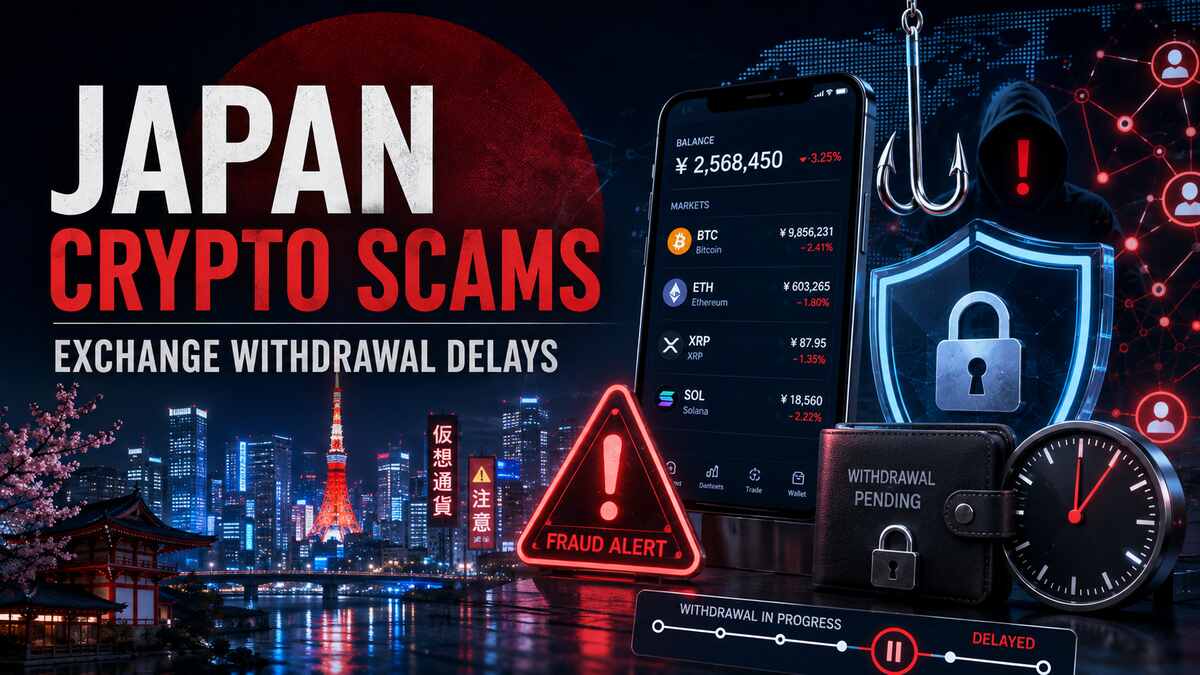
Japan crypto scams are behind a new request from the country’s financial regulator and police, who want exchanges to tighten how customers move funds. The Financial Services Agency said it acted jointly with the National Police Agency after losses among exchange users increased and authorities saw cases in which money tied to fraudulent schemes was transferred to exchange accounts. The request covers withdrawal delays, preregistered wallet addresses, stronger monitoring and tougher authentication. It was submitted to the Japan Virtual and Crypto Assets Exchange Association, the self-regulatory body for the sector, with exchanges expected to decide how these steps fit their own services and risks.
Japan crypto scams drive new exchange request
Japan’s Financial Services Agency asked crypto exchanges to limit when customers can withdraw digital assets after putting money into their accounts. The request says platforms should restrict crypto withdrawals for a set period after a customer deposits fiat currency or buys digital assets. Authorities presented the step as part of a broader effort to reduce misuse of exchange accounts.
The FSA said it made the request together with the National Police Agency as losses grew among exchange users. Authorities also pointed to cases where funds obtained through fraudulent schemes were moved into exchange accounts. The request does not create a single mandatory timetable, but it signals that regulators want exchanges to add friction where fast transfers may help scams succeed.
Safeguards proposed for Japan crypto scams
The request includes more than just delayed withdrawals. Exchanges were also asked to require customers to preregister crypto withdrawal addresses before transfers can be made. In addition, authorities proposed a waiting period before a newly added address can actually be used, which would slow down immediate transfers to fresh destinations.
Other measures in the request include customer-specific withdrawal limits and stronger monitoring of both transactions and access environments. Authorities also asked for phishing-resistant multifactor authentication. Another proposed check would make sure the name of a bank remitter matches the name of the crypto account holder, adding another layer of review around account activity.
Japan crypto scams and exchange implementation
The request was submitted to the Japan Virtual and Crypto Assets Exchange Association, which acts as Japan’s self-regulatory body for crypto exchanges. Using that channel allows the authorities to communicate the proposed safeguards to the industry through the organization that already oversees exchange conduct standards.
The FSA said the measures are not binding rules. Instead, exchanges should decide how to implement them based on their operations, services and exposure to misuse. That means one platform may adopt different settings or procedures from another, while still following the broad direction outlined by the authorities in response to Japan crypto scams.
Conclusion
Japan crypto scams have prompted a coordinated response from the Financial Services Agency and the National Police Agency, with both urging exchanges to strengthen controls around withdrawals and account access. The proposed measures include a delay after fiat deposits or crypto purchases, preregistration of withdrawal addresses, waiting periods for new addresses, customer-specific limits and stronger monitoring and authentication. Authorities also want checks to confirm that a bank remitter’s name matches the crypto account holder’s name. Although the request is not binding, it gives exchanges a clear framework for tailoring safeguards to their own services and risk exposure.
Disclaimer
The information provided in this article is for informational purposes only and should not be considered financial advice. The article does not offer sufficient information to make investment decisions, nor does it constitute an offer, recommendation, or solicitation to buy or sell any financial instrument. The content is opinion of the author and does not reflect any view or suggestion or any kind of advise from CryptoNewsBytes.com. The author declares he does not hold any of the above mentioned tokens or received any incentive from any company.
Featured image created by AI