
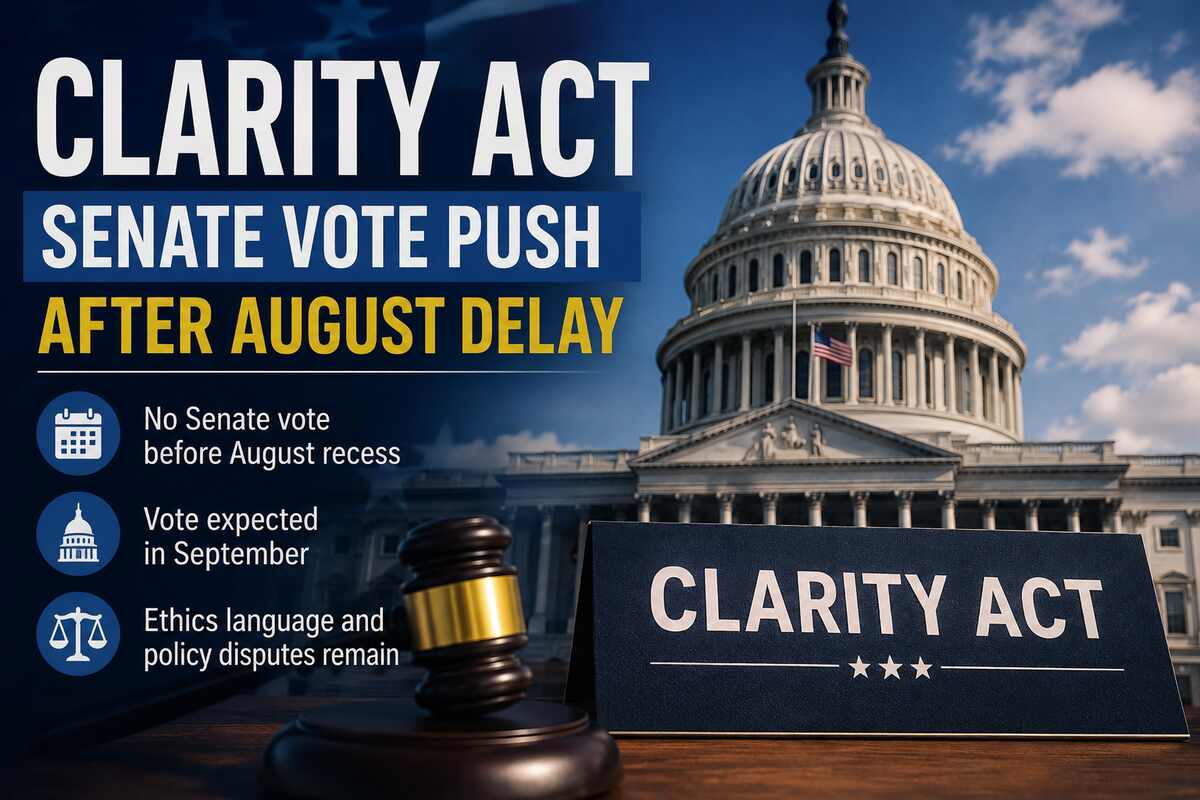
- The Senate will not vote on the Clarity Act before its August break.
- John Thune said a vote is expected after senators return in September.
- Ethics language and other policy disputes are still delaying the bill.
The Senate will not vote on the Clarity Act before lawmakers leave Washington for the rest of August, according to people following the legislation and a statement from Senate Majority Leader John Thune’s office. Supporters had hoped the Senate would stay in session long enough to settle the remaining disputes, but senators in both parties still had major concerns. The Senate is scheduled to return on Sept. 14, 2026, leaving a short window for action later in the month. For now, the Clarity Act remains delayed as industry groups and lawmakers continue trying to resolve the final political and policy issues before a floor vote.
Clarity Act delayed before the August recess
The Senate is using its final day before recess on other matters, including a continuing resolution to fund the federal government through the midterm election, a Russia sanctions bill linked to Senator Lindsey Graham, and a group of nominations. Thune also announced votes on those items for Friday morning, along with an amendment vote tied to the sanctions bill.
People following the bill told CoinDesk that the Clarity Act did not have a time agreement in place, meaning there was no arrangement to limit debate and move the measure quickly. Politico had also reported that the Senate did not expect to hold even a first vote on the legislation before the break.
Why the Clarity Act vote slipped
The Clarity Act has already won separate approvals from the Senate Banking Committee and the Agriculture Committee, and lawmakers have resolved most of their outstanding disagreements. Even so, a few important issues remained unsettled, which was enough to keep the measure from reaching the Senate floor before the chamber adjourned for August.
The biggest remaining dispute involved an ethics provision tied to President Donald Trump, who disclosed that he made more than $1 billion from his crypto businesses in 2025. Trump had agreed to language brokered by Senator Cynthia Lummis, but Senate Democrats and some Republicans, including Thom Tillis, still said they had concerns about that wording.
Political hurdles for the Clarity Act
Tillis and Senator Ruben Gallego drafted a counterproposal and said they sent it to the White House at the end of July. As of CoinDesk’s reporting, the White House had not publicly responded. A Senate aide also said other unresolved issues included Agriculture Committee provisions, law enforcement concerns, and continued discussions over stablecoin yield and rewards.
One source familiar with the matter told CoinDesk that Senate Democrats did not want to vote on the Clarity Act before the midterm election and would have delayed other Senate business if the bill had not been pushed to next month. People following the legislation also said many of the remaining obstacles had become political rather than purely about the bill’s text.
It would take 60 votes for the bill to pass. At the time of reporting, it was unclear whether the measure even had 50 votes, with several Republicans publicly opposing it while Democrats continued to press for a stricter ethics provision than the one now included.
What comes next for the Clarity Act
Crypto trade groups said they still expect work to continue during the recess. Digital Chamber CEO Cody Carbone said the delay was not the outcome supporters wanted at the start of the week, but added that efforts would continue to find the remaining common ground needed for a successful vote when Congress returns in September.
Ji Hun Kim, CEO of the Crypto Council for Innovation, also called the delay disappointing, while saying the bill had still seen major progress. He said the group remains committed to comprehensive market structure legislation and argued that every day without a clear framework pushes American users and builders offshore while leaving consumers exposed.
The next procedural question is whether Thune files for cloture on the Clarity Act before the Senate leaves town. If he does, the first procedural vote could come as soon as Tuesday, Sept. 15. If he waits until lawmakers return on Sept. 14, the first vote could not happen before Wednesday, Sept. 16, under Senate procedure.
Conclusion
The Clarity Act has missed an August Senate vote, but supporters still see a path to action when lawmakers return in September. The delay reflects a mix of scheduling pressure, unresolved policy questions, and broader political tensions around the ethics language connected to Trump. Other Senate priorities also took up the limited floor time available before recess. Even though many issues on the bill have already been worked out, the final vote count remains uncertain and key disputes are still open. That leaves the Clarity Act heading into September as an unfinished but still active part of the Senate’s crypto agenda.
Disclaimer
The information provided in this article is for informational purposes only and should not be considered financial advice. The article does not offer sufficient information to make investment decisions, nor does it constitute an offer, recommendation, or solicitation to buy or sell any financial instrument. The content is opinion of the author and does not reflect any view or suggestion or any kind of advise from CryptoNewsBytes.com. The author declares he does not hold any of the above mentioned tokens or received any incentive from any company.
Featured image created by AI