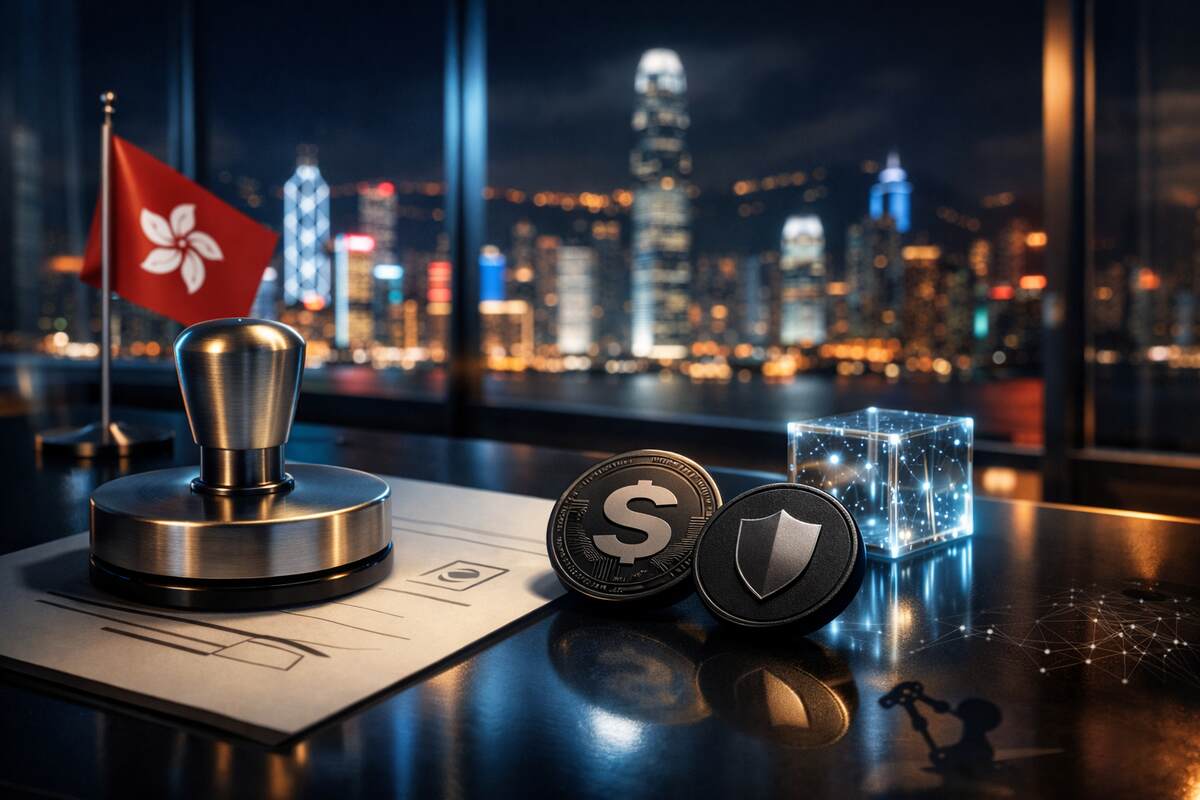
- Hong kong plans to issue its first stablecoin licenses next month, starting with a small group of issuers that show solid models and compliance.
- officials are also preparing a licensing regime for custodians and tracking how tokenization, DeFi, and AI shape digital asset markets.
Hong Kong is preparing to grant its first stablecoin licenses as early as next month, signaling another step in the city’s digital asset policy rollout. Financial Secretary Paul Chan Mo-Po outlined the plans on Wednesday at CoinDesk’s Consensus Hong Kong conference, describing a cautious approach that starts with only a limited number of license approvals. His remarks also highlighted broader developments in tokenization, decentralized finance, and artificial intelligence as they intersect with digital assets.
Hong Kong’s cautious rollout of stablecoin licenses
Chan said the government will begin by approving only a small group of stablecoin issuers, underscoring a measured strategy at the launch of the new regime. Authorities intend to focus on applicants that can demonstrate innovative use cases, sound business fundamentals, and strong compliance capabilities. The emphasis on a “credible and sustainable” model, along with robust regulatory adherence, is central to deciding who receives one of the initial licenses.
By limiting the first batch, Hong Kong aims to manage risk as it tests how regulated stablecoins fit into its wider financial system. The approach allows regulators to monitor how licensees operate in practice, while also sending a signal that quality and regulatory readiness are prerequisites for entering the market. Chan framed the licensing process as part of a broader attempt to integrate digital assets into the city’s existing financial structure without compromising oversight standards.
The move aligns with Hong Kong’s effort to position itself as a controlled but open environment for digital asset development. Stablecoins, which are commonly pegged to traditional currencies or assets, are seen as a bridge between conventional finance and blockchain-based systems. The requirement for novel use cases suggests that regulators want more than simple issuance models, favoring projects that demonstrate clear utility within payments, trading, or other financial services.
Regulatory framework for custodians and the wider ecosystem in hong kong
Alongside stablecoin licensing, Chan said Hong Kong is finalizing a separate regime for digital asset custodian service providers. He indicated that legislation related to custodians is expected to be introduced this summer. Once in place, the rules would sit alongside existing regulations and newly issued stablecoin licenses to form a more complete structure for supervising digital asset activity.
Chan described these efforts as building toward a regulatory system that covers the “team” of the digital asset ecosystem, referring to major functions such as issuance, trading, and custody. The government’s goal is to reduce gaps that could expose investors or the financial system to operational or security risks. By setting requirements for entities that safeguard digital assets, authorities aim to address one of the core vulnerabilities in the sector.
This focus on a holistic framework suggests that Hong Kong is not treating each asset class or service type in isolation. Instead, policymakers appear intent on creating a linked set of rules that govern how different pieces of the digital asset market interact. For custodians, that likely means strict standards around asset segregation, security practices, and disclosure, all under a licensing or registration regime that mirrors those used in more traditional finance.
Taken together, the planned legislation for custodians and the controlled rollout of stablecoin licenses indicate that Hong Kong is seeking both innovation and structure. The city is opening doors to new products and services, but only within a framework that policymakers believe can manage operational, market, and compliance risks across the ecosystem.
Tokenization, DeFi, and AI reshape finance in Hong kong’s view
In his speech, Chan highlighted three trends that he said are gaining momentum at the same time: tokenized real-world products, greater interaction between decentralized finance and traditional finance, and increasing connections between artificial intelligence and digital assets. He described tokenization initiatives as moving beyond experimental phases into real-world usage, particularly as more institutions participate.
According to Chan, government bonds, money market funds, and other conventional financial instruments are increasingly being issued on-chain. These tokenized versions rely on digital ledgers to improve settlement efficiency, allowing transactions to complete more quickly and with fewer intermediaries. The technology also supports fractional ownership, enabling investors to buy smaller portions of assets that might otherwise be out of reach, and can improve liquidity for instruments that have historically been harder to trade.
Chan’s remarks suggest that Hong Kong views this shift toward on-chain issuance as a practical development rather than a theoretical possibility. The reference to government bonds and money market funds indicates that tokenization is extending to core components of the financial system, not only niche or speculative products. For regulators, this raises questions about how existing rules apply when these instruments live on digital ledgers, but it also presents potential benefits in terms of transparency and market access.
He also noted what he described as a deeper interaction between decentralized finance and established financial institutions. While he did not provide specific examples, his comments point to a landscape where DeFi protocols and traditional players engage more directly, whether through integration of services, shared infrastructure, or mutual use of tokenized instruments. This convergence forms part of the context for Hong Kong’s regulatory efforts, as authorities work to oversee activity that spans both on-chain and off-chain domains.
AI and the emergence of a “machine economy”
Chan devoted part of his speech to the growing role of artificial intelligence within digital asset markets. He said advances in AI are moving toward a scenario where autonomous agents can make and execute decisions on their own. In that setting, AI-driven agents could hold and transfer digital assets, pay for services, and conduct transactions with one another directly on-chain.
He referred to this potential development as the early stage of what some call the “machine economy,” a system in which software agents are active participants in finance and commerce. These agents would not just analyze data or provide recommendations, but also take direct actions such as moving funds or settling payments, constrained only by the rules built into smart contracts and the protocols they use.
For Hong Kong’s policymakers, this trend raises new considerations about how to regulate markets in which non-human entities have operational control over assets. Chan’s comments indicate that the government is already thinking about how AI and digital assets intersect, even as current regulation focuses on more immediate issues such as stablecoin issuance and custody. The notion of AI agents transacting on-chain suggests a future in which regulatory frameworks may need to address autonomy, accountability, and security in new ways.
By linking AI with tokenization and DeFi, Chan placed this emerging “machine economy” within a broader transformation of the financial landscape. The same infrastructure that supports tokenized bonds or on-chain funds could also serve AI-driven participants, further blurring the line between human-led and machine-led activity in financial markets.
Conclusion
Hong Kong’s decision to start issuing stablecoin licenses next month, initially to a limited group of approved firms, marks another stage in its digital asset strategy. The city is pairing this move with plans for a licensing regime for custodians and broader efforts to close regulatory gaps across the ecosystem. At the same time, officials are closely watching shifts in tokenization, the integration of DeFi with traditional finance, and the rise of AI-driven activity on-chain. How these elements develop, and how effectively the regulatory framework keeps pace, will shape Hong Kong’s role in the evolving digital asset landscape.
Disclaimer
The information provided in this article is for informational purposes only and should not be considered financial advice. The article does not offer sufficient information to make investment decisions, nor does it constitute an offer, recommendation, or solicitation to buy or sell any financial instrument. The content is opinion of the author and does not reflect any view or suggestion or any kind of advise from CryptoNewsBytes.com. The author declares he does not hold any of the above mentioned tokens or received any incentive from any company.
Featured image created by AI