
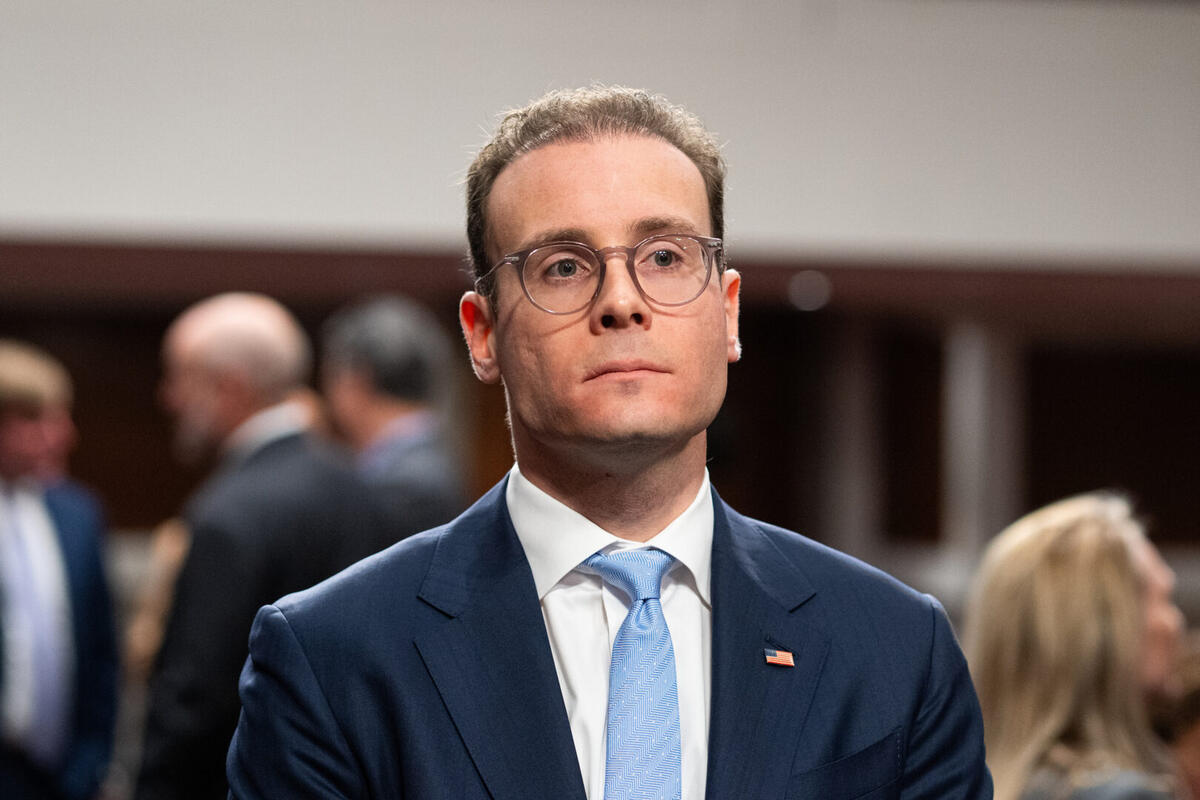
- CFTC chair Mike Selig plans new guidance on prediction markets, DeFi software providers and crypto derivatives oversight
- The agency aims to clarify rules for leveraged and margined crypto spot trading while coordinating with the SEC on digital assets
CFTC chair Mike Selig has outlined an expanded regulatory agenda for U.S. crypto markets, signaling a more assertive role for the derivatives watchdog in areas ranging from decentralized finance (DeFi) to prediction markets and artificial intelligence. Calling the United States the “crypto capital of the world,” he described a coordinated regulatory push that aims to bring clearer rules to key segments of the digital asset economy while reinforcing the CFTC’s jurisdiction.
CFTC chair outlines joint push with SEC on digital assets
Speaking at the FIA Global Cleared Markets Conference in Boca Raton, Florida, Selig said U.S. authorities are working more closely together to reassert leadership in digital assets. He highlighted a new working relationship with Securities and Exchange Commission Chairman Paul Atkins, emphasizing that the two agencies are seeking to avoid the clashes that have characterized past oversight of crypto.
According to Selig, the CFTC and SEC have moved to “end” internal turf battles by collaborating on a joint Project Crypto initiative. This effort is aimed at coordinating how the two regulators approach digital asset markets and related products, rather than issuing fragmented or conflicting guidance. He framed this cooperation as central to the country’s attempt to reclaim a leadership position in global crypto regulation. Related debates over jurisdiction and legislative direction have also surfaced in coverage of how the Clarity Act could reshape tokenization and DeFi rules and how the Coinbase standoff with the Clarity Act is reshaping U.S. crypto law.
Selig’s remarks underscored a broader message: U.S. market supervisors intend to speak with a more unified voice on digital assets. He presented this as a necessary step to give industry participants more predictable rules and to reduce regulatory uncertainty that has long complicated compliance planning for firms operating in both derivatives and securities markets.
Expanding CFTC chair agenda on prediction markets and legal battles
A major focus of Selig’s speech was the rapid growth of prediction markets, which U.S. regulations treat as “event contracts.” These platforms let users trade contracts tied to outcomes such as elections, economic indicators, and other real-world events. Selig said these markets are no longer a marginal phenomenon but have evolved into a significant and fast-growing trading ecosystem.
To respond to that expansion, the CFTC chair announced that the agency will publish guidance clarifying how event contracts can be listed and traded under U.S. law. Alongside the guidance, the regulator plans to open a formal rulemaking process that will solicit public comment on how these markets should be supervised. The combination of interpretive guidance and rulemaking is intended to create a clearer regulatory framework for both existing operators and new entrants. That context comes as prediction market platforms remain under pressure, including in cases like Polymarket facing 2026 bans and a $1.4 million CFTC penalty.
Selig linked this agenda to ongoing legal disputes with several U.S. states over the CFTC’s role in overseeing event contracts. He argued that “market participants deserve clarity” and said the agency will take a more proactive stance in asserting its authority in this area. He reiterated his view, voiced the previous month, that the CFTC must be recognized as the primary supervisor of prediction markets. To that end, he said he will keep reviewing litigation strategies to ensure that the agency’s position is presented forcefully in court proceedings.
The emphasis on legal strategy reflects the contested regulatory perimeter around event contracts, where questions about gambling law, state authority, and federal derivatives regulation intersect. Selig’s comments suggest the CFTC does not intend to relinquish ground in defining how these products are treated at the national level. Broader proposals that would expand the agency’s role have also appeared in discussions around Boozman’s crypto bill putting $500 million of crypto oversight under the CFTC.
New scrutiny for DeFi developers, spot structures and crypto derivatives
CFTC chair Mike Selig also signaled that the agency is turning to one of the most sensitive issues facing the crypto sector: how U.S. law applies to DeFi developers and software providers. He acknowledged that industry participants have long confronted uncertainty over whether writing or deploying code can trigger registration obligations with the CFTC. According to Selig, the agency now plans to confront this question directly rather than leaving it unresolved.
This prospective clarification is particularly significant for developers who create decentralized protocols that facilitate derivatives or margin trading without centralized intermediaries. The CFTC’s conclusions could determine whether such developers must register, adjust their business models, or alter the technical design of their projects to stay within existing law. The question fits into a wider policy conversation reflected in recent reporting on whether U.S. crypto regulation can move stablecoins into mainstream finance and on senators moving to set clear rules for crypto and stablecoins.
Beyond DeFi software issues, the CFTC chair said the agency is examining several trading structures that have often operated in a gray zone. These include leveraged crypto spot trading and the rules governing margined spot products on exchanges. The current review builds on earlier work led by former Acting Chairman Caroline Pham, who began revisiting “actual delivery” standards drafted during President Donald Trump’s first term. That earlier guidance has been seen as out of step with evolving crypto spot-market practices, and Selig indicated that the agency is still working on standards more aligned with how these markets function today.
Another area under active consideration is the treatment of crypto perpetual derivatives, which are a dominant product category in global digital asset trading. The CFTC is assessing how these products fit within existing U.S. legal frameworks, with potential implications for exchanges listing perpetual contracts and for U.S.-based traders accessing them. While Selig did not outline specific outcomes, his comments made clear that the agency views these instruments as central to its digital asset oversight.
Collectively, these initiatives represent an attempt to bring more defined rules to multiple layers of the crypto market stack—from on-chain software and margin products to complex derivatives—under the CFTC’s umbrella.
AI, automated trading, and the future of digital market oversight
In addition to crypto-specific topics, Selig addressed the growing presence of artificial intelligence and automated systems in digital markets. He noted the rise of AI-driven trading tools and agents, and he argued that regulators must adapt their frameworks to accommodate innovation in these technologies while maintaining market integrity.
His remarks echoed comments from several figures in the broader technology and crypto ecosystem. NEAR co-founder Illia Polosukhin has said that AI agents are likely to become the main users of blockchains, a view that underscores the expected convergence between distributed ledgers and autonomous software. Coinbase CEO Brian Armstrong has similarly argued, in a post on X, that AI agents could soon outnumber humans in the volume of transactions they initiate. Concerns around the intersection of artificial intelligence and digital assets have also been rising in areas such as AI-powered crypto scams.
By referencing these perspectives, Selig situated the CFTC’s work within a broader transformation of financial infrastructure, where machine-driven trading and AI-based decision-making may predominate. He suggested that regulatory design must keep pace with these shifts so that experimentation with AI and automation can proceed within clear, enforceable boundaries.
The intersection of AI, DeFi, and derivatives markets raises complex questions, from responsibility for algorithmic decisions to surveillance of automated trading strategies. Selig’s comments indicated that the CFTC is aware of these challenges and is considering how its rulebook should evolve to address them without stifling technological development. Similar regulatory frictions across agencies can also be seen in coverage of SEC slowdown hitting crypto ETF reviews in a market downturn.
Key takeaways
- The CFTC and SEC are coordinating under Project Crypto to reduce regulatory conflict over digital assets.
- Guidance and a rulemaking process are planned for prediction markets, with the CFTC asserting primary authority.
- The agency will directly address whether DeFi software providers must register under existing rules.
- Reviews are underway for leveraged and margined spot crypto trading and for crypto perpetual derivatives.
- The CFTC chair emphasized the need for regulatory frameworks that account for AI and automated trading in digital markets.
Conclusion
Selig’s latest remarks outline a broad agenda for the CFTC at a time when digital assets, DeFi, and AI are reshaping market structure. By tightening coordination with the SEC, pushing for clearer rules on event contracts, and reviewing the status of DeFi developers, leveraged spot trading, and perpetual derivatives, the CFTC chair signaled an intention to reduce uncertainty while reinforcing the agency’s jurisdiction. His focus on AI and automated trading suggests that future rulemaking will increasingly address how emerging technologies interact with both traditional derivatives law and the expanding crypto market.
Disclaimer
The information provided in this article is for informational purposes only and should not be considered financial advice. The article does not offer sufficient information to make investment decisions, nor does it constitute an offer, recommendation, or solicitation to buy or sell any financial instrument. The content is opinion of the author and does not reflect any view or suggestion or any kind of advise from CryptoNewsBytes.com. The author declares he does not hold any of the above mentioned tokens or received any incentive from any company.
Featured image source