- China restates that virtual currency activities are illegal, bans unauthorised offshore yuan-pegged stablecoins and warns banks off crypto services
- Regulators distinguish virtual currencies from real-world asset tokenisation, signalling strict oversight for offshore tokens backed by China-based assets
China moved on Friday to reinforce its long-standing opposition to private digital currencies, unveiling new measures aimed at tightening control over virtual assets and yuan-linked stablecoins. The latest announcement, published on the central bank’s website, reiterates that cryptocurrency-related business remains outlawed, while setting clearer boundaries for tokenisation of real-world assets. The steps underline Beijing’s determination to curb speculative activity in digital tokens and to maintain state dominance over monetary instruments.
China tougher stance on virtual currencies and stablecoins
In the joint statement, the People’s Bank of China and seven other agencies stressed that virtual currencies do not share the legal status of fiat money and that commercial activities involving such assets are classified as illegal financial conduct. The authorities said that recent speculative behaviour in virtual currencies had created fresh risks, prompting a renewed push to tighten supervision and enforcement.
One of the key measures is a ban on the unauthorised offshore issuance of stablecoins linked to the yuan. Regulators also prohibited both domestic entities and their overseas affiliates from issuing virtual currencies abroad without formal approval. In addition, domestic and foreign firms are barred from launching offshore stablecoins pegged to the yuan unless explicitly authorised. The agencies argued that stablecoins tied to official currencies effectively take on some functions of money in circulation, underscoring why they view such products as requiring strict control.
The central bank further cautioned financial institutions against offering traditional banking or clearing services to businesses connected to virtual currencies. This warning reinforces earlier restrictions designed to isolate crypto-related activity from the formal financial system. Beijing’s approach reflects a desire to prevent private digital instruments from undermining monetary sovereignty, while channelling digital innovation through state-led projects.
Central bank reinforces primacy of the digital yuan
The latest measures also highlight how China is positioning its own central bank digital currency in contrast to privately issued tokens. Winston Ma, an adjunct professor at NYU School of Law, said the central bank is effectively underlining that the official digital yuan is the only acceptable form of digital renminbi. In his assessment, the authorities are rejecting what he described as a patchwork of privately issued yuan stablecoins that currently circulate on global cryptocurrency platforms.
Beijing has for years maintained a strict line on crypto assets, but officials now contend that newer forms of speculative trading warrant a tougher response. By explicitly targeting offshore issuance of yuan-pegged stablecoins, regulators are closing a channel through which private actors could have created digital instruments resembling the national currency. The move reinforces the central bank’s monopoly over digital versions of the yuan and seeks to ensure that any currency-like digital product remains under state control.
The emphasis on the digital yuan also fits with China’s broader agenda to modernise its payment infrastructure while maintaining oversight. By allowing the official digital currency to develop within a regulated framework, and simultaneously limiting private stablecoins, authorities are drawing a clear boundary between state-sanctioned innovation and what they consider to be illicit financial experimentation.
RWA tokenisation and emerging regulatory space in China
Alongside the clampdown on virtual currencies and stablecoins, the notice addressed the growing business of real-world asset (RWA) tokenisation, where physical or financial assets are converted into digital tokens. The document said offshore issuance of tokens backed by assets located in China must face strict scrutiny from the relevant regulators. This marks an attempt to bring a rapidly expanding and previously loosely supervised segment under clearer rules.
Louis Wan, CEO of Unified Labs, described the most significant aspect of the announcement as the explicit distinction drawn between virtual currencies and real-world asset tokens. He noted that while virtual currencies remain banned, RWA tokenisation is being integrated into the regulatory system. In his view, this separation represents a milestone for China’s RWA sector, as it suggests a pathway for asset-backed tokens to operate within defined legal parameters even as pure cryptocurrencies stay outside the law.
Alex Zuo, senior vice president at Singapore-based crypto custodian provider Cobo, observed that the stricter oversight of offshore issuance also carries an important implication. He said the language of the notice indicates that China is, to some extent, permitting the creation of offshore tokens based on assets held onshore. Previously, he added, such activity existed in a regulatory grey zone. Zuo said the next questions for the industry concern whether detailed implementing rules will follow and whether concrete, compliant RWA projects will emerge under the new framework.
By moving RWA tokenisation toward formal oversight, authorities appear to be differentiating between speculative virtual currencies and asset-backed digital instruments that can be more tightly supervised. The approach suggests that while China continues to bar traditional crypto trading and related business, it is prepared to explore controlled uses of blockchain technology linked to real-world economic activity, subject to stringent regulation.
Conclusion
China’s latest announcement reinforces its prohibition on virtual currencies and extends that stance to cover unauthorised offshore issuance of yuan-pegged stablecoins and related products. The authorities have restated that crypto dealings constitute illegal financial activity, warned banks away from servicing such businesses, and underlined the central bank’s exclusive role in issuing a digital yuan. At the same time, regulators have carved out a separate space for real-world asset tokenisation, signalling a willingness to regulate rather than ban that segment outright. Market participants now await more detailed guidance to see how far this emerging framework for asset-backed tokens will develop within China’s tightly controlled financial system.
Disclaimer
The information provided in this article is for informational purposes only and should not be considered financial advice. The article does not offer sufficient information to make investment decisions, nor does it constitute an offer, recommendation, or solicitation to buy or sell any financial instrument. The content is opinion of the author and does not reflect any view or suggestion or any kind of advise from CryptoNewsBytes.com. The author declares he does not hold any of the above mentioned tokens or received any incentive from any company.
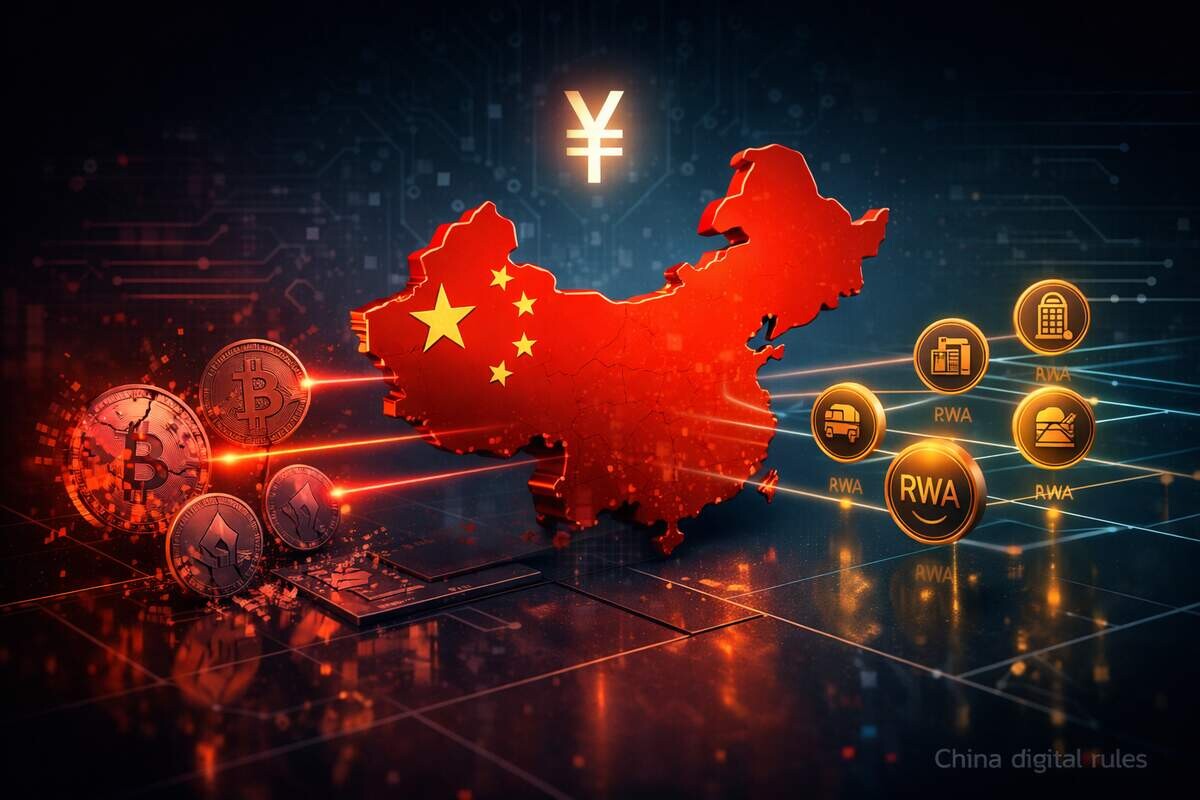
Featured image created by AI