
3 Key Takeaways
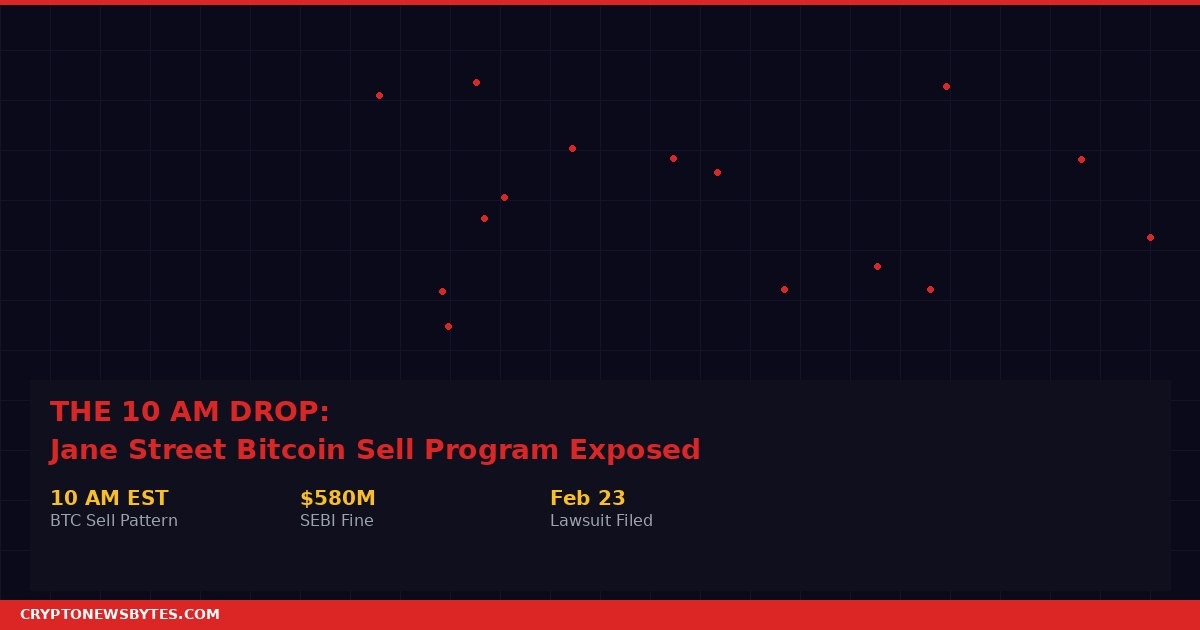
- Glassnode co-founders publicly alleged that Jane Street ran a systematic “10 AM Bitcoin sell program” throughout late 2025 that suppressed BTC prices through coordinated daily liquidation cascades
- The daily 10 AM flash crashes stopped after the Terraform Labs insider trading lawsuit against Jane Street was filed on February 23, 2026, a timing correlation that market analysts call too precise to ignore
- India’s securities regulator SEBI fined Jane Street $580 million for cross-market manipulation, establishing a global pattern of regulatory action against the firm across three continents simultaneously
The Jane Street Bitcoin Sell Program: What Changed After the Lawsuit
For months, Bitcoin traders noticed the same pattern: a sharp, sudden Jane Street Bitcoin sell pressure appearing at approximately 10 AM EST, triggering cascading liquidations across derivatives markets and suppressing price recovery. The pattern was so consistent that on-chain analysts began tracking it as a known market anomaly.
Then on February 23, 2026, the Terraform Labs bankruptcy administrator filed an insider trading lawsuit against Jane Street in Manhattan federal court. And the 10 AM drops stopped.
Glassnode co-founders Jan Happel and Yann Allemann, posting through their Negentropic X account, connected the dots publicly: the cessation of the daily sell pattern coincided almost exactly with the lawsuit becoming public. The allegation is explosive: that one of Wall Street’s most powerful trading firms was running a systematic Bitcoin suppression program, and that the legal exposure from the Terraform lawsuit made continuing it too risky.
The 10 AM Pattern: What Traders Observed
The Jane Street Bitcoin sell pattern followed a consistent structure that derivatives traders documented extensively through late 2025 and into early 2026. At approximately 10 AM EST on most trading days, a significant sell order, or series of orders, would hit Bitcoin spot and futures markets simultaneously. The selling was large enough to trigger stop-loss cascades and liquidate leveraged long positions, but not so large as to be obvious on any single exchange.
The result was a recurring “flash dip” that pushed BTC down 1-3% within minutes, followed by a slow recovery. For market makers with advance positioning (short futures placed before the sell program executed), this pattern created consistent, low-risk profits from the liquidation cascade. Traders who recognized the pattern began closing long positions before 10 AM as a defensive measure.
The mechanism requires understanding Jane Street’s unique position. The firm disclosed a $790 million stake in BlackRock’s iShares Bitcoin Trust (IBIT) in its Q4 2025 13F filing, adding approximately $276 million in shares during the quarter. To the public, this appeared bullish. To market structure analysts, it represented inventory, not a directional bet, since 13F filings do not reveal the derivatives hedge book that determines actual net exposure.
As an authorized participant and major liquidity provider in Bitcoin ETF markets, Jane Street sits at the intersection of ETF creation/redemption mechanisms and the hedging infrastructure above it. This position theoretically enables the kind of cross-market execution the Jane Street Bitcoin sell pattern required.
Jane Street Bitcoin Sell Allegations: The Global Pattern
The Terraform lawsuit is not an isolated action. Jane Street now faces regulatory scrutiny across three continents simultaneously, establishing a pattern that legal experts say strengthens each individual case:
United States (February 2026): The Terraform Labs lawsuit alleges insider trading during the May 2022 Terra collapse, centering on an $85 million withdrawal from Curve3pool within 10 minutes of Terraform’s secret $150 million pull. The lawsuit names co-founder Robert Granieri and employees Bryce Pratt and Michael Huang.
United States (December 2025): A separate $4 billion lawsuit against Jump Trading, filed by the same Terraform administrator, alleges Jump “actively exploited” the Terra ecosystem. The Jane Street complaint alleges confidential information may have been shared between the two firms through Terraform connections.
India (July 2025): India’s Securities and Exchange Board (SEBI) fined Jane Street 48.44 billion rupees (approximately 0 million) for cross-market manipulation involving options and futures positions. The firm disputes the findings, but the fine represents one of the largest regulatory penalties ever imposed on a trading firm in Asia.
Together, these actions paint a picture of a firm whose trading advantages may extend beyond superior technology and into information asymmetry and market manipulation across multiple asset classes and jurisdictions.
What the Lawsuit Revealed: “Bryce’s Secret” and the Information Pipeline
The Terraform lawsuit exposed internal mechanics that are relevant to the broader Jane Street Bitcoin sell allegations. Court filings describe a private communication channel called “Bryce’s Secret,” named after Bryce Pratt, a former Terraform Labs intern who joined Jane Street full-time in September 2021. The channel allegedly funneled material nonpublic information about Terraform’s liquidity decisions to Jane Street traders before any public disclosure.
The existence of private information channels between market makers and protocol teams raises a question that extends beyond Terra: if Jane Street maintained backdoor communications with one protocol, how many others exist? And if the firm had advance knowledge of significant market events, how would that information advantage manifest in daily trading activity?
The connection to the Clarity Act debate is direct. The bill is attempting to define insider trading rules for crypto markets. If the Jane Street cases establish precedent that private channels between market makers and protocol teams create legal liability, it would reshape how every major trading firm operates in digital asset markets.
LUNC Pumps 35% as Do Kwon Pardon Speculation Emerges
The lawsuit triggered an unexpected market reaction. Terra Classic (LUNC) surged 35% in the days following the filing, driven by speculation that the Jane Street allegations could shift blame away from Do Kwon and toward Wall Street market makers. This speculation intensified after President Trump’s pardons of Binance founder Changpeng “CZ” Zhao and Silk Road creator Ross Ulbricht, leading some Terra community members to speculate about a potential Kwon pardon.
This remains speculative. Kwon pleaded guilty and is serving a 15-year sentence for what the judge called “a fraud on an epic, generational scale.” The Jane Street lawsuit, even if successful, does not exonerate Kwon. But it does complicate the narrative that the Terra collapse was solely the result of a flawed algorithmic design by a single fraudulent founder.
What Happens Next: Cross-Cycle Accountability
Legal analysts are calling the combined Terraform lawsuits a landmark for blockchain forensics. The administrator spent four years tracking wallet flows, analyzing on-chain data, and cross-referencing private communications to build the cases. This combination of traditional bankruptcy discovery powers (subpoena rights, access to communication records) with blockchain transparency (permanent, immutable transaction records) creates a new enforcement model.
The message is clear: the crypto industry’s rapid cycles no longer provide cover for bad actors. The idea that you can exploit an event, survive the bear market, and emerge clean in the next bull cycle is being systematically dismantled. On-chain evidence does not expire.
For the broader market, the key question is whether the end of the Jane Street Bitcoin sell pattern marks a permanent shift. If the daily suppression was real and has now stopped due to legal exposure, Bitcoin’s price action may behave differently going forward, with one fewer source of systematic selling pressure at a known daily interval.
The courts will ultimately determine whether the allegations are proven. But the market has already rendered its own verdict: the 10 AM drops stopped, BTC rallied 5.84% in the same week, and the conversation about institutional manipulation in crypto markets has permanently changed.
Read the full background: Jane Street Terra Insider Trading Allegations: How Wall Street’s Biggest Trading Firm Allegedly Profited From Crypto’s $40 Billion Collapse
Related: Is Jane Street Driving Bitcoin ETF Flows and Price Changes?
Related Reading
Sources: Brave New Coin | Disruption Banking | PANews | CoinDCX
Disclaimer: All allegations against Jane Street are unproven. The firm denies wrongdoing and has called the Terraform lawsuit “baseless.” This article is for informational purposes only and does not constitute financial or legal advice. The lawsuits are in early stages and claims may be revised or dismissed.