- More than 1,700 unlicensed crypto platforms had to stop serving EU users on July 1.
- Only 323 companies held MiCA authorization when the transition took effect.
- EU regulators warned that scammers are mimicking migration notices and official agencies.
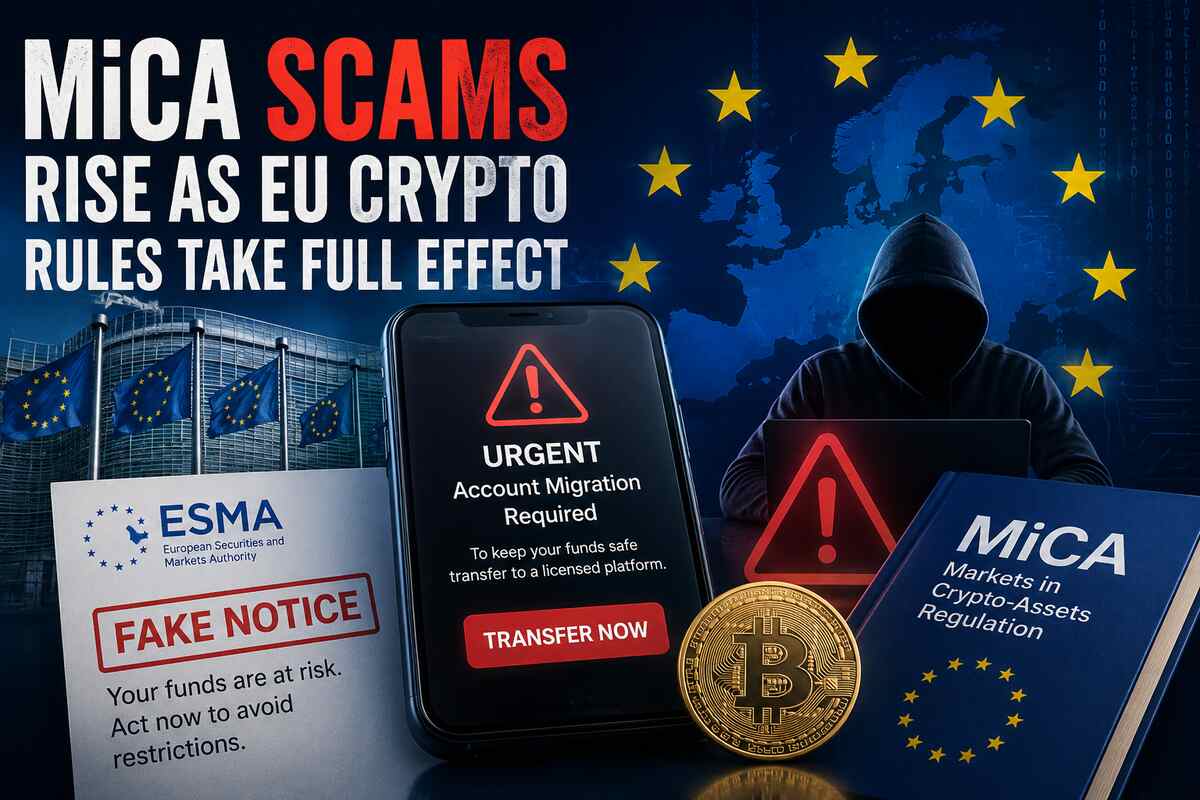
MiCA scams are drawing closer scrutiny across the European Union after the Markets in Crypto-Assets framework took full effect on July 1. The change forced more than 1,700 unlicensed crypto platforms to stop serving EU customers and point them toward licensed alternatives, but only 323 firms held valid authorization at the time. That left a large number of users needing to decide where to move assets, with earlier estimates suggesting up to 10 million people could be affected. Regulators say fraudsters are exploiting that transition by copying official language, misusing agency identities, and pressuring users to act before they can verify where their funds are going.
Why MiCA scams are spreading
The transition created a clear opening for fraud. Thousands of platforms were pushed out of the EU market at once, while the number of authorized firms remained much smaller. For users, the result was confusion around where to move assets and which companies could legally serve them. That uncertainty is central to why MiCA scams are gaining momentum.
Regulators and the source describe a simple but effective tactic. Criminals imitate the wording of genuine migration notices, present themselves as officials, and direct people to fake platforms or transfer destinations. Because real exchanges are also sending messages about withdrawals, restrictions, and account changes, scam outreach can blend in with legitimate communications and create a false sense of urgency.
Regulator alerts on MiCA scams
French regulator AMF said fraudsters have posed as its employees and convinced victims to pay administrative fees upfront to recover supposedly stolen funds. ESMA also said it was aware of criminals misusing its identity, logo, and name, including through falsified documents that claim user funds are at risk. Those warnings show that MiCA scams are not limited to fake exchange messages alone.
The Dutch AFM said the migration from unregulated exchanges had become the attack surface itself. It warned that fraudulent actors may target retail investors who are looking for a licensed provider during the transition. Austria’s Financial Market Authority issued a similar message, noting that hundreds of platforms lost legal status on July 1 and urging users to check official databases before moving assets.
How MiCA scams are operating
The source places the current wave in a broader pattern of social engineering. WhiteBIT found that nearly 41% of crypto incidents in 2025 involved malicious actors deceiving victims through fake investment offers or impersonation. European regulators said they have seen an increase in crypto scams since the July 1 deadline, suggesting that the new compliance deadline has amplified an already familiar threat.
The U.K. Financial Conduct Authority provided separate figures that help illustrate how impersonation fraud works at scale. It said it had 4,465 reports of fake FCA impersonations in the first half of 2025, and 480 victims were persuaded to hand over money. One common method involved claims that the FCA had recovered funds from a crypto wallet opened in the victim’s name, while screen-sharing software was increasingly used to help set up fake accounts on victims’ behalf.
What users should check before moving assets
Regulators gave broadly consistent guidance for users trying to navigate the shift. The AFM urged investors to verify any provider through the official ESMA register before transferring assets, and it said unsolicited requests to move funds should be treated with suspicion. The AMF and AFM also stressed that they do not ask people to transfer money and do not contact customers through private messages.
Another key warning was to confirm the exact legal entity that holds MiCA authorization instead of relying on a familiar brand name. According to the source, MiCA investor protections apply only when a user is being served by a regulated EU operation, and a wider group license elsewhere does not automatically cover every subsidiary. Austria’s regulator also suggested that users could move assets to self-hosted wallets to avoid migration traps entirely.
Conclusion
MiCA scams have emerged as a significant risk during the EU’s effort to remove unlicensed crypto providers from the market. The July 1 deadline forced more than 1,700 platforms to stop serving EU users, while only 323 firms held authorization, leaving many customers to search for alternatives in a compressed period. Regulators in France, the Netherlands, Austria, and at ESMA said criminals are exploiting that moment by impersonating officials, copying migration notices, and pushing fake transfer requests. Their message was consistent: verify the exact licensed legal entity in official registers, be skeptical of unsolicited contact, and remember that regulators do not ask people to move funds through private messages.
Disclaimer
The information provided in this article is for informational purposes only and should not be considered financial advice. The article does not offer sufficient information to make investment decisions, nor does it constitute an offer, recommendation, or solicitation to buy or sell any financial instrument. The content is opinion of the author and does not reflect any view or suggestion or any kind of advise from CryptoNewsBytes.com. The author declares he does not hold any of the above mentioned tokens or received any incentive from any company.
Featured image created by AI