
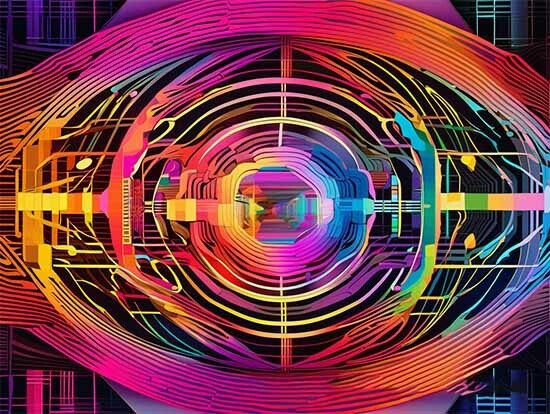
The Museum of Modern Art (MoMA) in New York City recently made waves in the art world by acquiring “Unsupervised—Machine Hallucinations,” a groundbreaking generative artwork created by Turkish digital artist Refik Anadol. This captivating piece, which employs artificial intelligence (AI) to generate unique visual designs inspired by MoMA’s extensive art archives, has sparked both admiration and controversy. In this article, we explore the remarkable journey of “Unsupervised—Machine Hallucinations,” its impact on the art community, and the broader conversation surrounding the use of AI in artistic creation.
The Genesis of “Unsupervised—Machine Hallucinations”
Refik Anadol’s journey in creating “Unsupervised—Machine Hallucinations” began when he embarked on the ambitious task of constructing a sophisticated machine learning model. This model was designed to ingest over 200 years of art from MoMA’s vast catalog, a treasure trove of artistic evolution, and innovation. Anadol’s vision was to reinterpret, alter, and riff on the original works from this extensive collection, breathing new life into the archives.
The Dynamic Nature of the Artwork
What sets “Unsupervised—Machine Hallucinations” apart is its dynamic nature. The artwork is not a static creation; instead, it constantly evolves, influenced by several external factors. Changes in light, movement, acoustics, and even weather play a significant role in shifting the artwork’s appearance and sound. Visitors to MoMA have been mesmerized by the ever-changing view, turning each visit into a unique and immersive experience.
Public Reception and Controversy
“Unsupervised—Machine Hallucinations” has ignited a wide range of reactions, from awe to skepticism. The New Yorker aptly described it as “one of the most crowd-pleasing—and controversial—exhibitions in New York City.” Its pulsing, 24-foot-tall video artwork has indeed captivated viewers within the museum’s walls. However, it has also sparked essential discussions surrounding the role of AI and modern tools in creating art.
AI in Art: A Broader Perspective
The use of AI in art has been a subject of controversy and debate beyond “Unsupervised—Machine Hallucinations.” Projects across various artistic mediums, including TV shows and video games, that have relied on AI assistance have faced considerable backlash. The infusion of machine-generated creativity into the world of art challenges traditional notions of authorship and creativity.
Notable Critiques
As with any innovative art form, there are critics. Noted art critic Jerry Saltz voiced his perspective on “Unsupervised—Machine Hallucinations” in New York Magazine, describing the work as a “glorified lava lamp.” Saltz further emphasized that Anadol’s creation appeared to be a “crowd-pleasing, like-generating mediocrity.” These critiques highlight the polarizing nature of AI-generated art and the ongoing dialogue it generates.
Conclusion
In conclusion, MoMA’s acquisition of “Unsupervised—Machine Hallucinations” is a testament to the ever-evolving nature of art. This generative artwork, powered by AI, pushes the boundaries of what art can be, transforming the act of creation into a dynamic and ever-changing experience. While it has earned praise for its innovation, it has also fueled debates about the role of AI in artistic endeavors. In a world where technology continues to shape our lives, “Unsupervised—Machine Hallucinations” reminds us that art, too, can evolve and adapt to new horizons.
Notice
The information provided in this article is for informational purposes only and should not be considered financial advice. The article does not offer sufficient information to make investment decisions, nor does it constitute an offer, recommendation, or solicitation to buy or sell any financial instrument. The content is opinion of the author and does not reflect any view or suggestion or any kind of advise from CryptoNewsBytes.com. The author declares he does not hold any of the above mentioned tokens or received any incentive from any company.