- South Korea is considering a 20% cap on major shareholder stakes in domestic crypto exchanges, with a possible limited exception for new operators.
- The proposal includes a multi-year compliance timeline, with larger exchanges expected to adjust sooner than smaller ones.
- Current ownership levels at major exchanges would likely require significant restructuring if the cap is enacted.
South korea crypto exchange stake cap plans are taking shape after South Korea’s government and ruling party reportedly agreed on a proposal to limit major shareholder ownership in domestic crypto exchanges to 20%, while allowing narrow exemptions for certain new operators. The reported agreement outlines a multi-year adjustment period for exchanges to bring ownership structures into line, and it arrives alongside other recent regulatory activity affecting virtual asset service providers and disclosures tied to investment advice.
Proposal sets 20% ceiling with limited exemptions
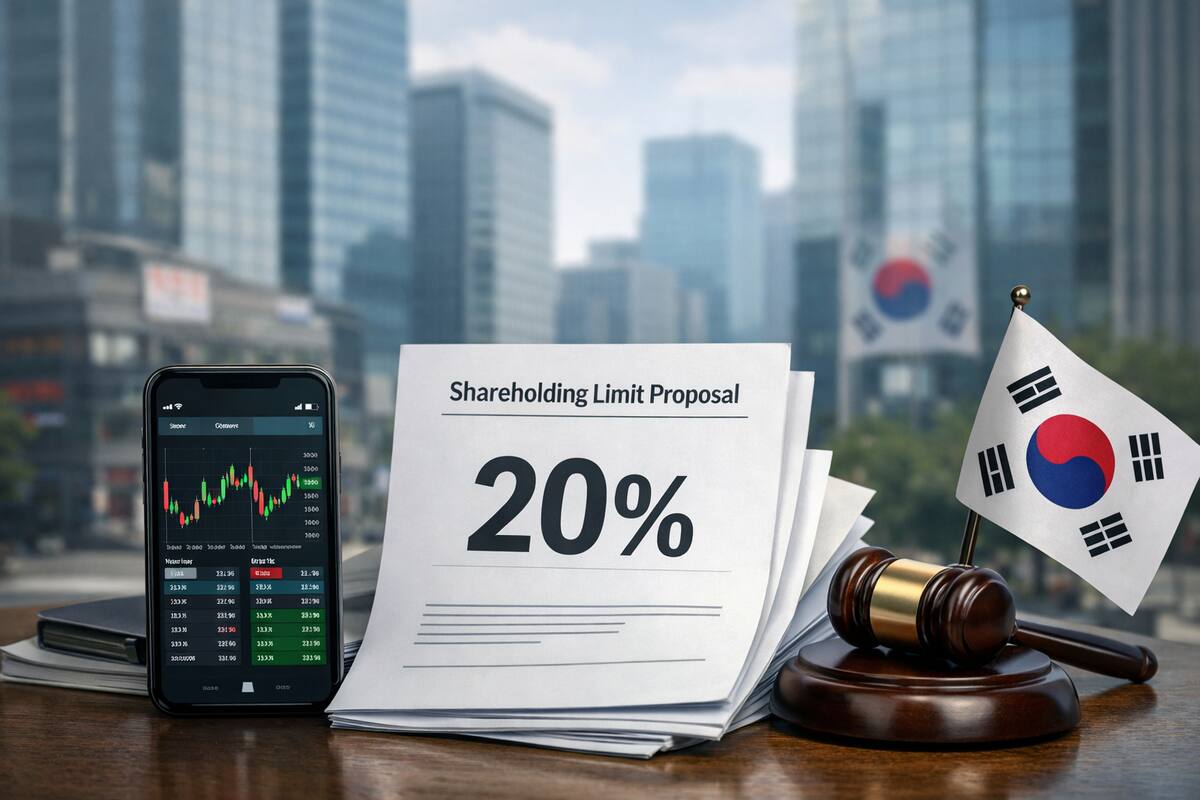
South Korea’s government and ruling party have reportedly agreed to cap the ownership stakes of major shareholders in crypto exchanges at 20%, as the south korea crypto exchange stake cap proposal takes shape. According to a Wednesday report from local media outlet Herald Economy, the Democratic Party of Korea’s digital asset task force and the Financial Services Commission (FSC) reached the 20% maximum shareholding limit after discussions.
The report also described a possible carveout for new businesses. Regulators may permit exceptions of up to 34% for new operators through an enforcement decree. The cited basis for that higher threshold is the Commercial Act’s 33.3% veto threshold in general shareholders’ meetings, indicating the exemption is tied to an existing corporate governance reference point.
While the proposal has been framed as an agreed plan between political and regulatory actors, it is still described as facing a lengthy legislative process. A member of the National Assembly is expected to introduce the bill, but the sponsor has not yet been determined. The path to passage is also uncertain because some lawmakers, including members of the ruling party, have raised concerns about restricting ownership in the sector.
Timeline for compliance and the impact on dominant platforms
Under the reported proposal, exchanges would have three years from the law’s enforcement to adjust their ownership structures to comply with the south korea crypto exchange stake cap. Smaller exchanges may receive an additional three-year grace period, creating a longer runway for certain operators depending on size. In contrast, larger platforms would be expected to make changes within the initial three-year period.
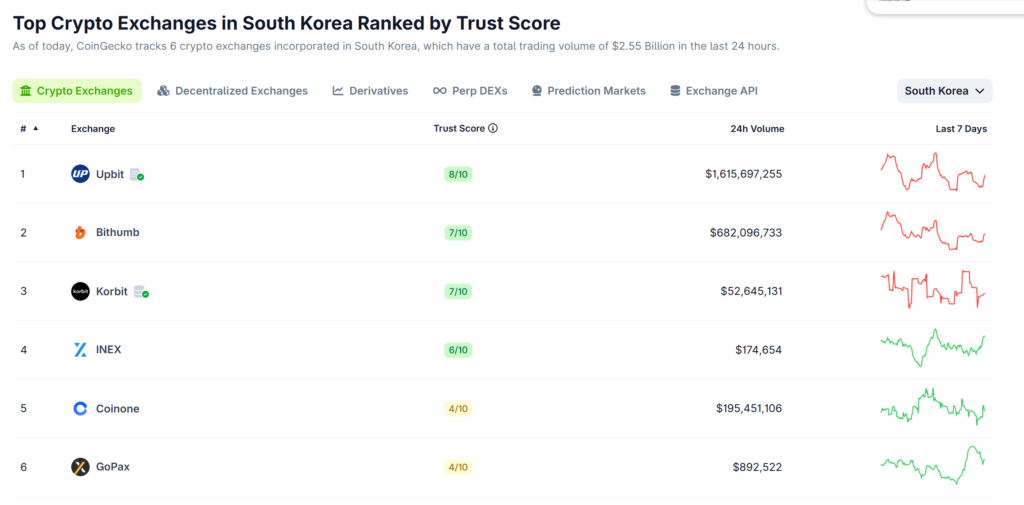
The report singled out Upbit and Bithumb as large platforms that together control roughly 90% of the local market. Under the proposal, these larger exchanges would be required to reduce major shareholder stakes within the first three years, without the additional grace period described for smaller exchanges. The structure of the timeline suggests the most immediate compliance burden would fall on the largest venues, particularly given their market concentration.
The overall proposal has reportedly received some backing among regulators, but the same source material indicates concerns within the lawmaking process. That combination points to a scenario where compliance schedules and thresholds are being debated alongside potential unintended effects on the market, with the largest exchanges central to the practical outcomes due to their share of local trading activity.
Current ownership levels exceed the proposed cap
Current ownership levels at major South Korean exchanges are described as exceeding the 20% limit contemplated by the south korea crypto exchange stake cap. The report listed several specific holdings to illustrate the scale of changes that would be required if the cap is enacted in its described form.
At Upbit, chairman Song Chi-hyung holds about 25.52%, which is above the proposed 20% ceiling. For Bithumb, Bithumb Holdings owns roughly 73.56% of the exchange. Coinone chairman Cha Myung-hoon controls about 53.44%, also far above the suggested maximum.
Other ownership figures referenced in the report include Korbit and GOPAX. Mirae Asset Consulting is set to hold around 92.06% of Korbit following an acquisition, and Binance owns about 67.45% of GOPAX. Each of these figures, as presented, would require substantial restructuring to meet a 20% limit, especially where ownership is highly concentrated in a single shareholder.
The inclusion of an exemption up to 34% for new businesses does not directly address these existing ownership structures as described, since many of the listed holdings are significantly above both 20% and 34%. The source content does not specify how the exceptions would be applied beyond stating they may be allowed for new businesses through an enforcement decree.
Industry warning and related regulatory developments
An industry insider cautioned that the south korea crypto exchange stake cap could affect competition and innovation. The insider reportedly told the outlet that the approach is “unprecedented worldwide” and has “low global consistency,” warning that an excessive introduction could create negative effects. The potential outcomes they cited included limited competition, slowed innovation, and stronger barriers to entry.
The proposal is also set against the backdrop of other South Korean regulatory actions mentioned in the source content. In late January, South Korea’s National Assembly approved changes to the country’s crypto licensing framework that introduced stricter entry requirements for virtual asset service providers (VASPs). Under the updated rules, authorities can examine executives and major shareholders for a broader range of potential violations, including drug trafficking, tax evasion, fair-trade breaches, and serious economic crimes.
In February, Democratic Party lawmaker Kim Seung-won announced plans to draft amendments to the Capital Market and Financial Investment Business Act and the Act on the Protection of Virtual Asset Users. These amendments, as described, would mandate disclosure from individuals who provide investment advice or encourage trading of financial products or virtual assets. The source content does not provide further detail on the form those disclosures would take, but it indicates a parallel policy focus on information requirements tied to market conduct.
Together, these developments show multiple regulatory threads unfolding at once: an ownership-cap proposal affecting exchange governance through the South korea crypto exchange stake cap, licensing changes affecting who can operate and under what scrutiny, and planned disclosure mandates targeting those who advise or promote trading activity.
Conclusion
South Korea’s government and ruling party have reportedly agreed on a south korea crypto exchange stake cap that would limit major shareholder ownership in domestic crypto exchanges to 20%, with potential exceptions up to 34% for new businesses via an enforcement decree. The proposal includes a three-year window for exchanges to adjust ownership structures, with smaller exchanges possibly receiving an additional three-year grace period, while larger platforms such as Upbit and Bithumb—together controlling roughly 90% of the local market—would be expected to comply within the initial three years. Current ownership levels cited for major exchanges exceed the proposed cap, and while the plan has some regulatory backing, it faces a lengthy legislative process and has drawn warnings about potential effects on competition, innovation, and barriers to entry, as other recent and planned regulatory steps continue to evolve.
Disclaimer
The information provided in this article is for informational purposes only and should not be considered financial advice. The article does not offer sufficient information to make investment decisions, nor does it constitute an offer, recommendation, or solicitation to buy or sell any financial instrument. The content is opinion of the author and does not reflect any view or suggestion or any kind of advise from CryptoNewsBytes.com. The author declares he does not hold any of the above mentioned tokens or received any incentive from any company.
Featured image created by AI