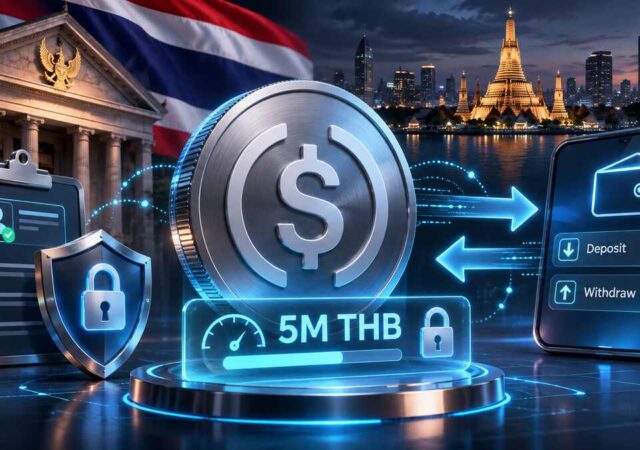

- Thailand’s SEC proposed separate daily caps of 5 million baht for stablecoin deposits and withdrawals.
- Customers would need to use wallets or accounts they own, with third-party wallet transfers blocked.
- Operators would face Travel Rule, blockchain analytics, and market-making disclosure requirements.
Thailand’s proposed stablecoin rules would tighten how regulated crypto operators handle deposits, withdrawals, and customer wallet checks. The country’s Securities and Exchange Commission said the draft would set a daily limit of 5 million baht, or about $148,000, for stablecoin deposits and a separate 5 million baht limit for withdrawals for each customer at each operator. The proposal also requires firms to confirm that customers own the wallets or accounts used for transfers and would block transfers involving third-party wallets. Thai regulators said the stablecoin rules are meant to reduce money laundering risks, cybercrime, and attempts to work around cross-border money transfer controls.
Stablecoin rules propose separate daily caps
Thailand’s Securities and Exchange Commission said the proposed stablecoin rules would apply to regulated crypto operators in the country. Under the draft, customers would face one daily cap for stablecoin deposits and another daily cap for withdrawals, with each limit set at 5 million baht.
The regulator said these caps would apply separately at each operator rather than as one combined limit across the market. In practice, the stablecoin rules would give licensed firms a clearer structure for handling customer transfer volumes while placing formal limits on daily stablecoin activity.
Stablecoin rules require wallet verification
A key part of the draft is a restriction on transfers to and from third-party wallets. Instead, customers would need to use wallets or accounts that they own when depositing or withdrawing stablecoins through regulated operators.
The SEC said operators would have to verify that ownership before processing transfers. These stablecoin rules would therefore add a direct customer verification requirement, making wallet ownership checks part of routine compliance for exchanges and other covered firms.
Stablecoin rules add compliance checks
Thailand’s draft also says operators must comply with the Travel Rule, which requires crypto service providers to collect and share information related to transfers. That would increase the amount of transfer-related data that firms need to handle under the proposed stablecoin rules.
The proposal would also require the use of blockchain analytics to detect wallets linked to suspicious activity. Combined with the Travel Rule, those measures show that the stablecoin rules are designed not only to limit transfers but also to strengthen monitoring around potential financial crime.
Market making and trade conditions
The draft goes beyond transfer controls and includes new requirements for market structure. Crypto exchanges would need to identify their market makers and specify which assets those firms provide liquidity for on the platform.
Thailand’s SEC also said crypto brokers would be barred from using liquidity providers for stablecoin-baht pairs. In addition, certain off-platform trades would be subject to a minimum size of 3 million baht, adding another operating condition within the broader stablecoin rules proposal.
Conclusion
Thailand’s proposed stablecoin rules would place tighter controls on how stablecoins move through regulated crypto platforms. The draft sets separate daily limits of 5 million baht for deposits and withdrawals, requires customers to use wallets or accounts they own, and blocks transfers involving third-party wallets. It also adds compliance obligations through the Travel Rule and blockchain analytics, while introducing new disclosure and trading conditions for exchanges and brokers. The SEC said the measures are aimed at curbing money laundering, cybercrime, and attempts to bypass cross-border money transfer rules. The proposal follows a consultation launched in September on stablecoin transfer limits and broader oversight of crypto operators.
Disclaimer
The information provided in this article is for informational purposes only and should not be considered financial advice. The article does not offer sufficient information to make investment decisions, nor does it constitute an offer, recommendation, or solicitation to buy or sell any financial instrument. The content is opinion of the author and does not reflect any view or suggestion or any kind of advise from CryptoNewsBytes.com. The author declares he does not hold any of the above mentioned tokens or received any incentive from any company.
Featured image created by AI