
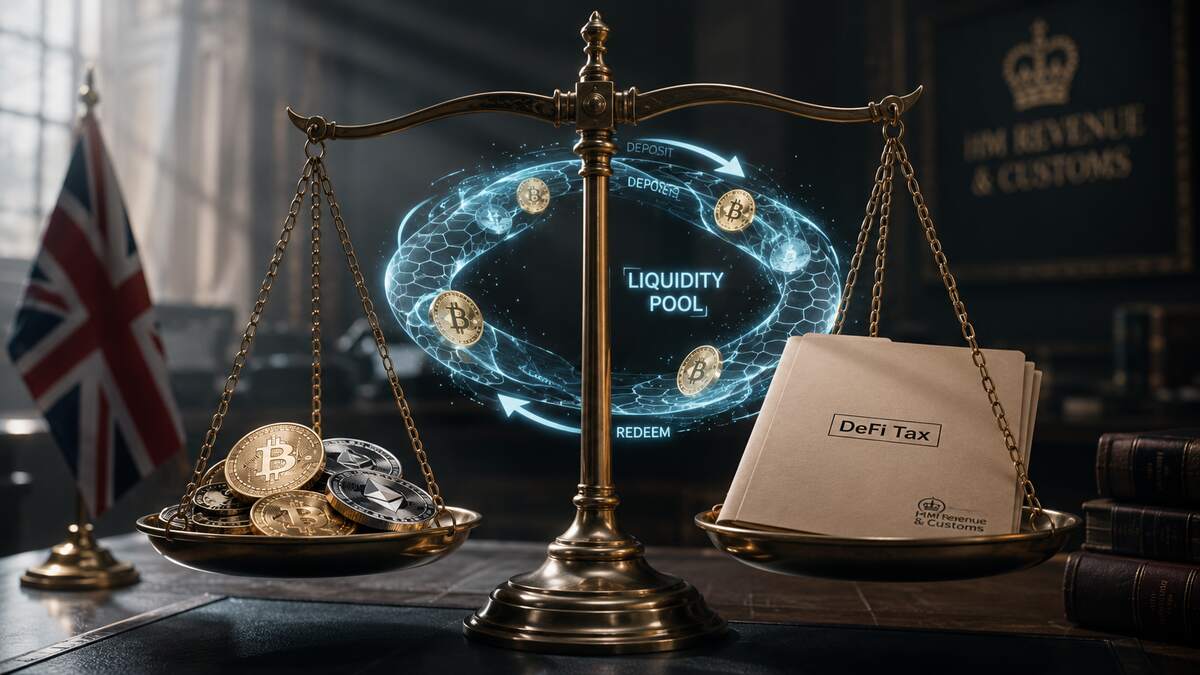
- HMRC said certain DeFi deposits will no longer count as a taxable disposal.
- The UK change starts on 6 April 2027 and may affect about 700000 users.
The UK is changing how crypto is taxed when users place assets into DeFi lending protocols and liquidity pools. Under the updated UK DeFi tax approach set out by HM Revenue & Customs, capital gains tax will be deferred until there is a genuine economic disposal of the assets. The policy paper published Monday says the change will amend the Taxation of Chargeable Gains Act 1992 from 6 April 2027. HMRC estimates the measure will affect around 700000 individuals and trustees who use crypto loans and liquidity pools. The move follows concerns that earlier guidance could create tax charges before users had actually sold anything, adding administrative burdens that did not reflect the economics of the transactions.
What HMRC changed under the UK DeFi tax rules
Under the UK DeFi tax framework, HM Revenue & Customs confirmed that depositing cryptoassets into DeFi lending protocols and liquidity pools will no longer be treated as a taxable disposal in covered cases. Instead, tax will be deferred until a real economic disposal takes place. The update is set out in a policy paper published Monday and is scheduled to take effect on 6 April 2027.
How the new treatment works
The UK DeFi tax measure applies no gain no loss treatment in three situations: lending a single cryptoasset, borrowing one, and supplying tokens to an automated market maker used in liquidity pools. Moving into or out of those arrangements in the same asset will not trigger a tax event. A gain or loss will arise only on a real disposal, or in a liquidity pool if a user withdraws more or fewer tokens than were originally deposited. Collateral posted to borrow against will also be disregarded for capital gains tax.
Why the policy was revised
The UK DeFi tax policy was revised because HMRC’s 2022 guidance meant that moving tokens into a DeFi arrangement could itself be treated as a disposal. That created the possibility of capital gains tax applying before any actual sale. Feedback from stakeholders said this caused disproportionate administrative burdens, and the new framework is intended to better match the economics of these transactions.
UK DeFi tax industry response and timeline
The UK DeFi tax change follows a process that began with a 2022 call for evidence, continued through a 2023 consultation, and reached a summary of responses at Budget 2025. Stani Kulechov, founder of Aave, described the outcome as the right direction in a tweet and said other approaches would have created heavy paperwork for taxpayers. He also said the result showed industry feedback can shape policy and noted separate HMRC plans to tax stablecoins more like money. HMRC estimates the measure will affect around 700000 individuals and trustees, while the final costing still requires certification by the Office for Budget Responsibility.
Conclusion
The UK decision marks a shift in how crypto lending and liquidity pool activity will be treated for capital gains tax purposes. Rather than taxing certain DeFi transfers when assets move into lending protocols or pools, HMRC plans to defer tax until a genuine economic disposal happens. The rules will apply from 6 April 2027, giving users and protocols more than a year to adjust before the amended treatment under the Taxation of Chargeable Gains Act 1992 takes effect. With HMRC estimating that around 700000 individuals and trustees could be affected, the update is likely to matter widely across UK crypto users involved in these arrangements.
Disclaimer
The information provided in this article is for informational purposes only and should not be considered financial advice. The article does not offer sufficient information to make investment decisions, nor does it constitute an offer, recommendation, or solicitation to buy or sell any financial instrument. The content is opinion of the author and does not reflect any view or suggestion or any kind of advise from CryptoNewsBytes.com. The author declares he does not hold any of the above mentioned tokens or received any incentive from any company.
Featured image created by AI