- South Korea is proposing stricter cybersecurity requirements for financial firms after incidents involving 16 companies.
- A review found cybersecurity deficiencies at 130 of 555 financial companies and about 100,000 pieces of customer data were exposed.
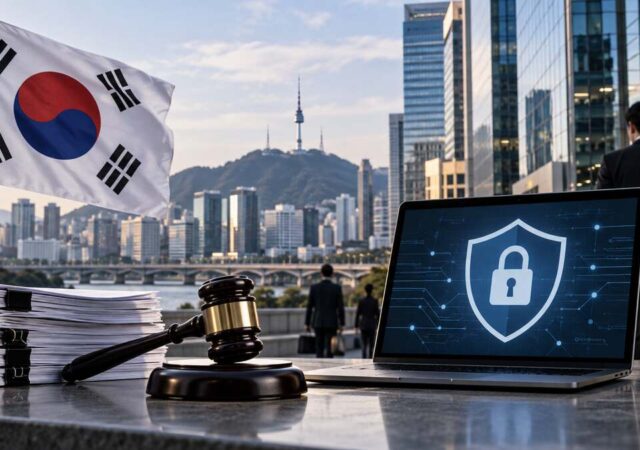
South Korea cybersecurity plans are moving toward tighter oversight after earlier security incidents affected banks, crypto firms and other financial companies. The Financial Services Commission said it wants stronger threat monitoring, more frequent security assessments and clearer executive accountability following an industry-wide review. That review found cybersecurity deficiencies at 130 of 555 financial companies. The regulator also said about 100,000 pieces of customer information were exposed across affected firms, including names, contact details and identification numbers. The proposed changes would also bring more regular vulnerability testing for larger institutions and could allow additional inspections when urgent threats appear.
South Korea cybersecurity review finds broad weaknesses
South Korea’s Financial Services Commission said it is preparing tougher cybersecurity requirements after investigating earlier security incidents involving 16 companies, including crypto exchanges. The proposal follows an industry-wide review that looked at financial institutions more broadly and identified security deficiencies in a significant number of firms.
According to the FSC, 130 of 555 financial companies showed cybersecurity deficiencies. The regulator also said about 100,000 pieces of customer information had been exposed across the affected firms. The data involved names, contact details and identification numbers, showing the scope of the exposure cited in the review.
Firms named in the incidents
The affected firms include Streami, the operator of Gopax, and crypto trading platform Prabang. The source content links these companies to the wider set of incidents reviewed by the regulator as South Korea considers stronger security requirements for the financial sector.
Prabang had previously disclosed that an Oct. 2 hack exposed personal information belonging to some customers. The FSC also said it is still investigating whether the incidents involved artificial intelligence or whether they were connected to the same attackers.
South Korea cybersecurity reforms under consideration
Under the proposed reforms, larger financial institutions would undergo vulnerability assessments at least twice each year. The regulator also plans to improve information-sharing systems as part of its effort to strengthen defenses after the incidents and review findings.
The FSC is also considering the use of artificial intelligence in security monitoring for smaller companies. In addition, it may allow extra cybersecurity inspections outside regular assessment schedules when urgent threats emerge, a measure the regulator said is aimed at helping prevent future incidents.
Executive accountability and monitoring plans
The commission said it would pursue improved threat monitoring and stronger accountability for executives. These steps are part of the broader package of measures being discussed after the investigation and the industry-wide review highlighted weaknesses across multiple financial firms.
The proposed approach combines more frequent assessments with the possibility of additional inspections when necessary. While the FSC is still examining whether AI played a role in the incidents or whether the attacks were linked, its current plan centers on tighter oversight and more active monitoring.
Conclusion
South Korea cybersecurity proposals focus on stricter assessments, stronger monitoring and greater responsibility for executives after a review found deficiencies at 130 of 555 financial firms. The FSC said around 100,000 pieces of customer information were exposed across affected companies, including names, contact details and identification numbers. Named firms include Streami, which operates Gopax, and Prabang, which had previously disclosed an Oct. 2 hack affecting some customer data. The regulator is also weighing twice-yearly vulnerability checks for larger institutions, better information sharing, AI-based monitoring for smaller firms and added inspections when urgent threats arise.
Disclaimer
The information provided in this article is for informational purposes only and should not be considered financial advice. The article does not offer sufficient information to make investment decisions, nor does it constitute an offer, recommendation, or solicitation to buy or sell any financial instrument. The content is opinion of the author and does not reflect any view or suggestion or any kind of advise from CryptoNewsBytes.com. The author declares he does not hold any of the above mentioned tokens or received any incentive from any company.
Featured image created by AI