- Australia Senate committee supports a bill to place digital asset platforms and custody services under existing financial services law
- Proposed rules would require most platforms to hold an Australian Financial Services Licence and follow asset safeguarding and disclosure standards
The australia senate has released a committee report supporting new laws to bring digital-asset platforms and custody providers under the country’s existing financial-services system. The findings from the Senate Economics Legislation Committee endorse a bill that would extend established licensing, compliance, and consumer-protection rules to businesses handling crypto and other tokenized assets for clients.
Senate committee backs digital-asset framework
In its report, the committee stated that the proposed Corporations Amendment (Digital Assets Framework) Bill 2025 marks an important step toward modernising regulation of digital assets. Lawmakers highlighted that activity in this sector is growing quickly while current oversight remains inconsistent, leaving parts of the industry outside the rules that apply to traditional financial firms. The bill, published on Sunday, seeks to close those gaps by leveraging the existing Corporations Act and ASIC Act rather than designing a standalone system solely for blockchain-based products.
The australia senate committee noted that the framework would require operators of digital-asset platforms and tokenized custody services to come within the Australian Financial Services Licence regime in most cases. This would align their obligations more closely with those of established financial institutions that hold or manage assets on behalf of clients. The report positions the bill as a continuation of earlier regulatory measures, such as mandatory AUSTRAC registration for crypto exchanges and Treasury consultations looking at how to integrate digital-asset platforms into the wider financial-services framework.
Licensing, custody rules and transition period
Under the draft legislation, businesses managing digital tokens for customers would face specific requirements designed to mirror protections seen in conventional finance. Platform operators and tokenized custody providers would generally need to obtain an Australian Financial Services Licence. They would also have to follow asset-safeguarding rules aimed at protecting client holdings and meet disclosure obligations when onboarding retail users. Lawmakers argued that, without these measures, firms can currently hold large volumes of customer digital assets without comparable safeguards.
The bill also sets out statutory definitions for key concepts, including “digital tokens,” “digital asset platforms,” and “tokenized custody platforms.” These definitions are intended to capture intermediaries that deal with customer assets while avoiding direct regulation of the underlying blockchain technology. By situating digital-asset activity within the existing financial-services law, the australia senate aims to create a more consistent and enforceable regime for service providers. If Parliament passes the bill, firms that do not already hold an Australian Financial Services Licence would be given a six-month transition window to adjust their operations, secure licences where needed, and bring their compliance procedures into line with the new standards.
Australia Senate Proposal Gains Industry Support and Highlights Economic Potential
Industry groups have broadly supported the push for clearer rules, arguing that regulatory certainty will help both businesses and consumers. Kate Cooper, CEO of OKX Australia, told Decrypt that a stable framework could underpin wider economic benefits. She pointed to research from the Digital Finance Cooperative Research Centre and the Digital Economy Council of Australia, which estimates that innovation in digital finance could add up to $24 billion a year to national output, equivalent to around 1% of GDP. In her view, legislative clarity around the obligations of digital-asset platforms may provide the foundation for those gains.
Cooper added that a defined regulatory regime can reinforce protections around how customer assets are stored, while still allowing Australian firms to use global blockchain infrastructure. The intention, she said, is to support secure custody and platform operations within a regulated environment rather than limiting access to new technology. For businesses in the sector, the australia senate proposal would deliver a clearer path to compliance through licensing, custody standards, and disclosure duties that are more predictable than the current patchwork of obligations.
Key takeaways
- Senate committee supports a bill to regulate digital-asset platforms under existing financial law.
- Most operators would need an Australian Financial Services Licence and must follow asset-safeguarding and disclosure rules.
- A six-month transition is planned for unlicensed providers if the bill passes.
- Industry groups see potential economic gains of up to $24 billion a year from digital-finance innovation.
Conclusion
With the committee’s endorsement, the Corporations Amendment (Digital Assets Framework) Bill 2025 now moves to the next stages of the parliamentary process. Lawmakers will weigh whether to adopt what would be Australia’s first comprehensive regime for digital-asset platforms and tokenized custody services. The outcome will determine how far the australia senate’s vision of bringing crypto-related intermediaries under mainstream financial regulation shapes the future of the country’s digital-asset market.
Disclaimer
The information provided in this article is for informational purposes only and should not be considered financial advice. The article does not offer sufficient information to make investment decisions, nor does it constitute an offer, recommendation, or solicitation to buy or sell any financial instrument. The content is opinion of the author and does not reflect any view or suggestion or any kind of advise from CryptoNewsBytes.com. The author declares he does not hold any of the above mentioned tokens or received any incentive from any company.
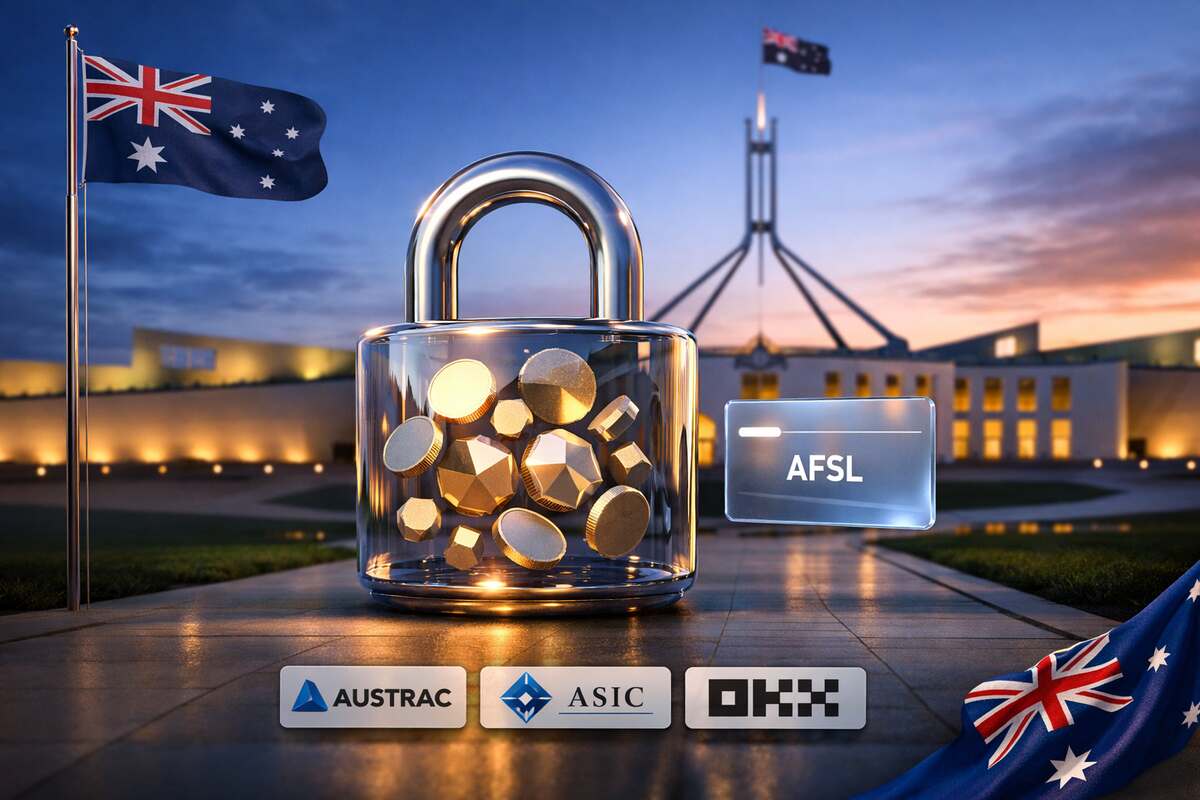
Featured image created by AI