
Before March 12, 2026, every crypto ETF did one thing: tracked a price. You bought the fund, you owned a claim on a digital asset, and if the price went up you made money. BlackRock changed that on March 12 when it launched the iShares Staked Ethereum Trust, ticker ETHB, on Nasdaq. ETHB holds spot Ethereum and stakes the majority of those holdings. Investors receive monthly cash distributions from the staking rewards. For the first time in a U.S.-listed regulated product, an ETF is paying its holders a yield on top of price exposure.
The fund crossed $260 million in assets within its first week. It was the only Ethereum ETF to record net inflows on the Friday following its launch, pulling in $5.47 million while the broader Ethereum ETF category saw $41.97 million in net outflows. Ethereum rose approximately 20 percent in the eight days after the launch. Whether ETHB caused that move, contributed to it, or simply coincided with it is a fair debate. What is not debatable is that the product structure it introduced is now the template for an entire generation of yield-generating crypto funds that will follow it.
| $260M+ ETHB AUM in First Week | ~2.4% Net Annual Yield to Investors | $130B BlackRock Total Crypto ETP Assets |
How ETHB Actually Works: The Mechanics
ETHB holds spot Ethereum in custody, the same structure as BlackRock’s existing ETHA fund which manages $6.5 billion in assets. The difference is what happens to that ETH once it is inside the fund. Between 70 and 95 percent of the fund’s ETH holdings are delegated to professional validators who run Ethereum staking operations. The current validators are Coinbase Prime, Figment, Galaxy Digital’s blockchain infrastructure division, and Attestant. These operators stake the ETH on the Ethereum network and earn staking rewards, currently running at approximately 3.1 percent annually.
Of those gross staking rewards, 82 percent flows to ETHB investors as monthly cash distributions. BlackRock and Coinbase retain the remaining 18 percent as a staking service fee. After accounting for the fund’s 0.25 percent annual sponsor fee, discounted to 0.12 percent for the first year on the first $2.5 billion in assets, the net yield investors receive is approximately 2.4 percent annually. The fund also maintains a liquidity sleeve of 5 to 30 percent of holdings in unstaked ETH at all times so it can meet redemptions even while the majority of assets are locked in staking, which carries exit queue delays built into the Ethereum protocol.
The math: 3.1 percent gross yield, multiplied by 82 percent investor share, equals approximately 2.54 percent, minus the discounted 0.12 percent sponsor fee, equals approximately 2.42 percent net. The 1.9 to 2.2 percent range cited in the prospectus accounts for variable network conditions and the drag from the unstaked liquidity sleeve.
How ETHB Generates and Distributes Yield
Source: BlackRock ETHB prospectus, Phemex analysis, CoinDesk March 2026.
| Component | Detail | Rate |
|---|---|---|
| ETH Staked | 70-95% of holdings via Coinbase Prime, Figment, Galaxy, Attestant | 70-95% |
| Gross Network Yield | Ethereum proof-of-stake network rewards | ~3.1% pa |
| Investor Share | Paid monthly to ETHB shareholders | 82% (2.54%) |
| Staking Fee | Retained by BlackRock and Coinbase | 18% |
| Sponsor Fee | 0.12% discounted rate on first $2.5B, first year | 0.12% |
| Net Yield to Investor | After staking fee and sponsor fee | ~2.4% pa |
Net yield varies with Ethereum network conditions and the size of the unstaked liquidity sleeve. Prospectus range: 1.9-2.2%. Staking carries slashing risk, validators can lose a portion of staked ETH for protocol violations.
ETHB vs Broader Ethereum ETF Market: First Week Flows (March 12-21, 2026)
ETHB was the only Ethereum ETF to record positive inflows on March 21 while the sector saw $41.97M in net outflows. Source: SoSoValue, Stocktwits, BlackRock | March 2026.
| ETHB (BlackRock) Only ETH ETF with positive flows | +$5.47M | |
| ETHB Monday inflows Largest single day that week | +$67M | |
| ETHB first week AUM | $260M+ | |
| ETHA (no staking, BlackRock) Existing non-staking ETH ETF | $6.5B AUM | |
| Broader ETH ETF sector All other ETH ETFs, March 21 | -$41.97M |
ETHB recorded $155M in first-day inflows per some sources, with $15.5M in first-day trading volume per Bloomberg ETF analyst James Seyffart. The $260M+ AUM figure is confirmed by SoSoValue within one week of the March 12 launch.
Why This Was Not Possible Until Now
ETHB could not exist before 2026. Two things changed that made it possible.
The first is regulatory. Under former SEC Chair Gary Gensler, all Ethereum ETF applications were instructed to remove staking functionality. The SEC’s position was that staking services could constitute unregistered securities offerings, a view that led to enforcement actions against Kraken and Coinbase for their retail staking programmes. When Paul Atkins became SEC Chair, that position shifted. Atkins has described the innovation exemption framework and the new token taxonomy as designed to enable rather than obstruct. ETHB is the most concrete product of that policy reversal to date.
The second is the GENIUS Act, signed into law in July 2025, which established a federal stablecoin framework and cleared the regulatory runway for yield-generating crypto products more broadly. The combination of a new SEC chair with a different philosophy and a legislative framework that validated crypto yield products created the opening BlackRock moved through on March 12.
Jay Jacobs, BlackRock’s U.S. head of equity ETFs, described the product at launch as a choice instrument. Investors who already hold ETHA for pure ETH price exposure now have a yield-generating alternative from the same issuer. Some crypto-native investors had been reluctant to move into spot ETFs because they would lose staking rewards. ETHB removes that friction. (CoinDesk, March 12, 2026)
What ETHB Opens the Door For
BlackRock has not filed for a Solana staking ETF or a Cardano staking ETF. It does not need to. ETHB has demonstrated that the mechanics work inside a U.S.-regulated ETF structure. Solana and Cardano staking ETF filings from other issuers are already in front of the SEC. The question is no longer whether staked proof-of-stake assets can be packaged into yield-generating regulated funds. ETHB answered that question. The question now is which networks go next and how quickly the SEC processes the applications under Chair Atkins’s framework.
The structural implication for Ethereum itself is also significant. Every dollar flowing into ETHB requires buying spot ETH. If ETHB scales toward ETHA’s $6.5 billion in assets, that is a meaningful volume of ETH being purchased and then locked in staking contracts, compressing liquid supply further. Ethereum already has 37 million ETH, approximately 30 percent of total supply, locked in staking. ETHB adds institutional-scale demand for staked ETH on top of that existing structural supply constraint.
BlackRock currently manages more than $130 billion across all crypto-related exchange-traded products and captured approximately 95 percent of global digital asset ETP net inflows in 2025. When the world’s largest asset manager demonstrates a staking ETF template, the rest of the industry follows. This is what that looks like in practice.
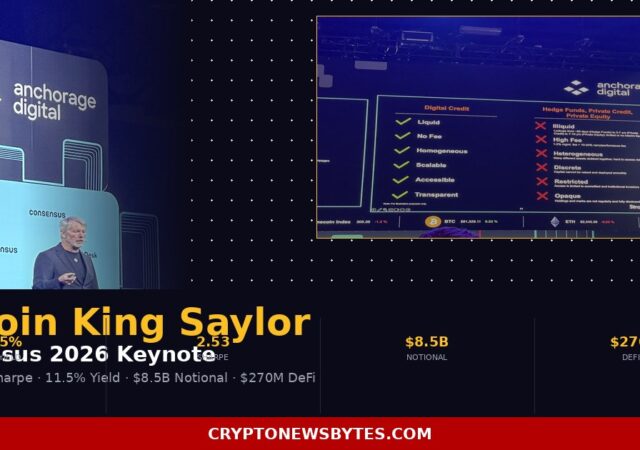
For more on the broader institutional buildout happening simultaneously, see our coverage of the Nasdaq tokenized stocks SEC approval, the Morgan Stanley MSBT Bitcoin ETF, and how Saylor’s digital credit thesis connects to the same yield-seeking demand ETHB is serving.
FAQs: BlackRock ETHB Staked Ethereum ETF
Related Coverage on CryptoNewsBytes
The other major institutional infrastructure story from the same week, Wall Street building blockchain rails into the $126 trillion equity market.
The bank-issued Bitcoin ETF that completed the week’s Wall Street crypto infrastructure trio alongside ETHB and the Nasdaq tokenization approval.
Goldman’s bottom call on the same day ETHB was driving positive ETH ETF inflows in a sea of outflows, the market context for what ETHB landed into.
The parallel yield-generating thesis in the Bitcoin ecosystem, STRC for Bitcoin, ETHB for Ethereum. Two different structures targeting the same demand for crypto yield in a regulated wrapper.
The DC Blockchain Summit panel that mapped the next phase, ETHB is the first major proof point of the yield-generating phase that follows spot ETFs.
Primary sources: CoinDesk, March 12, 2026 | FinTech Weekly | BlackRock ETHB prospectus | SoSoValue ETF data | Phemex ETHB analysis | Stocktwits March 21, 2026. Published April 2, 2026.