In This Briefing
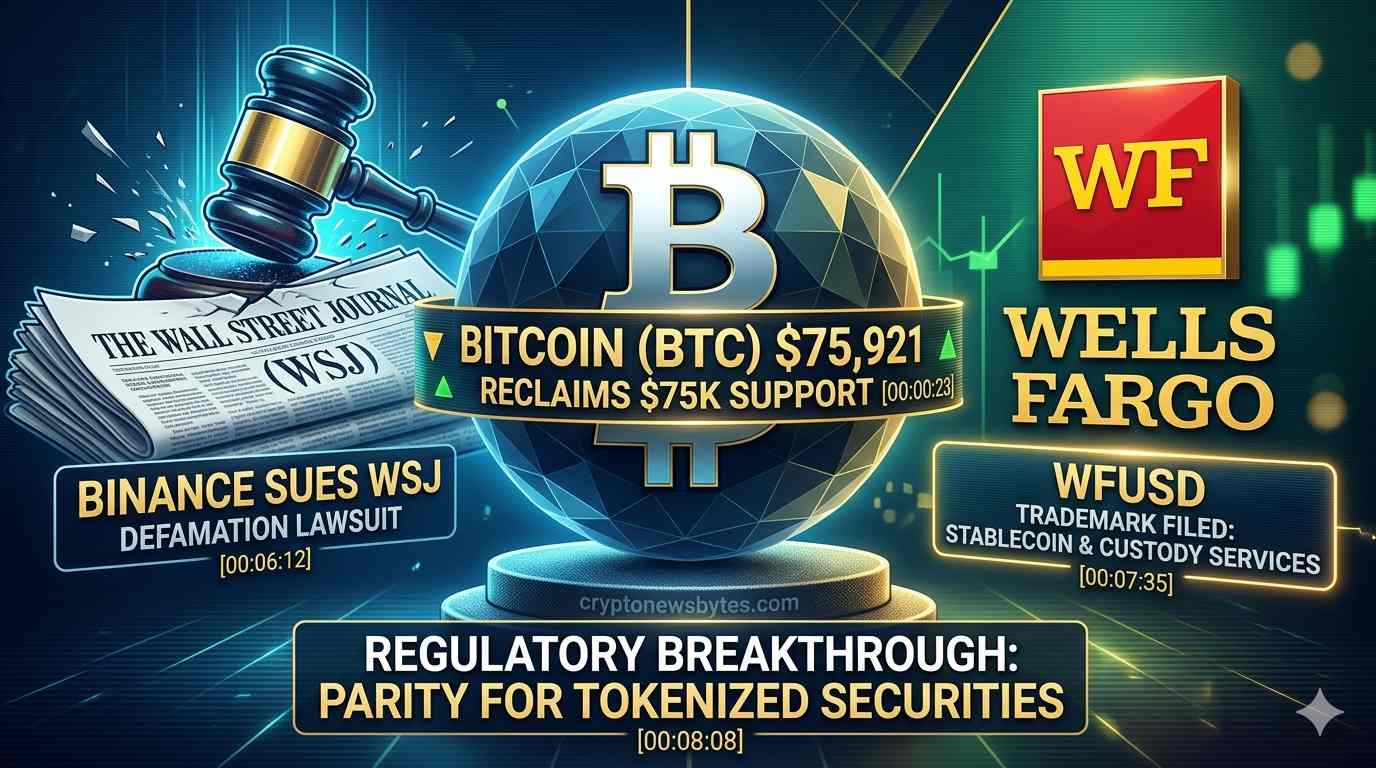
- Bitcoin pushes toward $75,000 on safe-haven demand as geopolitical tensions ease and short liquidations accelerate the move
- Binance files a defamation lawsuit against Dow Jones, publisher of the Wall Street Journal, over a February report on Iranian crypto flows
- Wells Fargo trademarks WFUSD, signalling intent to launch a dollar-backed stablecoin or tokenized deposit product
- The Fed, FDIC and OCC issue joint guidance granting capital parity for tokenized securities — a major barrier removed for banks
Bitcoin Pushes Toward $75,000
Bitcoin is trading at approximately $73,930 today, holding near the key $74,450 resistance level that has defined the upper boundary of the current range since April 2025. The asset hit a daily high of $75,921 earlier this week on a combination of safe-haven demand and short liquidations — a $1,800 surge that triggered approximately $113 million in short positions being closed across major exchanges.
The broader context matters here. Bitcoin hit an all-time high above $126,000 in October 2025 before a 42% drawdown into early 2026. The current $74K level represents a recovery attempt, with nearly $700 million flowing into US Bitcoin ETFs in March alone — a signal that institutional buyers are treating this level as an entry point rather than an exit.
Rick Edelman, founder of the Digital Assets Council of Financial Professionals, has argued that Bitcoin’s primary role has now cemented as a global store of value, with stablecoins absorbing the transactional utility once envisioned for BTC. He advocates replacing the traditional 60/40 investment portfolio with an 80/20 model that includes a 10 to 20% crypto allocation for long-term outperformance.
Binance Files Defamation Suit Against the Wall Street Journal
Binance has filed a defamation lawsuit against Dow Jones, the publisher of the Wall Street Journal, over a February 23 report alleging that the exchange had “dismantled” an internal compliance investigation into crypto flows linked to sanctioned Iranian networks.
Binance flatly denies the characterisation. The exchange states the compliance probe was not halted — it was conducted in active cooperation with law enforcement and resulted in the offboarding of suspicious accounts. Dugan Bliss, Binance’s Global Head of Litigation, called the lawsuit “a necessary step to defend ourselves against misinformation.”
The timing is notable. In early March, a federal judge separately dismissed a lawsuit alleging Binance facilitated terrorist financing — a legal win that strengthens Binance’s position as it enters this new legal confrontation with one of the world’s most prominent financial publications. The outcome of the WSJ case will be closely watched by the entire crypto industry given the role media reporting plays in regulatory and reputational risk for exchanges.
Wells Fargo Trademarks WFUSD — Big Banking Goes Native
Wells Fargo has filed a trademark application for “WFUSD” covering three international classes: crypto trading and staking services, blockchain platforms for digital payments, and hardware wallets and tokenization software. The breadth of the filing signals this is not a passive reservation — it is groundwork for a live product.
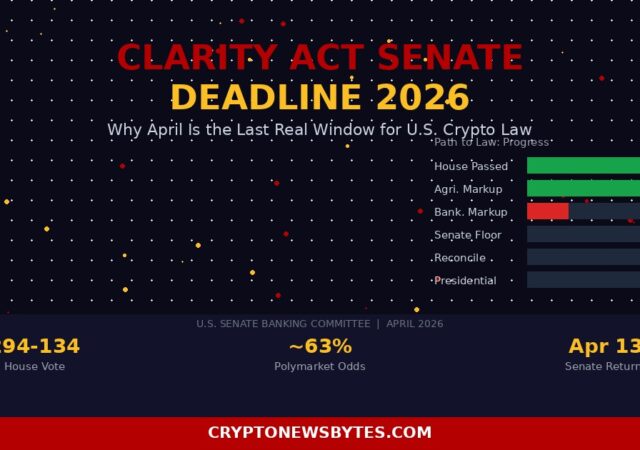
The move follows JP Morgan’s successful JPMD token launch and places Wells Fargo firmly in the institutional stablecoin race alongside other major banks building native blockchain products. The CLARITY Act moving through the US Senate and the USD1 stablecoin framework from World Liberty Financial are providing the regulatory scaffolding that makes these bank-issued stablecoin products viable.
Regulators Grant Capital Parity for Tokenized Securities
The Federal Reserve, FDIC, and OCC issued joint guidance this month clarifying that the US capital framework is “technology-neutral.” Banks may now treat tokenized securities with the same accounting and capital requirements as traditional book-entry securities, provided the underlying legal rights are identical.
This removes one of the most significant structural barriers for banks looking to use blockchain for collateral management and settlement. It is not a small development — it means a tokenized US Treasury bond sitting on a blockchain ledger is treated identically to one held in a traditional custodial account for bank capital purposes. Expect this to accelerate bank-led tokenization programmes significantly in the second half of 2026.