
⚡ Key Takeaways
- Ethereum is trading at $2,071 (+2.55%) — outperforming Bitcoin’s +2.31% gain today, a potential early signal of capital rotation.
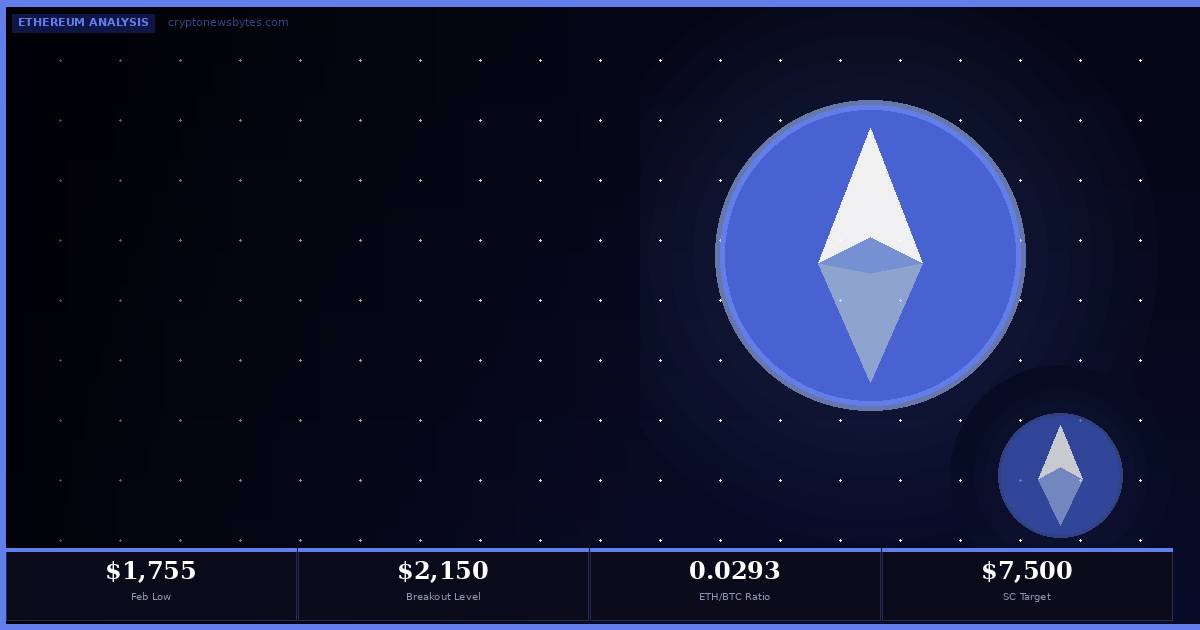
- The ETH/BTC ratio sits at 0.0293, recovering from multi-year lows. $2,150 is the critical breakout level — a clean close above it historically precedes DeFi rallies by 24–48 hours.
- Short seller Culper Research has publicly bet against ETH, calling it a structural “death spiral.” Their full argument — and the bull case rebuttal — is broken down below.
- Standard Chartered has set a $7,500 ETH price target for 2026, citing exchange supply at decade lows and the upcoming Glamsterdam upgrade.
- The CLARITY Act reclassifies Ethereum as a digital commodity — removing the SEC’s claim that ETH is a security and opening the door to regulated institutional ETH products.
- Harvard endowment disclosed a rotation into ETH exposure — the first Ivy League endowment to do so publicly.
Ethereum is doing something today that it has not done consistently for months: outperforming Bitcoin. While BTC is up 2.31%, ETH is up 2.55%. The ETH/BTC ratio — the clearest measure of whether capital is rotating from Bitcoin into Ethereum — is ticking up from multi-year lows. Whether this is a one-day blip or the beginning of the altseason rotation that DeFi investors have been waiting for is the question that matters most for Ethereum holders right now. Here is the data, both sides of the bull/bear debate, and how the regulatory landscape is shifting in ETH’s favour.
Ethereum Price Chart — March 2026
ETH/BTC Ratio: The Capital Rotation Signal
The ETH/BTC ratio currently sits at 0.0293. To understand why this matters: when the ratio rises, it means ETH is outperforming Bitcoin — capital is rotating from the reserve asset into the productive asset. When it falls, Bitcoin dominance is rising and Ethereum is underperforming. The ratio has been in a sustained downtrend since late 2021. A recovery above 0.035 would be the clearest technical signal that a genuine rotation cycle has begun. We are not there yet — but today’s outperformance is the kind of early signal that historically precedes that move.
The Bull vs. Bear Debate: Culper Research vs. Standard Chartered
🐻 Bear Case — Culper Research
- ETH faces structural competition from Solana, Base, and other L1s eating its market share
- Fee revenue has collapsed post-EIP-4844 as activity migrated to L2s
- ETH issuance is now inflationary again — the deflation narrative is broken
- Institutional ETH ETF inflows have disappointed relative to BTC ETFs
- Culper calls it a potential “death spiral” — falling fees → less burn → more supply → lower price → less developer interest
🐂 Bull Case — Standard Chartered
- Exchange supply at decade lows — less ETH available to sell
- Glamsterdam upgrade (H1 2026) expected to significantly improve execution layer performance
- Harvard endowment public rotation into ETH exposure signals institutional conviction
- CLARITY Act + Atkins taxonomy removes SEC’s securities claim on ETH — unlocks regulated products
- Standard Chartered price target: $7,500 by end of 2026
The CLARITY Act: Ethereum’s Biggest Regulatory Catalyst
For Ethereum specifically, the regulatory unlock matters more than for Bitcoin — because Ethereum’s securities status uncertainty has been a bigger barrier to institutional adoption. Bitcoin’s commodity status has been broadly accepted since 2015 (CFTC ruling). Ethereum’s status has been contested since the Merge. The CLARITY Act ending that uncertainty is a more significant catalyst for ETH than for BTC — which is part of why the ETH/BTC ratio tends to outperform when regulatory clarity news is positive.
❓ Frequently Asked Questions — Ethereum March 2026
Standard Chartered — $7,500 ETH 2026 price target | Culper Research — ETH bear thesis | CryptoQuant — Exchange supply at decade lows | TradingView — ETH/BTC ratio chart | CryptoNewsbytes — Atkins taxonomy coverage