
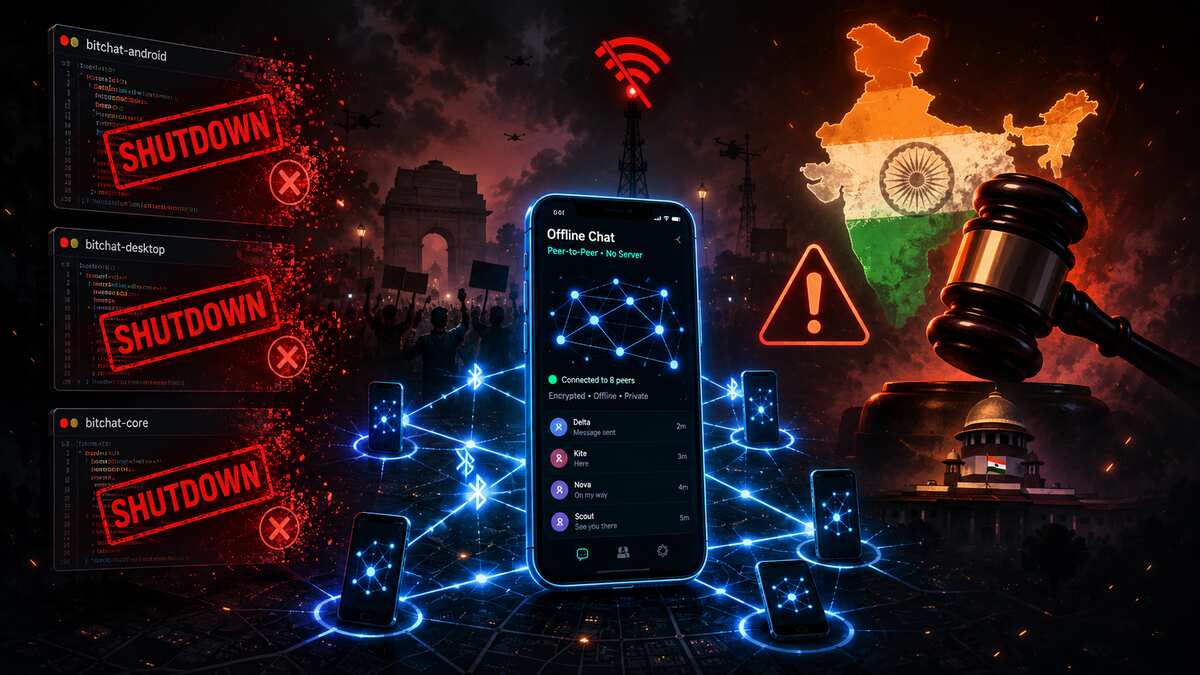
- India ordered GitHub to disable three Bitchat-related repositories within three hours.
- Officials said Bitchat’s anonymous structure makes lawful interception and investigations more difficult.
- The app remained available through Google and Apple app stores as of publication.
India has moved against Bitchat by ordering GitHub to disable repositories tied to Jack Dorsey’s offline messaging app as protests in Delhi continued amid repeated internet shutdowns. The directive came from the Indian Cyber Crime Coordination Centre, which said the app enables anonymous communication without registration, phone numbers, or centralized logs. The Bitchat takedown has therefore focused attention on software designed to function without internet access and on how authorities respond when demonstrators use mesh-networking tools to coordinate after ordinary connections are disrupted. It also raises questions about whether restricting open-source code can meaningfully limit access to a decentralized application.
Bitchat takedown order from India’s cybercrime agency
India’s top cybercrime watchdog directed GitHub late Thursday to remove access to three repositories linked to Bitchat. The Indian Cyber Crime Coordination Centre, part of the Home Ministry, issued the notice under Section 79(3)(b) of the IT Act and gave GitHub three hours to disable access to the specified code repositories. According to the notice reviewed by CoinDesk, officials objected to the app’s ability to support anonymous communication without registration, phone numbers, or centralized logging. The order said that structure significantly limits lawful interception, attribution, and investigation by law enforcement, forming the stated basis for the Bitchat takedown demand.
How Bitchat works during internet shutdowns
Bitchat is a decentralized messaging app that relays encrypted messages between nearby phones through Bluetooth mesh networks. It does not require internet access, central servers, user accounts, or phone-number registration. Jack Dorsey released the software as an open-source project in July 2025, allowing its code to be viewed, copied, and redistributed. The app was also designed to pass bitcoin transactions offline from one phone to another until a device with connectivity can broadcast them to the wider network. That approach was intended to keep payments functioning during blackouts, disasters, or state-imposed shutdowns, helping explain why the dispute has attracted attention beyond private messaging.
Bitchat takedown amid Delhi protest shutdowns
Since July 20, cities across India have seen some of their largest demonstrations in years. Student protesters rallying under the “Cockroach Janta Party” banner, a jab at the ruling Bharatiya Janata Party, have been protesting a national exam scandal and have faced tear gas and baton charges. The government imposed repeated internet suspensions around protest sites in New Delhi. Researchers documented demonstrators using Bluetooth mesh apps, including Bitchat, to continue coordinating after connections dropped. That use reduced the immediate impact of the shutdowns and placed the software at the center of the wider Bitchat takedown dispute.
What remained online after the Bitchat takedown order
As of publication, it was unclear whether GitHub had complied with the three-hour deadline. CoinDesk reported that the Bitchat application could still be accessed and downloaded through both Google’s Play Store and Apple’s App Store during Friday afternoon in Asia, indicating that the order targeted repositories rather than every distribution channel. The report also noted that Microsoft-owned GitHub has previously removed repositories in response to Indian legal orders. However, open-source projects are often copied or mirrored across multiple hosting services, so removing code from one platform does not necessarily erase it or prevent other versions from remaining available elsewhere.
Conclusion
The Bitchat takedown shows how India is responding to an offline communication tool used during internet restrictions around protests in Delhi. Authorities argued that the app’s anonymous and decentralized structure makes lawful interception, attribution, and investigation more difficult, while supporters value its ability to keep messages and even bitcoin transactions moving without standard connectivity. The case also highlights the limits of targeting open-source software because repositories can be mirrored on other services and the app remained available through major app stores at publication. For now, the practical reach of the order remains uncertain, even though the legal pressure on GitHub is clear.
Disclaimer
The information provided in this article is for informational purposes only and should not be considered financial advice. The article does not offer sufficient information to make investment decisions, nor does it constitute an offer, recommendation, or solicitation to buy or sell any financial instrument. The content is opinion of the author and does not reflect any view or suggestion or any kind of advise from CryptoNewsBytes.com. The author declares he does not hold any of the above mentioned tokens or received any incentive from any company.
Featured image created by AI