- The EU added four sanctions designations connected to the A7 network and its links to Africa.
- Transaction bans were extended to 14 crypto-related platforms located outside Russia.
- The package introduces a tool for restricting third-country crypto providers used by Russia.
The latest EU crypto sanctions widen the bloc’s pressure on Russia by adding new designations connected to the cross-border A7 network and expanding restrictions on crypto service providers located outside the country. The move follows earlier warnings from the EU that Russia has become increasingly reliant on cryptocurrencies for international transactions. It also comes after Chainalysis reported that the A7 network, where the A7A5 stablecoin operates, had processed nearly $120 billion. The crypto measures form part of a broader enforcement package that also targets banks, vessels in Russia’s shadow fleet and oil refineries in Russia and Belarus.
EU crypto sanctions expand to the A7 network
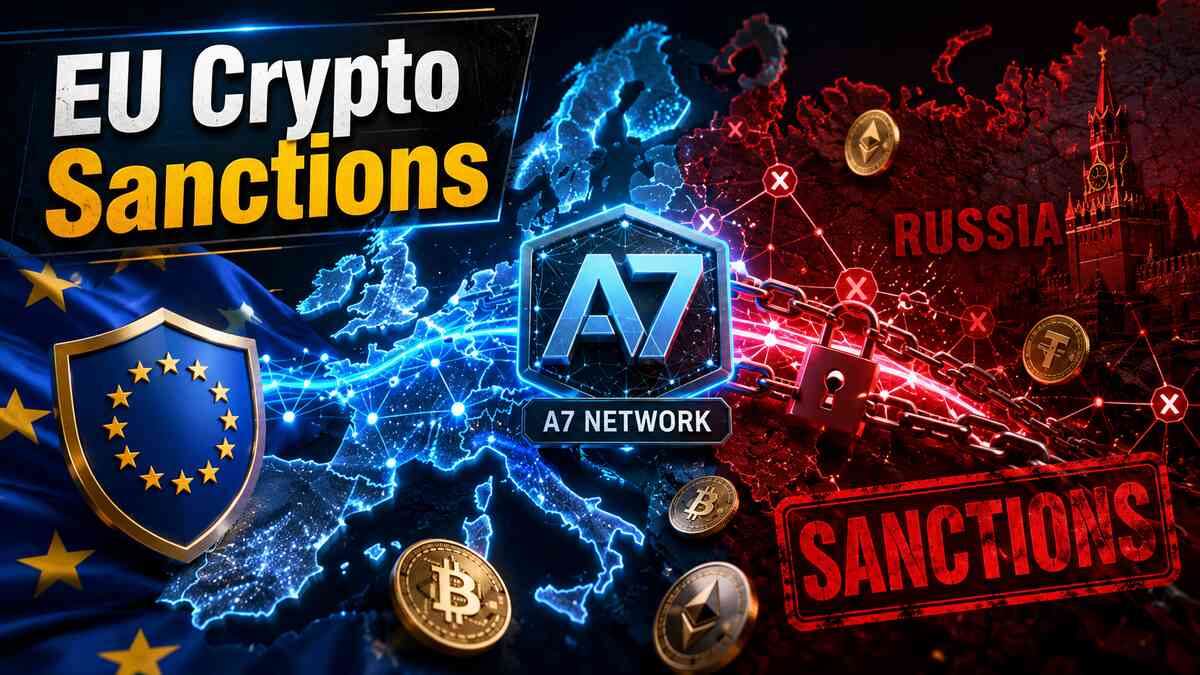
The European Union extended its sanctions against Russia by adding four designations connected to the cross-border A7 network. According to the source material, the measures also cover the network’s developing links to Africa. The decision brings a specific crypto-linked payment network directly into the EU sanctions framework instead of relying solely on broader restrictions against Russian banks and financial institutions.
Chainalysis previously reported that the A7 network, where the A7A5 stablecoin operates, had processed nearly $120 billion. The blockchain analytics company also described the network as having been deliberately created to support Russia’s efforts to evade international sanctions. That assessment helps explain why the latest EU crypto sanctions specifically address A7 and its international connections.
Wider platform restrictions under EU crypto sanctions
The EU is also extending its transaction ban to 14 unnamed crypto-related service platforms. According to the source, the affected platforms are based in Georgia, Panama, the United Arab Emirates, the Marshall Islands, Kyrgyzstan and Belarus. Although the companies were not identified individually, the measure shows that the bloc is extending its restrictions beyond providers located directly in Russia.
The 21st sanctions package also introduces what the source describes as the first possible full third-country ban involving crypto-asset services. The mechanism could allow the EU to prohibit transactions between EU operators and crypto providers used by Russia. This would give the bloc a broader instrument for restricting access to foreign service providers that allegedly support Russia-linked activity.
Broader financial measures in the sanctions package
Kaja Kallas, the EU’s High Representative for Foreign Affairs and Security Policy and chair of the Foreign Affairs Council, said the package targets more than 100 banks and crypto operators. She added that the measures cover more than 40 vessels associated with Russia’s shadow fleet and several oil refineries located in Russia and Belarus.
The EU is also imposing asset freezes and prohibiting funds from being made available to 94 banks and major financial institutions. In addition, the transaction ban is being extended to 33 more Russian credit and financial institutions. These actions place the crypto restrictions within a broader attempt to limit Russia’s access to financial, industrial and energy-related services.
Russian crypto law adds to the timing
The sanctions were announced three days after Russia’s State Duma passed legislation establishing the country’s first comprehensive framework for regulating cryptocurrency. Most of the rules are scheduled to take effect on September 1. The legislation creates requirements for crypto exchanges, depositories, other digital asset providers, traders and investors operating in the Russian market.
The EU had announced an earlier sanctions package against Russia in April, describing it as its largest package against the country in two years. At that time, the bloc said Russia was becoming increasingly dependent on cryptocurrencies for international transactions. The latest measures deepen that policy focus by targeting specific networks, platforms and foreign crypto service providers.
Conclusion
The latest EU crypto sanctions broaden the bloc’s campaign against Russia by directly targeting the A7 network, extending transaction bans to 14 crypto-related platforms and introducing a mechanism for restricting third-country crypto providers used by Russia. The measures were announced only days after Russia passed a broad regulatory framework for its domestic crypto market. Beyond digital assets, the EU package also targets banks, financial institutions, shadow-fleet vessels and oil refineries. Taken together, the measures demonstrate a wider effort to increase financial pressure on Russia across both traditional financial channels and crypto-linked payment networks.
Disclaimer
The information provided in this article is for informational purposes only and should not be considered financial advice. The article does not offer sufficient information to make investment decisions, nor does it constitute an offer, recommendation, or solicitation to buy or sell any financial instrument. The content is opinion of the author and does not reflect any view or suggestion or any kind of advise from CryptoNewsBytes.com. The author declares he does not hold any of the above mentioned tokens or received any incentive from any company.
Featured image created by AI