
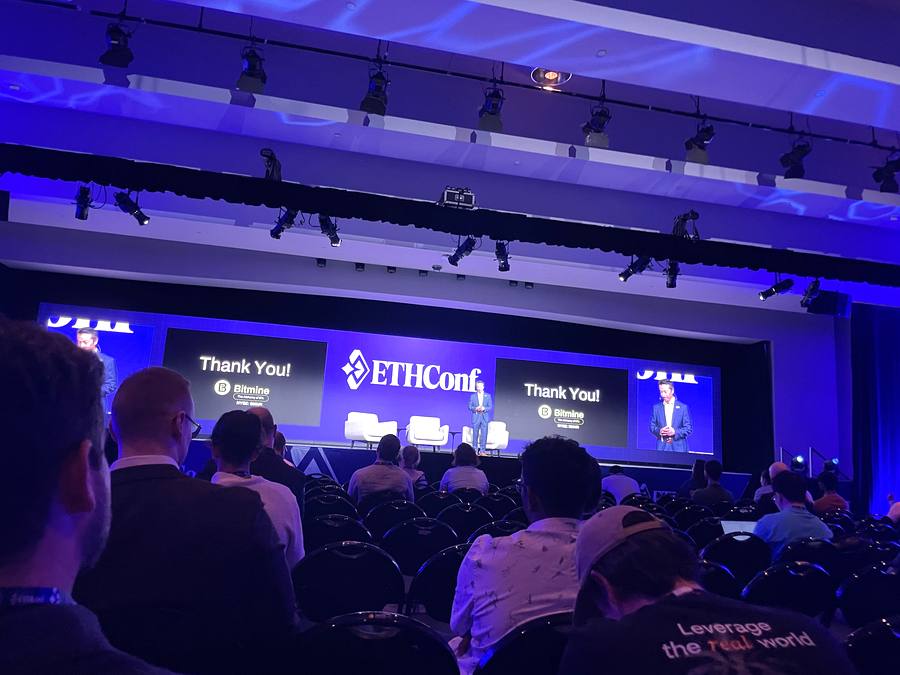
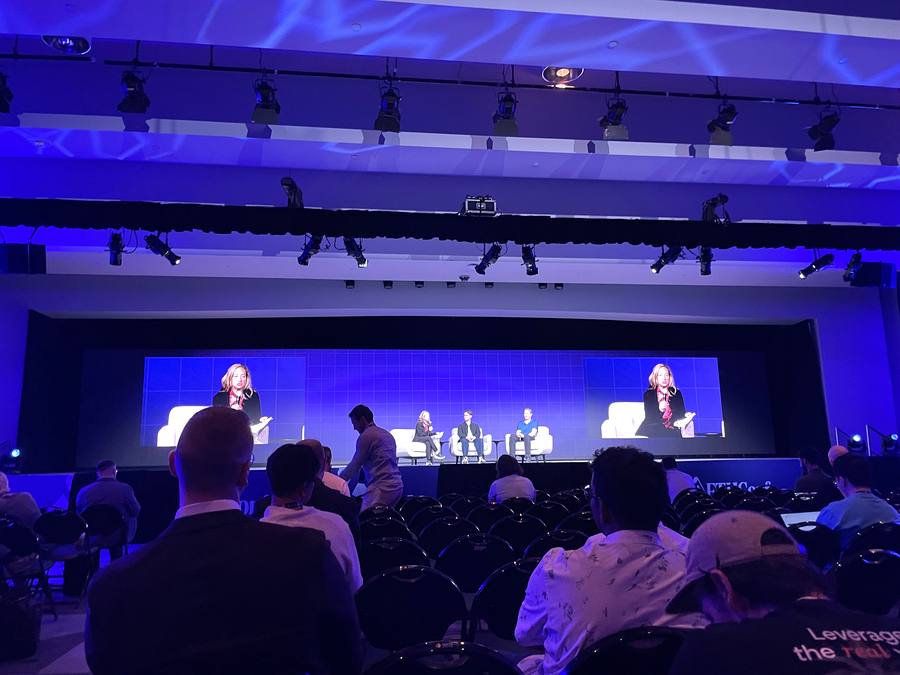
The inaugural ETHConf opened on June 8 at the Javits Center in New York City with 47 sessions across four stages, 5,000 attendees, and a speaker list that would have been unimaginable at an Ethereum conference three years ago. The SEC’s Chief Counsel of the Crypto Task Force was on the main stage by 10:45 AM. BlackRock’s Global Head of Digital Assets spoke after lunch. The DTCC’s Managing Director of Technology, Research and Innovation shared a fireside with the Linux Foundation. Joe Lubin of Consensys gave his vision for the next decade of Ethereum. Aave’s Stani Kulechov talked about credit markets. And Google Cloud sat down with a16z crypto to discuss enterprise adoption. This is not a developer hackathon. This is where Ethereum’s institutional chapter is being written.
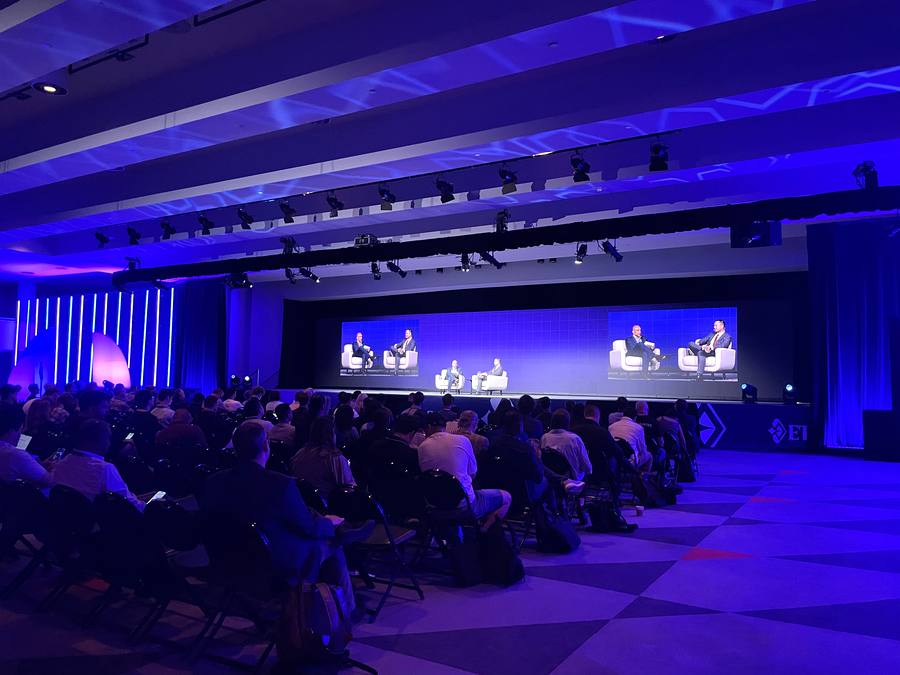
ETHConf is produced by ETHGlobal and positioned as the definitive Ethereum event of the year. The three-day programme runs June 8 to 10 and covers stablecoins, DeFi and payments, protocol updates, infrastructure, institutional adoption, staking and yield, digital asset policy, and AI integration on-chain. Day 1 alone ran 47 sessions. Day 2 has 43. The structure mirrors the shift in Ethereum’s actual user base: equal weight to technical depth and institutional strategy, with a significant policy dimension that previous ETH conferences never had.
The Session That Defined Day 1: SEC on the Main Stage
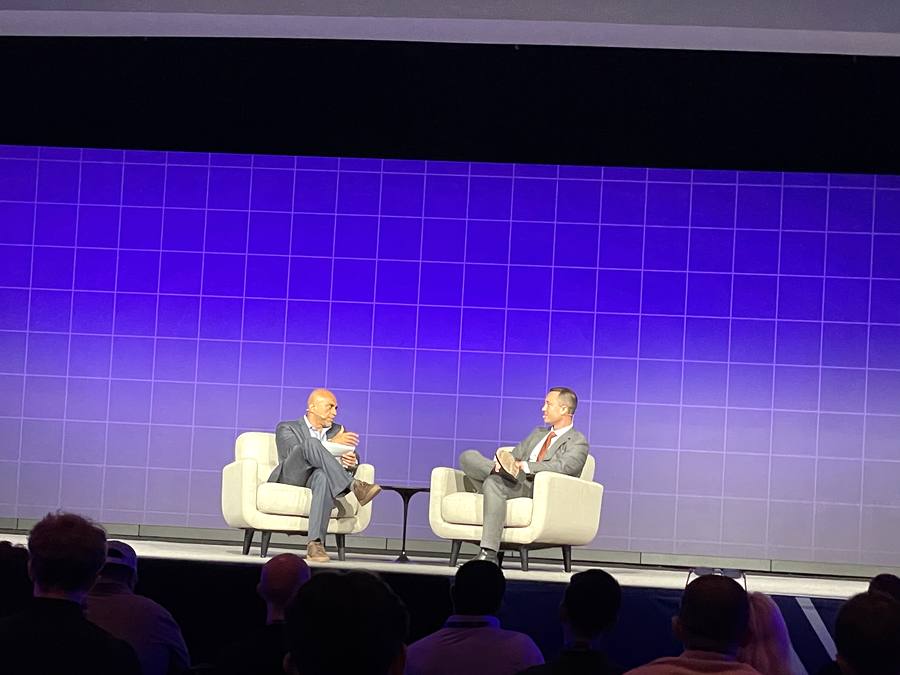
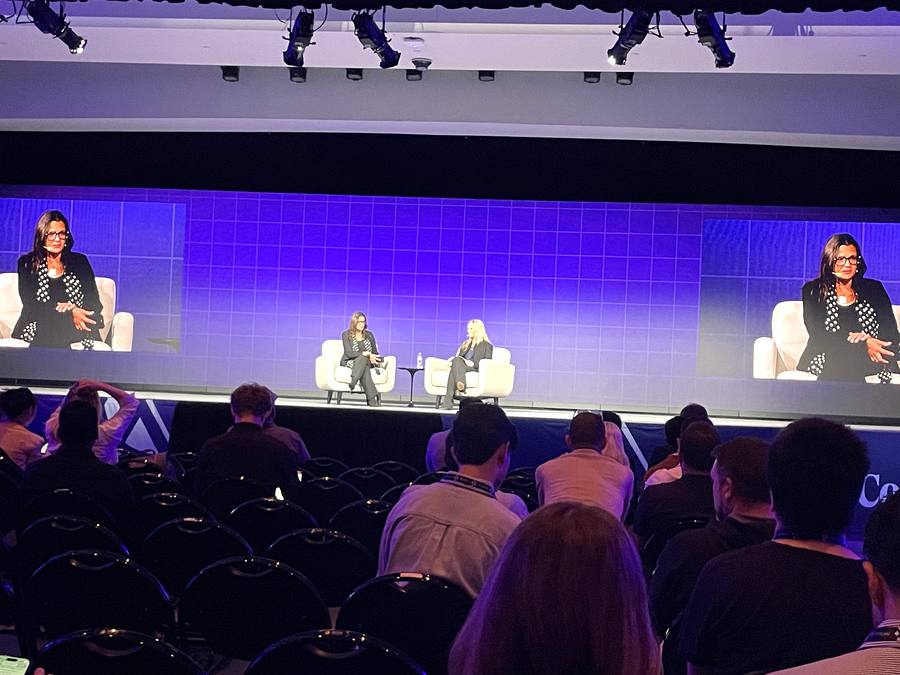
The most significant thing about Day 1 was not any single announcement. It was the presence of Taylor Lindman, Chief Counsel of the SEC’s Crypto Task Force, on the main stage at 10:45 AM for a session titled “The Onchain Capital Markets Era Starts in Washington DC.” Lindman’s session framing was explicit: for the first time in a decade, US crypto rules are being written, not litigated. The conversation covered tokenized securities, DeFi, and the next phase of capital markets alongside Salman Banaei, General Counsel of Plume.
An SEC official actively discussing Ethereum’s role in capital markets at an Ethereum conference, in the same week that the CLARITY Act Senate floor vote window is open, represents a shift in the relationship between the regulator and the ecosystem that would have been inconceivable in 2023 or 2024. The SEC in those years was the primary adversary of the Ethereum ecosystem. The SEC at ETHConf 2026 is a speaker exploring how the technology integrates into regulated markets. That change in posture is the story underneath every Day 1 session.

Day 1 Main Stage: Session by Session
ETHConf Day 1 Main Stage and Full Programme
Monday June 8, 2026 · Javits Center NYC | Source: ethconf.com/schedule | @cryptonewsbytes
10:00 AM · Keynote
Welcome and Introduction
Kartik Talwar, ETHGlobal Co-founder
10:10 AM · Talk · Ethereum Foundation
A Reasonably Necessary World Computer
Tim Beiko, Protocol Lead and Ethereum has properties no other platform can replicate. This talk applies a “reasonably necessary” test to three frontiers: programmable markets, capture-resistant coordination, and agent economies.
10:25 AM · Talk · Aave
Building Credit Markets at Internet Speed
Stani Kulechov, Aave CEO and Founder and The internet transformed information. Why has credit remained impossible to scale? Kulechov’s case for on-chain credit infrastructure.
10:45 AM · Fireside · SEC Crypto Task Force
The Onchain Capital Markets Era Starts in Washington DC
Taylor Lindman (SEC Chief Counsel, Crypto Task Force) + Salman Banaei (Plume General Counsel) and For the first time in a decade, US crypto rules are being written, not litigated. Tokenized securities, DeFi, and the next phase of capital markets.
11:10 AM · Fireside · DTCC + Linux Foundation
The Settlement Layer Wall Street Already Trusts
Johnna Powell (DTCC Managing Director, Technology, Research and Innovation) + Daniela Barbosa (Linux Foundation Decentralized Trust Executive Director) and DTCC is the backbone of US securities settlement. This session is about whether Ethereum becomes part of that backbone.
11:35 AM · Fireside · Consensys
Why the Next Ten Years of Ethereum Look Different
Joe Lubin, Consensys CEO, interviewed by Kartik Talwar and Lubin has been building on Ethereum since genesis. His view on where the next decade diverges from the last.
12:05 PM · Talk · Bitmine
Blockchains Are Central to the Future of Finance and Agentic AI
Young Kim, Bitmine COO and CFO and The company that just bought 126,971 ETH ($214M) last week despite its chairman calling for slower purchases.
12:25 PM · Fireside · Consensys
Institutional Adoption and the Importance of Code Neutrality
Declan Fox (Consensys Head of Linea) + Rob Dawson (Consensys CTO) and As digital assets move into institutional infrastructure, governance becomes as important as technology.
2:00 PM · Fireside · BlackRock
What the World’s Largest Onchain Allocators See for the Future
Robbie Mitchnick, BlackRock Global Head of Digital Assets + Matt Sheffield (SharpLink CIO) and BlackRock manages over $10 trillion. Mitchnick’s presence at ETHConf is not symbolic. IBIT alone has seen over $2.4B in outflows since May 18. What BlackRock’s digital asset head says here matters.
2:25 PM · Fireside
Where Silicon Valley and Onchain Finance Converge
Nemil Dalal + others and The intersection of VC-backed tech and Ethereum-native finance.
Source: ethconf.com/schedule · Day 1 had 47 total sessions across Main Stage, Breakout Stage, and Community Hub | @cryptonewsbytes
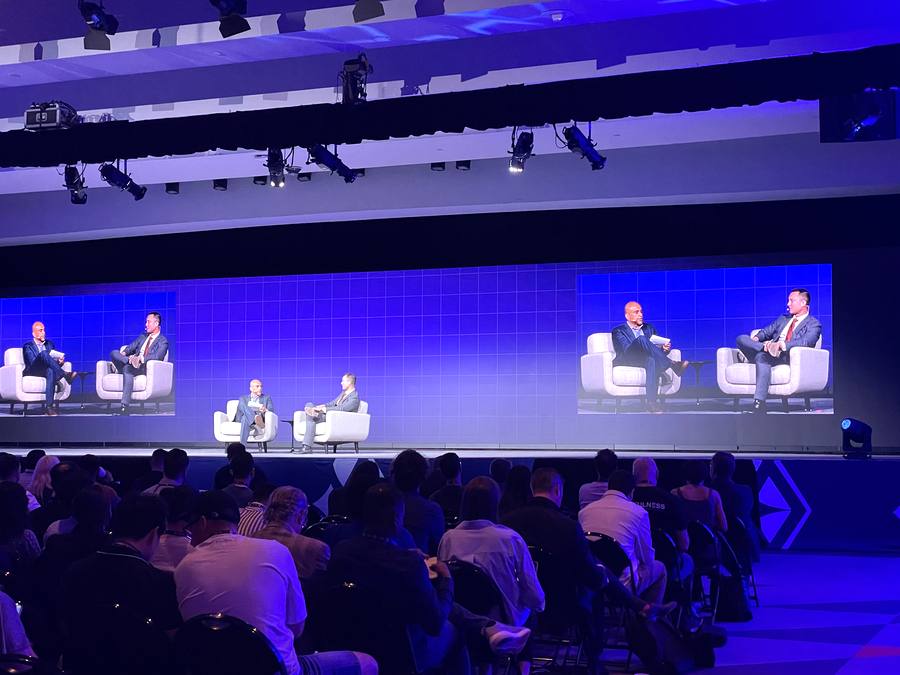

Breakout Stage: The Sessions the Main Stage Did Not Cover
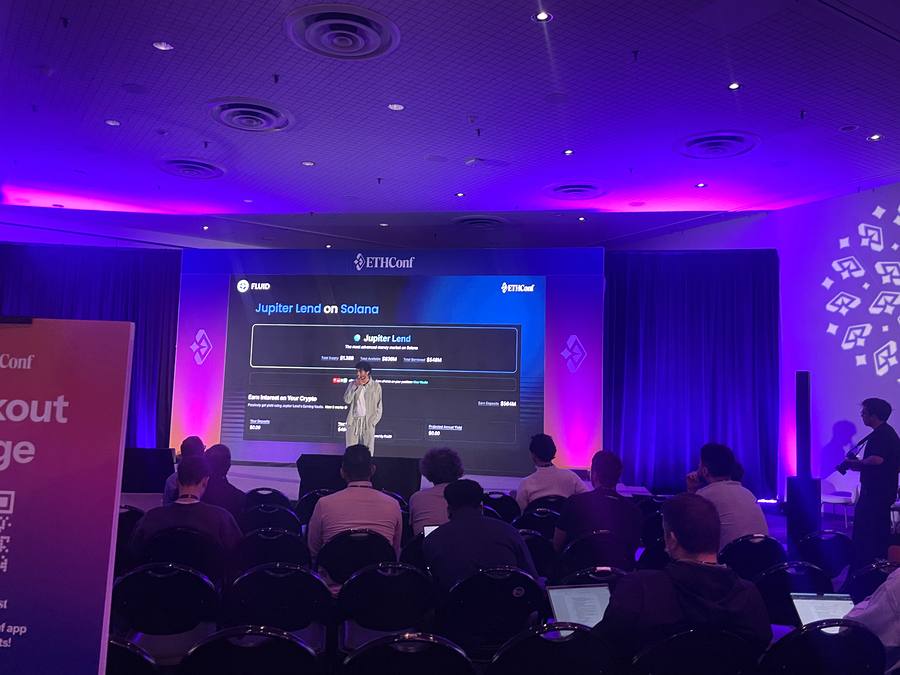
While the main stage handled the institutional and policy narrative, the Breakout Stage ran the technical and security track. Three sessions stand out from the Day 1 breakout programme.
Paul-Henry Kajfasz, CEO of Unlink, spoke on “Financial Privacy: The Missing Layer of Institutional Onchain Finance” at 11:00 AM. The framing was historical: money has been private by default for 5,000 years. Counterparties see their leg of a trade, regulators see what they need, and the public sees aggregated reports. On-chain transparency breaks that model entirely. The challenge for institutional adoption is recreating appropriate privacy without sacrificing the auditability that regulated entities require. This is the tension that Zcash’s Orchard pool vulnerability disclosure this week made concrete in the most uncomfortable way possible.
Odysseas Lamtzidis of Phylax spoke on “Securing Institutional DeFi Without Centralizing It” at 11:20 AM. The core tension: institutions need stronger security protections, but emergency controls recreate the centralization that DeFi is supposed to eliminate. This session is directly relevant to the Flooring Protocol exploit that happened the same day, where a white-hat rescue required Yuga Labs to act unilaterally to protect user assets. Centralized emergency intervention saved the NFTs. It also demonstrated exactly the governance risk this session was addressing.
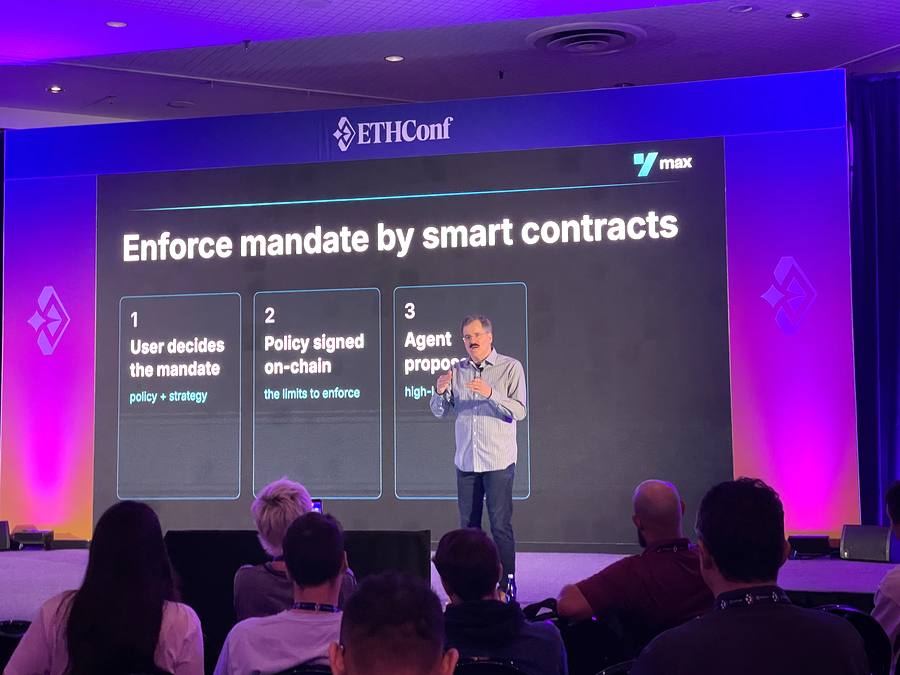
Dean Tribble of Agoric gave a breakout talk titled “Agents Need Mandates, Not Keys: Enforceable Guardrails for Agentic Finance” at 12:40 PM. The argument: agents will increasingly manage money on behalf of users, but giving them raw private keys creates too much risk and too little control. Agoric’s Ymax system shows how user mandates, enforced by smart contracts, can bound what an agent is permitted to do. This is the most practical governance answer to the AI agent finance problem that the Travala Travel MCP and OpenSea ERC-8257 discussions this week surfaced.
ETHConf Day 1: Sessions by Track
47 sessions across 4 stages | Source: ethconf.com/schedule | @cryptonewsbytes
Track allocation is editorial estimate based on session titles and descriptions. | @cryptonewsbytes
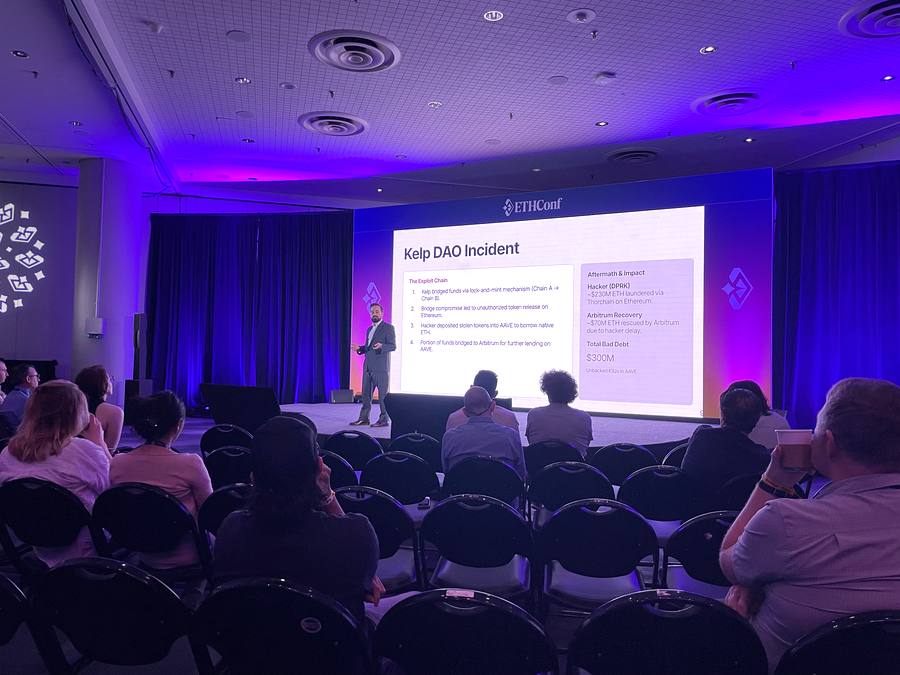
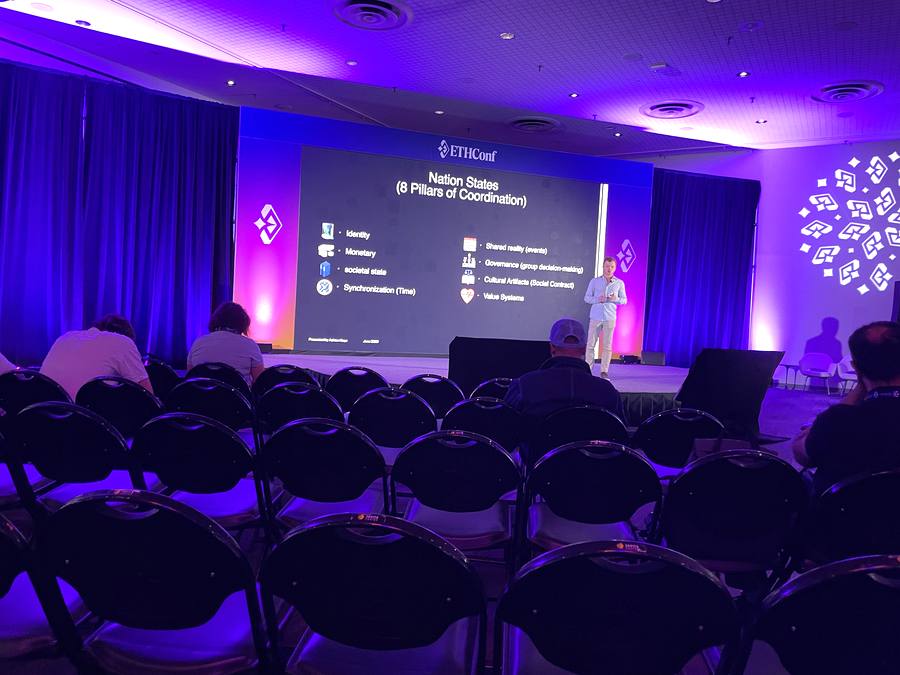
The Bitmine Timing: $214M ETH Buy, Then Main Stage
One of the more notable scheduling coincidences of Day 1 was Bitmine COO and CFO Young Kim speaking on the main stage hours after his company’s largest single Ethereum purchase of 2026 was reported. Bitmine bought 126,971 ETH last week, worth roughly $214 million at current prices, despite chairman Tom Lee’s earlier calls to slow purchases. Kim’s session title, “Blockchains Are Central to the Future of Finance and Agentic AI,” gave the ETHConf audience the framing behind that acquisition decision in real time. Ethereum at $1,640 and falling is still attractive enough for a company to deploy $214 million in a single week.
What Day 2 Holds
Day 2 runs 43 sessions on Tuesday June 9. The confirmed speakers include Sergey Nazarov (Chainlink founder), Sreeram Kannan (EigenLayer founder), and a deeper programme across staking and yield, RWA tokenization, and privacy. CPI data drops Wednesday June 10 during Day 3 of the conference, which will create an unusual dynamic where the macro event most relevant to Ethereum’s price is happening simultaneously with the Ethereum ecosystem’s largest conference of the year. Attendees on the floor will be watching both the main stage and their price feeds at the same time.


Further Reading
BlackRock’s IBIT has bled $2.4B+ in outflows since May 18. Mitchnick on the ETHConf main stage today speaks directly to that institutional reversal narrative.
The SEC official speaking at ETHConf and the CLARITY Act Senate vote window are the same policy moment. Rules being written, not litigated.
The agentic AI theme from Day 1’s breakout sessions is already live in production. Agoric’s “Agents Need Mandates, Not Keys” talk addresses the governance layer that Travala’s model still lacks.
This article is based on the official ETHConf 2026 programme. Sources: ethconf.com/schedule, CoinPedia, GNCrypto, IQ.wiki, TheChainPost. Published June 9, 2026. Updated as additional session details emerge.